7-Day Western & Southern: Elizabeth Bay's Penguins
6 nights aboard the Galapagos Angel
7-Day Western & Southern: Elizabeth Bay's Penguins
Trip highlights
- Elizabeth Bay shelters the archipelago's largest penguin colony
- Sierra Negra's caldera stretches 10 km, one of Earth's largest
- Punta Espinosa hosts the largest marine iguana gathering in the islands
- Devil's Crown's sunken cone draws white-tipped reef sharks and rays
- Post Office Bay's mail barrel has been filling up since 1793
Why book with us
- Availability updated daily - Departures and prices come straight from the operators' own systems, so a cabin shown free is free.
- Galápagos only - We arrange Galápagos cruises exclusively and know every vessel.
- Personal advice - One dedicated contact from your first question to your return.
- Travel that gives back - Part of every booking goes into protecting the national park.
The archipelago's largest Galapagos penguin colony, a volcanic caldera 10 km across, a mail barrel in continuous use since 1793 - seven days aboard the Galapagos Angel cover Bartolome, Isabela, Fernandina, and Floreana. Bartolome's 372 steps open the trip, with penguins a good bet on the snorkel below. Punta Vicente Roca's cliffs and Punta Espinosa's marine iguanas fill the next day, then Tagus Cove and Elizabeth Bay's zodiac-only mangrove cove. Urbina Bay's uplifted coral and Punta Moreno's flamingo pools follow. Sierra Negra's caldera and the tortoise center near Puerto Villamil come before Floreana's Devil's Crown, Punta Cormorant, and Post Office Bay. Mosquera's sea lions, sprawled across white coral sand, close the trip.
Galapagos Angel
built 2023 · 115 ft · First Class cruise
- Category
- First Class
- Onboard leadership
- 1 bilingual naturalist guide
- Guests
- 16
- Wi-Fi
- Yes
- Crew
- 10
- Cabin types
- 2
The ship
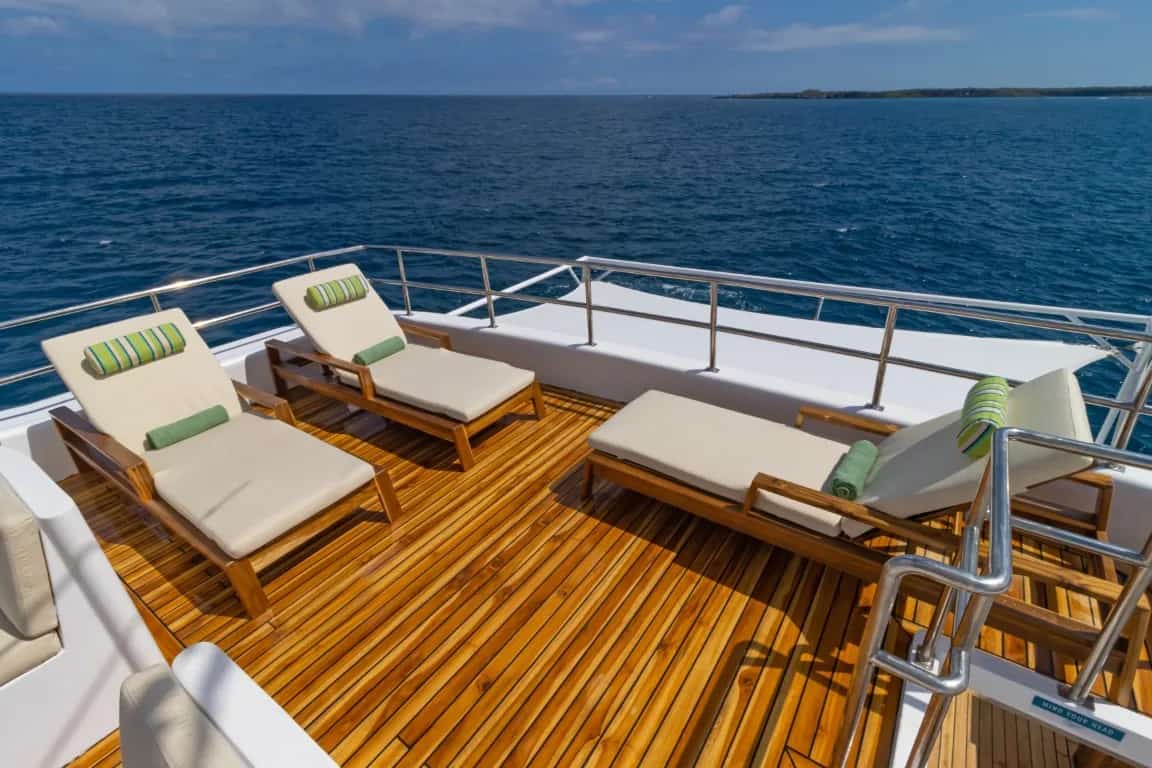
The addition of this new first class motor yacht to the Galapagos' largest and most prestigious fleet includes adventure, comfort, and exclusivity.
Designed and built in the Netherlands, the Galapagos Angel is ready to explore the Enchanted Islands with outstanding itineraries and top-notch service.
Comfort and cuisine
With two large suites and six convertible cabins, the yacht accommodations are comfortably designed for 16 passengers, who can enjoy breathtaking views through the panoramic windows and of sharing their day-to-day experiences with their loved ones by using our onboard WiFi service.
Leave your trip in the hands of the crew members and our certified bilingual naturalist guides, who will show you the most outstanding places in the islands and make you live an unforgettable experience.
On board
Amenities
- Air conditioning
- Wi-Fi on board
- Naturalist guide
Activities
- Kayaking
- Snorkeling
- Guided hikes
- Panga rides
A fit for travelers who value a new ship and Wi-Fi on board over cabin size, since the six main-deck cabins measure 13 m².
Cabins
Itinerary
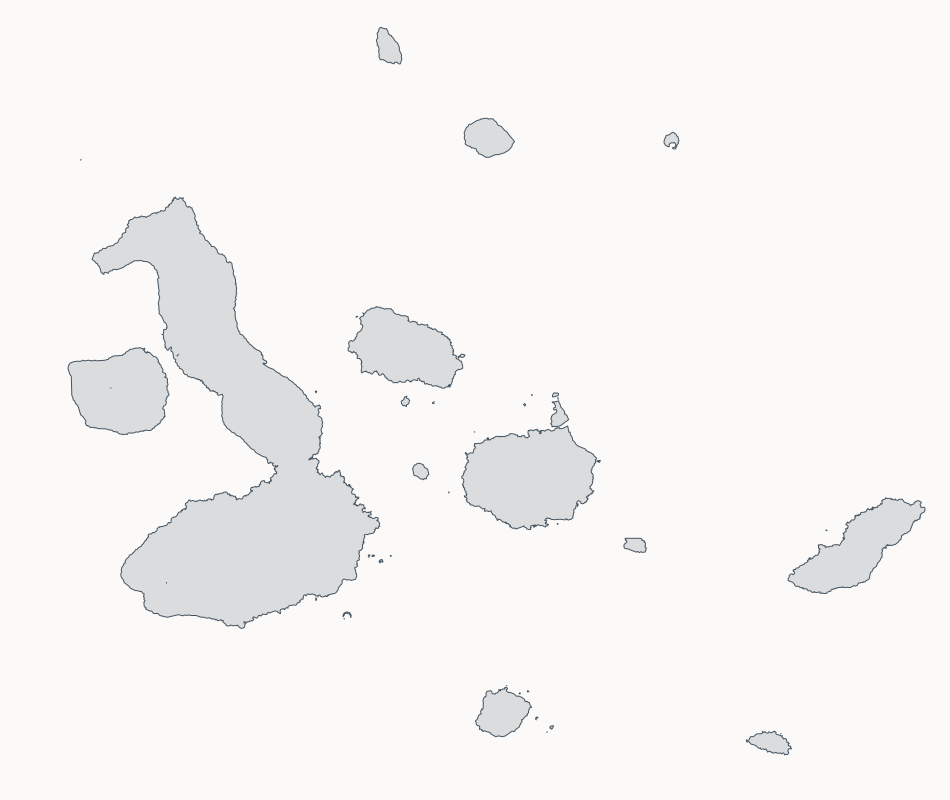
Day by day. Click an activity for details.
Map
MorningBaltra Airport (Arrival) · BaltraAirport or transfer
Most Galapagos itineraries begin here. Baltra's airport is the world's first fully ecological airport, run on solar and wind power and built largely from recycled materials, including old oil pipes repurposed into the terminal structure. Land iguanas, wiped out here by the 1950s and reintroduced through a decades-long breeding program, now number in the hundreds again, some right around the airport grounds. From the terminal, a short bus transfer brings you to the pier for the panga ride out to your ship.
AfternoonBartolomé Summit · Bartolomé
A wooden staircase of 372 steps climbs Bartolome's extinct volcano from a lava-and-concrete dock or sandy beach, depending on conditions. Along the way, red, orange, black, and even green volcanic layers mark the slopes, home to pioneer plants like the island-endemic Tiquilia nesiotica, lava cactus, and scattered Scalesia. With some luck, a lava lizard crosses the trail. At the top, the view over the twin bays and the iconic Pinnacle Rock is the reward for the climb. Back at sea level, a snorkel around the coral reef and submerged lava rocks is a good bet for Galapagos penguins and white-tipped reef sharks, with sea turtles and manta rays turning up now and then too.
MorningPunta Vicente Roca · IsabelaSnorkellingPanga ride
There's no landing at Punta Vicente Roca: this dramatic, eroded caldera on Isabela's coast is explored entirely by snorkel, dinghy, or kayak. The cold Cromwell Current runs through here, and it's what keeps the water so alive: blue-footed boobies nest reliably along the cliffs, and in the water you can expect Galapagos penguins and, between July and November, ocean sunfish rising to cleaning stations in the cold upwelling. Sperm whales pass through on rare occasions, and giant manta rays are a possibility during the same cooler months.
AfternoonPunta Espinosa · FernandinaLanding
Fernandina is the only major island in the archipelago with no introduced species, which makes Punta Espinosa one of the most pristine wildlife encounters anywhere in the Galapagos. A wet landing brings you onto black lava draped with the largest gathering of marine iguanas in the islands, alongside Galapagos penguins and flightless cormorants, both drawn here by the cold, nutrient-rich current. Around June, when marine iguana hatchlings emerge, keep an eye out for the Galapagos racer snake hunting along the nesting zone. Snorkeling here is a rare chance to watch marine iguanas feeding underwater, a behavior found almost nowhere else.
MorningTagus Cove · IsabelaHikingPanga ride
A zodiac ride along Tagus Cove's cliffs is the first stop, tracing walls carved with the graffiti of sailors and whalers going back over a century. Charles Darwin himself anchored here in 1835. Watch the rock for Galapagos penguins and flightless cormorants before you land and set off on a gently climbing trail, roughly 30 minutes each way, to a viewpoint over Darwin Lake, a crater lake saltier than the ocean itself. Along the way, look for land birds that are easy to miss: ground and tree finches, yellow warblers, large-billed flycatchers, and, with a little luck, the tool-using woodpecker finch. Land iguanas and giant tortoises sometimes cross the path as well. Back at the water, most visits close with a dinghy ride or a snorkel along the submerged cliff wall, depending on the day's plan, with another good chance at penguins and cormorants gliding by.
AfternoonElizabeth Bay · IsabelaPanga ride
There's no landing here. The whole visit happens aboard a zodiac. The route passes the Marielas Islets, home to the largest and most important Galapagos penguin colony in the archipelago, before easing into a cove ringed by red mangroves. Flightless cormorants perch at the water's edge, sea turtles surface nearby, and golden rays glide beneath the boat now and then. It's one of the best places in the islands to watch this much wildlife without ever stepping ashore.
MorningUrbina Bay · IsabelaLanding
At the base of Alcedo Volcano on Isabela, Urbina Bay marks a dramatic geological event: a 1954 uplift left blocks of coral fully exposed on dry land, well above the waterline. A long, level walk leads out to them, passing land iguanas and flightless cormorants along the way, and, on occasion, a giant tortoise.
AfternoonPunta Moreno · IsabelaLandingPanga ride
At first glance Punta Moreno looks like little more than a lava flow at the base of Cerro Azul, but its black surface holds a series of lagoons with a surprising amount of life. Flamingos are a fairly good bet in the pools, and paint-billed crakes, white-cheeked pintails, and common gallinules turn up for those willing to watch the water closely.
MorningSierra Negra · IsabelaHiking
Sierra Negra's caldera stretches 10 km north to south and 9 km east to west, one of the largest volcanic calderas on Earth. The more commonly walked route to Volcan Chico crosses relatively recent lava flows with sweeping views toward the volcanoes of Isabela and neighboring Fernandina; a longer trek reaches a system of active fumaroles known as the Sulfur Mine. This is a geology-and-scenery visit, and wildlife isn't the focus here.
AfternoonIsabela Interpretation Center · IsabelaVisitor centre
Also known as the Arnaldo Tupiza Tortoise Breeding Center, this facility near Puerto Villamil centers on giant tortoise conservation, with eggs incubated in a hatchery and young tortoises raised in supervised corrals before release. Around the grounds, keep an eye out for vegetarian finches, small tree-finches, Galapagos lava lizards, and smooth-billed anis alongside the tortoises the center exists to protect.
MorningDevil's Crown · FloreanaSnorkelling
From the landing, a trail leads to a wide, shallow lagoon where Galapagos flamingos wade through the shallows, filtering shrimp from the mud that gives them their color. Continuing over a low rise brings you to Flour Beach, a nesting ground for green sea turtles between December and June. Just offshore, the eroded remains of an old volcanic cone form Devil's Crown, one of the best snorkeling spots in the islands. White-tipped reef sharks and spotted eagle rays are a near-certain sight inside the ring, and on a good day you might also spot hammerhead sharks, sea lions, or a colorful mix of reef fish weaving through the rocks.
MorningPunta Cormorant · FloreanaLanding
From the landing, a trail leads to a wide, shallow lagoon where Galapagos flamingos wade through the shallows, filtering shrimp from the mud that gives them their color. Continuing over a low rise brings you to Flour Beach, a nesting ground for green sea turtles between December and June. Just offshore, the eroded remains of an old volcanic cone form Devil's Crown, one of the best snorkeling spots in the islands. White-tipped reef sharks and spotted eagle rays are a near-certain sight inside the ring, and on a good day you might also spot hammerhead sharks, sea lions, or a colorful mix of reef fish weaving through the rocks.
AfternoonPost Office Bay · FloreanaLanding
One of the few places in the islands where human history takes center stage over wildlife. In 1793, a whaling captain installed a wooden barrel here as an informal mailbox, and the tradition has never stopped: you're welcome to leave a postcard without a stamp, and to sort through what's already inside for anything addressed near your own home to hand-deliver in person. After a wet landing on the sandy beach, a short walk brings you to the barrel. It is one of the most memorable traditions anywhere in the islands.
MorningMosquera Islet · MosqueraSnorkellingBeach
A tiny, flat islet of white coral sand between North and South Seymour, Mosquera is best known for its resident sea lion colony, sprawled across the beach for much of the day. Shorebirds and lava herons work the shoreline fairly reliably, and sharks and rays are a possibility for anyone snorkeling or diving nearby.
MorningBaltra Airport (Departure) · BaltraAirport or transfer
The return transfer is straightforward: a panga ride from your ship to the pier, then a short bus ride to Baltra's airport, the world's first fully ecological terminal, run on solar and wind power. Land iguanas, reintroduced here after being wiped out decades ago, are sometimes seen right around the grounds on the way to your flight.
Availability and prices updated
Dates & Prices
7 available departures. Prices per guest based on double occupancy.
Single supplement: Sole occupancy of a double cabin usually carries a surcharge of 70 to 100 per cent. On many departures we can offer cabin sharing instead, in which case the supplement is waived entirely. Just mention it in your inquiry.
What's included
Included in the price
- ✓All meals on board
- ✓Two certified national park naturalist guides
- ✓All excursions and landings listed in the itinerary
- ✓Snorkelling gear and wetsuit
- ✓Kayaks and stand-up paddleboards on board
- ✓Coffee, tea and water at any time
Not included
- ✕International flights to Ecuador
- ✕National park fee, currently 200 USD per person
- ✕Transit control card, currently 20 USD per person
- ✕Alcoholic drinks
- ✕Tips for crew and guides
- ✕Travel insurance
FAQs
What does a Galápagos cruise cost in total?
On top of the cruise price, budget around 200 USD for the national park fee, 20 USD for the transit control card and 400 to 600 USD for the domestic flight from Quito or Guayaquil. International flights to Ecuador come on top of that.
When is the best time to visit Galápagos?
Good all year round. From December to May the water is warmer and the sea calmer, which is ideal for snorkelling. From June to November it is cooler and rougher, but wildlife density in the water is higher because the Humboldt Current brings more food.
Do I need vaccinations or a visa?
Citizens of the EU, the UK, the US and many other countries do not need a visa for stays of up to 90 days. There are no compulsory vaccinations. For recommendations please speak to your doctor or a travel health clinic.
How rough is it on board?
Crossings between the islands can be noticeably choppy, especially at night in the west of the archipelago. Catamarans such as the Endemic sit steadier than single-hull yachts. If you are sensitive, bring motion sickness tablets.
Can I book as a solo traveller?
Yes. Either with a single supplement or through cabin sharing, where we pair you with another solo traveller of the same gender. Just mention it in your inquiry.
How does booking with you work?
You send a non-binding inquiry through the website. We check availability directly with the operator and come back to you within one business day with a concrete offer. The booking is then handled personally by us, not online.

Prefer to talk? + 1 786 509 6338
We answer personally, and we answer ourselves. A Galápagos trip is once in a lifetime, and you want the right advice before you book.
+ 1 786 509 6338Talk to us
Tell us who is traveling and we will check this departure for availability.