Black-Necked Stilt in Galápagos: Facts and Where to See It
The black-necked stilt (Himantopus mexicanus) is an elegant wader with long rose-pink legs, a thin black bill and crisp black-and-white plumage. For its body size, only flamingos have longer legs. In Galápagos it wades in shallow, brackish lagoons, and naturalist guides' sighting records place it at 3 visitor sites on 3 islands, in every month of the year.
Good to know
| Scientific name | Himantopus mexicanus |
|---|---|
| Group | Shore birds |
| Endemic to Galápagos | No; the Americas |
| Legs | The second-longest legs for body size of any bird, after flamingos |
| Diet | Aquatic insects, small crustaceans, snails, tadpoles, tiny fish |
| Eggs | 2 to 5, incubated 24 to 29 days |
| Oldest on record | At least 12 years, 5 months |
| IUCN status | Least Concern |
| In Galápagos | All year, at 3 sites (guide sighting records) |
- Cornell Lab of Ornithology, All About Birds, Black-necked Stilt overview and life history (all rows except status)
- our species data (status)
Long legs, sharp temper
Stilts walk slowly and deliberately through shallow water, picking aquatic insects, small crustaceans, snails and tiny fish with a quick peck, sometimes dipping the head under. They also sweep the bill from side to side, and sometimes chase small fish into the shallows.
- Noisy when disturbed. Their high, yapping calls carry a long way.
- Nest defenders. Stilts gang up on any intruder near their nests, circling it while calling and leaping with flapping wings, a reaction researchers call the popcorn display. They also fake incubating to lure predators away, and may even strike people from behind with their legs.
- Chicks that dive. Downy chicks can run within about two hours of hatching, and can dive and swim underwater to escape.
- Cornell Lab of Ornithology, All About Birds (foraging, calls, nest defence, popcorn display, distraction displays, chicks)
Where the stilt lives and nests
Black-necked stilts live in shallow wetlands with little vegetation: salt pans, shallow lagoons, saltmarshes, mangrove swamps and mudflats. They nest on the ground, on small islands, clumps of plants or high spots near water. Both partners scrape a shallow hollow about 5 cm deep and line it with whatever lies close by, from grass to shells and pebbles, and both share incubation and the care of the chicks.
- Cornell Lab of Ornithology, All About Birds (habitat, nest, shared care)
Where to see black-necked stilts in Galápagos
Guide sighting records list stilts at 3 sites. Cerro Brujo on San Cristóbal is rated Possible; the brackish lagoon at Punta Cormorant on Floreana and the Isabela Wetlands near Puerto Villamil are rated Rare. Lagoons behind beaches are where to look.
- Our guide sighting data
Possible
- Cerro Brujo, San Cristóbal.Beach. Seen all year.Possible
Rare
- Isabela Wetlands, Isabela.Landing. Seen all year.Rare
- Punta Cormorant, Floreana.Landing. Seen all year.Rare
How you see them: landing at 2 sites, beach at 1 site.
When to see them
The guide records list stilts in every month. In the next twelve months, 562 departures stop at a site where they are seen.
- Our guide sighting and departure data
- 30
- departures in November 2026
Show the November 2026 departures - 37
- departures in December 2026
Show the December 2026 departures - 43
- departures in January 2027
Show the January 2027 departures - 41
- departures in February 2027
Show the February 2027 departures - 411
- departures in the other 8 months
Choose a month in the list - 562
- departures in the next twelve months stop where they are seen
Show all departures
Is the black-necked stilt endangered?
No, it is listed as Least Concern. Elsewhere in its range it even uses man-made wetlands such as evaporation ponds and flooded fields. In Galápagos, park rules keep visitors on the trails and at least 2 metres (6 feet) from wildlife, which matters near nesting stilts that will defend their nest loudly.
- Our species data (status)
- Cornell Lab of Ornithology (man-made wetlands, nest defence)
- Galápagos National Park Rules
Mistakes to avoid
- Walking towards a calling stilt. Loud calls and circling birds mean a nest is near; step back.
- Looking only at the sea. Stilts live in the lagoons behind the beach.
- Counting on one site. All three sites in the guide records are rated Possible or Rare.
- Cornell Lab of Ornithology
- our guide sighting data
Frequently asked questions
Why does the black-necked stilt have such long legs?
Stilts have the second-longest legs for their size of any bird, after flamingos, and use them to wade through shallow wetlands for food.
- Cornell Lab of Ornithology, All About Birds
What does a black-necked stilt eat?
Aquatic invertebrates and small animals: insect larvae, small crustaceans, snails, tadpoles and tiny fish, caught with a quick peck or by sweeping the bill through the water.
- Cornell Lab of Ornithology, All About Birds
Where can I see a black-necked stilt in Galápagos?
In lagoons behind beaches. The guide records rate Cerro Brujo on San Cristóbal Possible, and Punta Cormorant and the Isabela Wetlands Rare.
- Our guide sighting data
Are black-necked stilts aggressive?
Near the nest, yes. They circle intruders while calling and leaping, fake incubation to lead predators away, and may strike people from behind with their legs.
- Cornell Lab of Ornithology, All About Birds
Where do black-necked stilts live?
In shallow wetlands with little vegetation: salt pans, shallow lagoons, saltmarshes, mangrove swamps and mudflats, across the Americas.
- Cornell Lab of Ornithology, All About Birds
Availability and prices updated
Departures that take you to them
Every Galápagos cruise in this list stops at least once at a site where our guides see the Black-necked Stilt. The best chances come first, and each departure shows the site and the day. Found one that suits you? Ask us about it. There is no booking and no payment: we check the departure and reply.
Next departures with a good chance
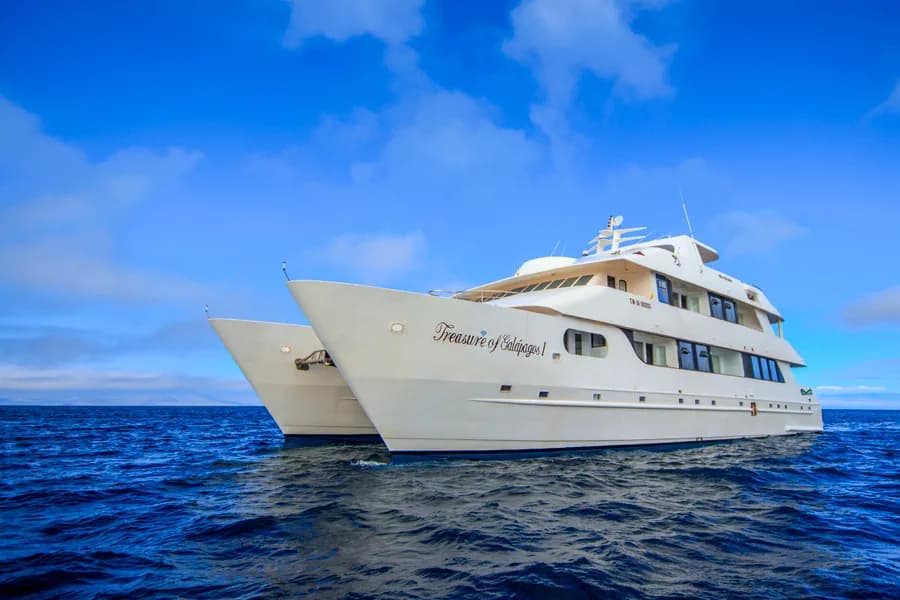
November 20, 2026 · Treasure, 5-Day Northern & Western: Punta Pitt's Triple Boobies
Possible: Cerro Brujo, day 4. 1 spot
from US$4,150 per guest
Check availability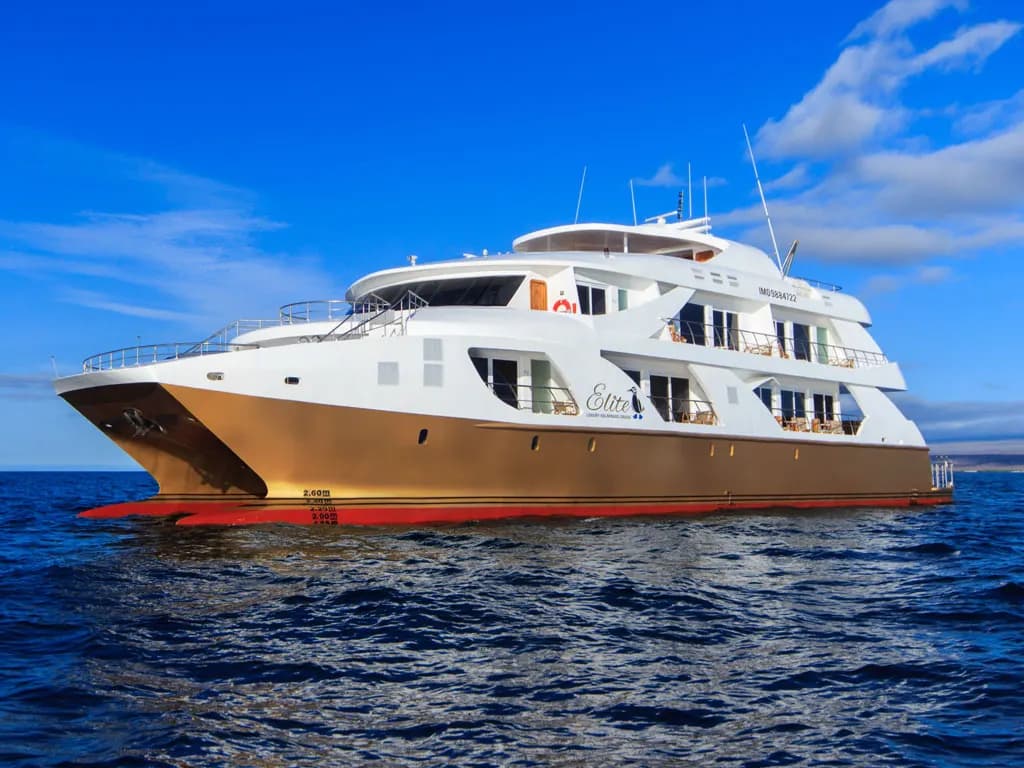
November 21, 2026 · Elite, 8-Day Western Islands: El Junco's Bathing Frigatebirds
Possible: Cerro Brujo, day 7. 2 spots
from US$7,992 per guest
Check availability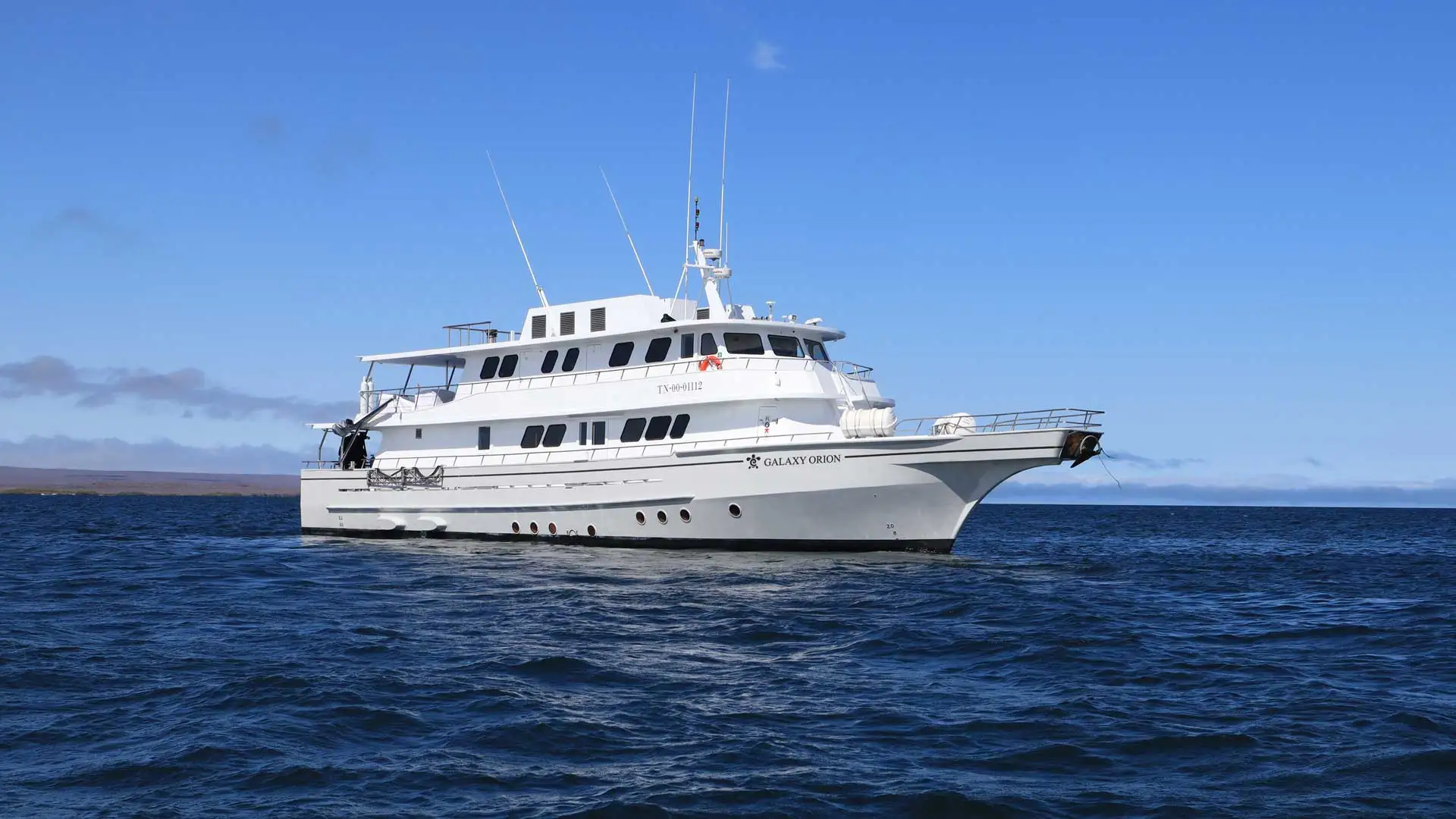
November 21, 2026 · Galaxy Orion, 5-Day Western & Southern: San Cristobal's Highlands
Possible: Cerro Brujo, day 4. 2 spots
from US$2,255 per guest
Check availability
1,741 departures
On every departure
Included
All meals on board · Two certified national park naturalist guides · All excursions and landings listed in the itinerary · Snorkelling gear and wetsuit · Kayaks and stand-up paddleboards on board · Coffee, tea and water at any time
How you see them
Landing at 2 sites · Beach at 1 site