Brown Noddy in Galápagos: Facts and Where to See It
The brown noddy (Anous stolidus) is a sleek tern of tropical seas, chocolate brown with a bold white forehead fading to a grey nape. It flies low over the water and snatches small fish and squid from the surface, and at sea it often perches on floating debris or the backs of sea turtles. Naturalist guides' sighting records place it at 1 site in Galápagos.
Good to know
| Scientific name | Anous stolidus |
|---|---|
| Group | Seabirds |
| Endemic to Galápagos | No; tropical and subtropical oceans worldwide |
| Look | Chocolate brown, white forehead, grey nape |
| Diet | Small fish and squid |
| Young | One chick, fledges at 6 to 7 weeks |
| Population | 800,000 to 1.4 million mature birds |
| IUCN status | Least Concern |
| In Galápagos | At 1 site (guide sighting records) |
- Cornell Lab of Ornithology, All About Birds, Brown Noddy overview and life history (all rows)
- our guide sighting data
A tern that hitches rides
Brown noddies are strong, fast fliers that course low over the ocean and swoop to pluck prey from the surface. They also hover and patter their feet on the water, or catch food while sitting on it. They often feed in mixed flocks over schools of predatory fish that drive small fish to the surface.
- Living perches. At sea they rest on flotsam and on the backs of sea turtles.
- Colonies. They breed on small islands in colonies of a few to thousands of pairs, nesting on cliffs, on the ground or in trees and shrubs.
- Faithful pairs. Pairs are monogamous and often use the same nest site year after year; both parents raise the single chick and feed it for up to 100 days after it first flies.
- Cornell Lab of Ornithology, All About Birds (flight, feeding, flocks, perches, colonies, pairs, chick care)
Where the brown noddy lives
Brown noddies breed on small islands in the tropical and subtropical Indian, Pacific and Atlantic Oceans, and stay around those islands and nearby coasts much of the year. After nesting, some disperse far out to sea, where almost nothing is known about them. In Galápagos they are seen along the coasts, low over the water.
- Cornell Lab of Ornithology, All About Birds (range, dispersal)
- our guide sighting data
Where to see brown noddies in Galápagos
Guide sighting records list brown noddies at 1 site: Punta Vicente Roca on Isabela, seen from the panga along the cliffs or while snorkelling. The guides rate it Rare, so a noddy is a bonus on a visit planned for other wildlife.
- Our guide sighting data
Rare
- Punta Vicente Roca, Isabela.Panga ride, snorkelling. Seen all year.Rare
How you see them: panga ride at 1 site, snorkelling at 1 site.
When to see them
The guide records list brown noddies in every month. In the next twelve months, 255 departures stop at the site where they are recorded.
- Our guide sighting and departure data
- 14
- departures in November 2026
Show the November 2026 departures - 20
- departures in December 2026
Show the December 2026 departures - 15
- departures in January 2027
Show the January 2027 departures - 15
- departures in February 2027
Show the February 2027 departures - 191
- departures in the other 8 months
Choose a month in the list - 255
- departures in the next twelve months stop where they are seen
Show all departures
Is the brown noddy endangered?
No. The IUCN lists it as Least Concern, with an estimated 800,000 to 1.4 million mature birds worldwide. In Galápagos, park rules keep visitors at least 2 metres (6 feet) from wildlife, also from birds resting on rocks beside the panga.
- Cornell Lab of Ornithology, All About Birds (IUCN status, population)
- Galápagos National Park Rules
Mistakes to avoid
- Overlooking it as a dark gull. Look for the white forehead.
- Missing the sea surface. Noddies feed low over the water.
- Counting on a sighting. The one site in the guide records is rated Rare.
- Cornell Lab of Ornithology
- our guide sighting data
Frequently asked questions
How does the brown noddy catch its food?
It flies low and fast over the sea and swoops to pluck small fish and squid from the surface. It also hovers while pattering its feet on the water, and often joins mixed flocks over schools of predatory fish that drive small fish upwards.
- Cornell Lab of Ornithology, All About Birds
What is a Brown Noddy?
A tropical tern, chocolate brown with a white forehead, that feeds on small fish and squid low over the ocean and breeds in colonies on small islands.
- Cornell Lab of Ornithology, All About Birds
Where do brown noddies nest?
On small tropical and subtropical islands, on cliffs, on the ground or in trees and shrubs, in colonies of a few to thousands of pairs.
- Cornell Lab of Ornithology, All About Birds
Where can I see a brown noddy in Galápagos?
The guide records list Punta Vicente Roca on Isabela, rated Rare.
- Our guide sighting data
Where do brown noddies rest at sea?
On flotsam and even on the backs of sea turtles.
- Cornell Lab of Ornithology, All About Birds
Do brown noddies feed with other birds?
Yes, they often feed in mixed flocks over schools of predatory fish that drive small fish to the surface.
- Cornell Lab of Ornithology, All About Birds
Availability and prices updated
Departures that take you to them
Every Galápagos cruise in this list stops at least once at a site where our guides see the Brown Noddy. The best chances come first, and each departure shows the site and the day. Found one that suits you? Ask us about it. There is no booking and no payment: we check the departure and reply.
Next departures with a good chance
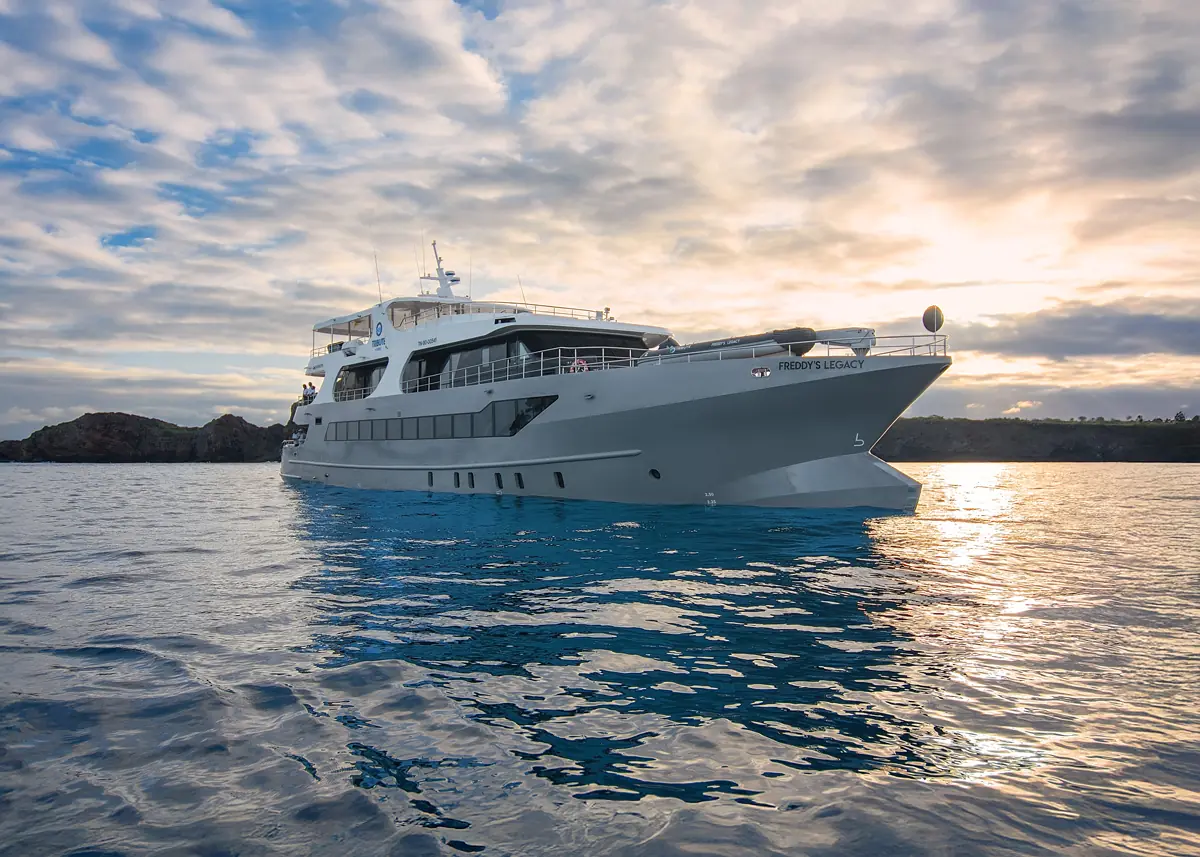
November 12, 2026 · Tribute, 7-Day Western Islands: Fernandina's Marine Iguanas
Rare: Punta Vicente Roca, day 4. 5 spots
from US$7,916 per guest
Check availability
November 14, 2026 · Grand Ocean Spray, 6-Day Western Islands: Fernandina's Underwater Iguanas
Rare: Punta Vicente Roca, day 2. 7 spots
from US$7,191 per guest
Check availability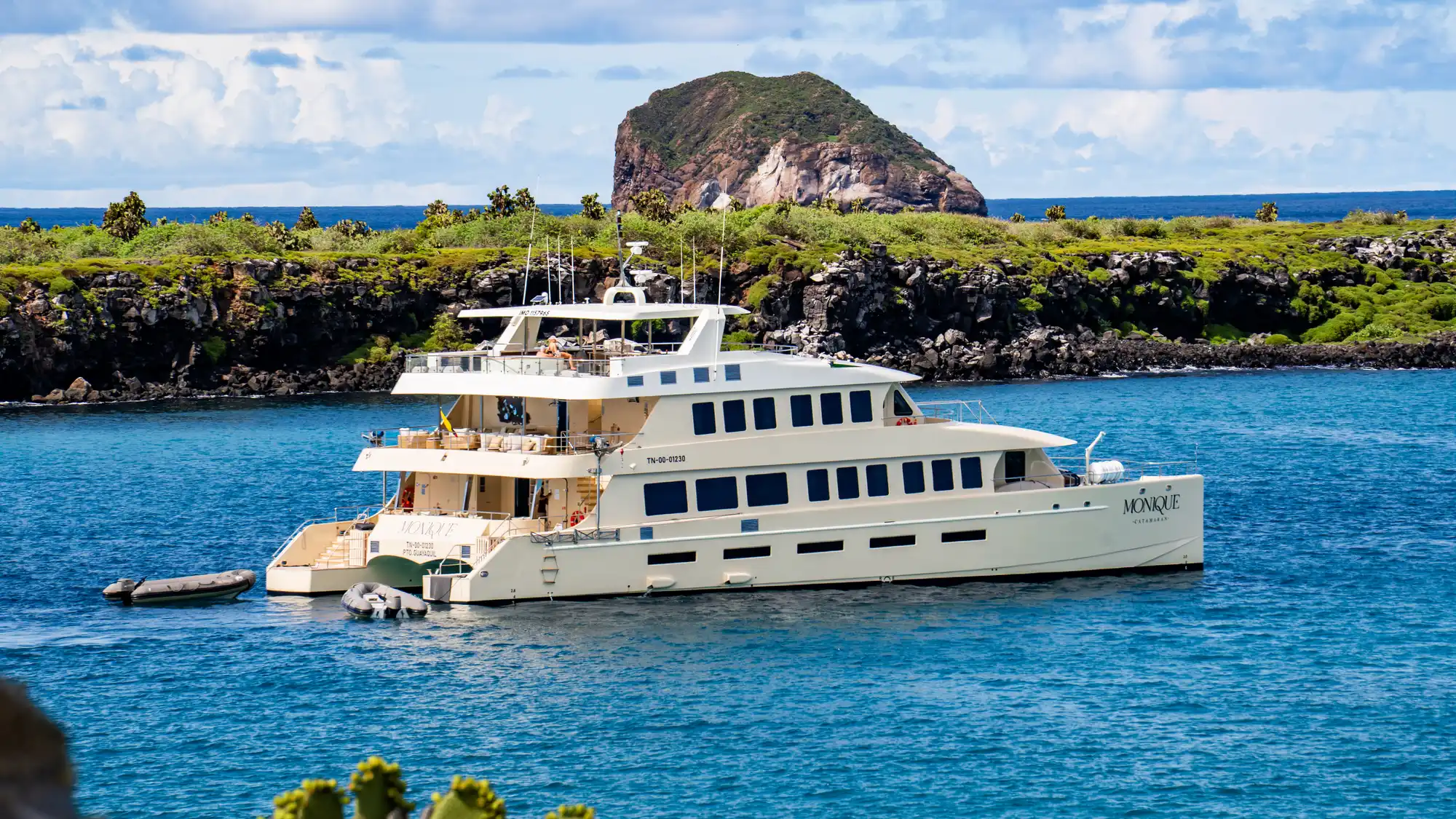
November 19, 2026 · Monique, 8-Day Western Islands: Elizabeth Bay's Penguins
Rare: Punta Vicente Roca, day 3. 8 spots
from US$6,632 per guest
Check availability
980 departures
On every departure
Included
All meals on board · Two certified national park naturalist guides · All excursions and landings listed in the itinerary · Snorkelling gear and wetsuit · Kayaks and stand-up paddleboards on board · Coffee, tea and water at any time
How you see them
Panga ride at 1 site · Snorkelling at 1 site