Diamond Stingray in Galápagos: Facts and Where to See It
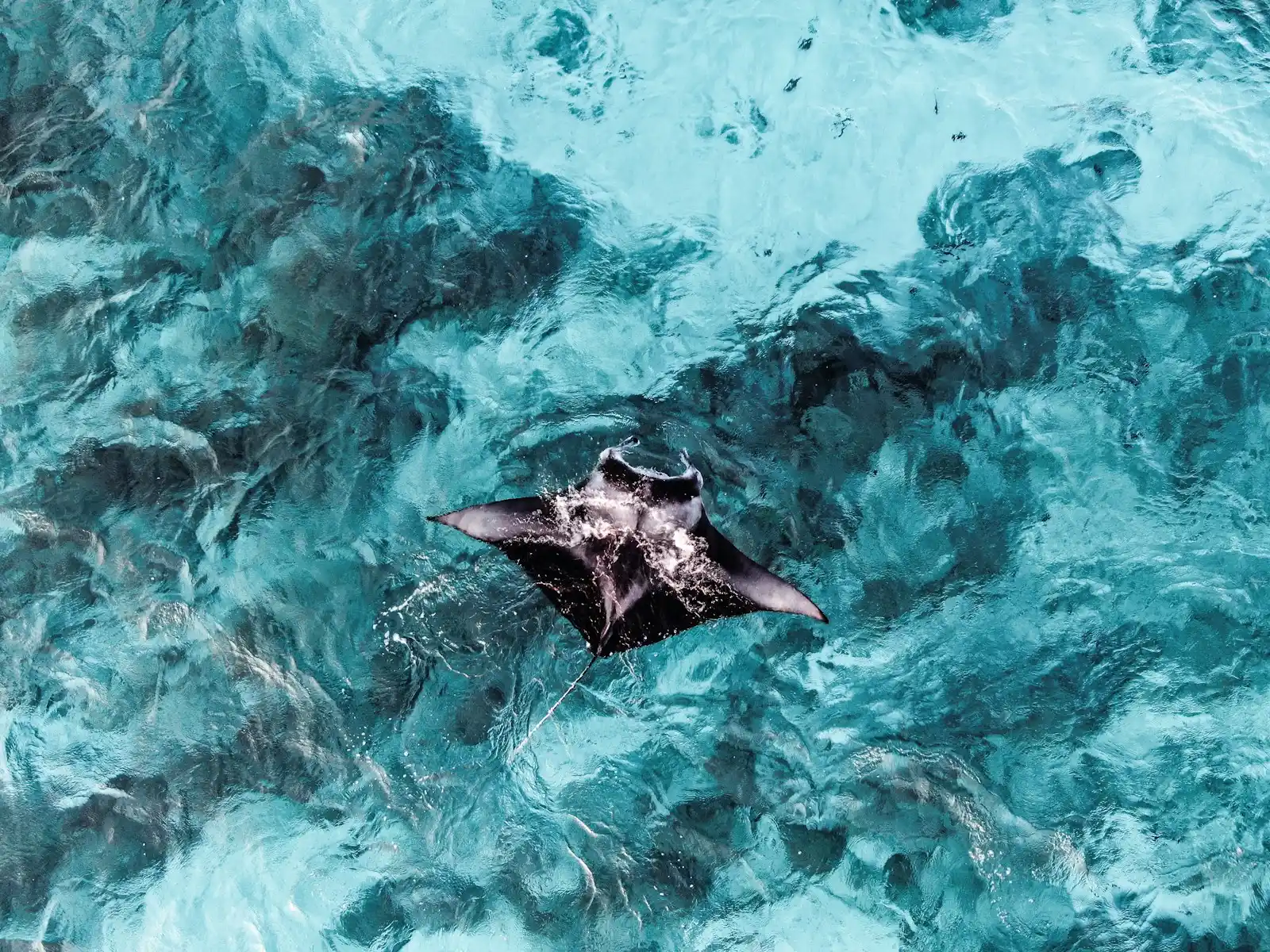
The diamond stingray (Hypanus dipterurus) is a bottom-living ray of the eastern Pacific with an angular, diamond-shaped disc up to about 1 metre across and a long whip-like tail with a venomous spine. It spends much of the day buried in sand with only its eyes showing. It lives around the Galápagos Islands, and naturalist guides' sighting records place it at 1 snorkelling site.
Good to know
| Scientific name | Hypanus dipterurus |
|---|---|
| Group | Rays, stingrays |
| Endemic to Galápagos | No; southern California to northern Chile, Galápagos and Hawaii |
| Size | Disc up to 1 m, possibly 1.2 m; females larger |
| Diet | Crustaceans, molluscs, other invertebrates, small fish |
| Active | Mostly at night |
| Danger to people | Not aggressive, but the tail spine is venomous |
| IUCN status | Vulnerable |
| In Galápagos | At 1 site (guide sighting records) |
- Wikipedia, Diamond stingray (all rows)
A ray that hides in the sand
The diamond stingray is most active at night. By day it lies buried in sand with only its eyes sticking out. At night it hunts burrowing animals, sucking or digging them out of the bottom, and crushes hard shells with powerful jaws and flat, molar-like teeth.
- Shape. The disc is rhomboid, slightly wider than long, with angular corners; plain olive, brown or grey above and off-white below.
- Tail. Up to one and a half times as long as the disc, with a long, slender, serrated spine on top.
- Skin. Young rays are smooth; adults develop rows of low bumps along the back and on the "shoulders".
- Wikipedia, Diamond stingray (night activity, burying, feeding, teeth, shape, colour, tail, spine, tubercles)
Where the diamond stingray lives
Diamond stingrays live in coastal waters of the eastern Pacific from southern California to northern Chile, and around the Galápagos and Hawaiian Islands. They usually stay on sandy or muddy flats near rocky reefs and kelp forests, down to about 30 metres. The young develop inside the mother, nourished by a "uterine milk" once their yolk runs out, and are born live.
- Wikipedia, Diamond stingray (range, habitat, depth, reproduction)
Where to see diamond stingrays
Guide sighting records list one site: Devil's Crown, a snorkelling site off Floreana, rated Rare. Look at sandy patches for the outline of a buried ray and a pair of eyes.
- Our guide sighting data
- Wikipedia (burying)
Rare
- Devil's Crown, Floreana.Snorkelling. Seen all year.Rare
How you see them: snorkelling at 1 site.
When to see them
The guide records list the diamond stingray at Devil's Crown in every month. In the next twelve months, 42 departures stop at the site.
- Our guide sighting and departure data
- 2
- departures in November 2026
Show the November 2026 departures - 2
- departures in December 2026
Show the December 2026 departures - 2
- departures in January 2027
Show the January 2027 departures - 1
- departure in February 2027
Show the February 2027 departures - 35
- departures in the other 8 months
Choose a month in the list - 42
- departures in the next twelve months stop where they are seen
Show all departures
Is the diamond stingray endangered?
The IUCN assesses it as Vulnerable. It is the slowest-growing stingray known and has few young, so it cannot withstand heavy fishing. It is caught for food by small-scale fishers in Latin America, especially in Mexico, where it is one of the most important rays commercially. In Galápagos, park rules ask visitors to keep at least 2 metres (6 feet) from wildlife.
- Wikipedia, Diamond stingray (IUCN, growth, fishing)
- Galápagos National Park Rules
Mistakes to avoid
- Standing on the sandy bottom. A buried ray is hard to see, and its spine is venomous.
- Diving down to it. Keep your distance, as park rules ask.
- Counting on a sighting. The one site in the guide records is rated Rare.
- Wikipedia, Diamond stingray
- Galápagos National Park Rules
- our guide sighting data
Frequently asked questions
Is the diamond stingray dangerous?
It is harmless if left alone, but its long tail spine is venomous and potentially dangerous. At least one death off southern California has been caused by it.
- Wikipedia, Diamond stingray
Why is it called a diamond stingray?
Because of its angular, diamond-shaped disc.
- Wikipedia, Diamond stingray
What does the diamond stingray eat?
Crustaceans, molluscs and other invertebrates, plus small fish. It mainly targets animals buried in the bottom, which it sucks or digs out.
- Wikipedia, Diamond stingray
How big do diamond stingrays get?
Their disc reaches about 1 metre across, possibly 1.2 metres, and the tail can be one and a half times as long as the disc. Females grow larger than males.
- Wikipedia, Diamond stingray
Where do diamond stingrays live?
In the eastern Pacific from southern California to northern Chile, and around Galápagos and Hawaii, on sandy or muddy flats near reefs down to about 30 metres.
- Wikipedia, Diamond stingray
Availability and prices updated
Departures that take you to them
Every Galápagos cruise in this list stops at least once at a site where our guides see the Diamond Stingray. The best chances come first, and each departure shows the site and the day. Found one that suits you? Ask us about it. There is no booking and no payment: we check the departure and reply.
Next departures with a good chance
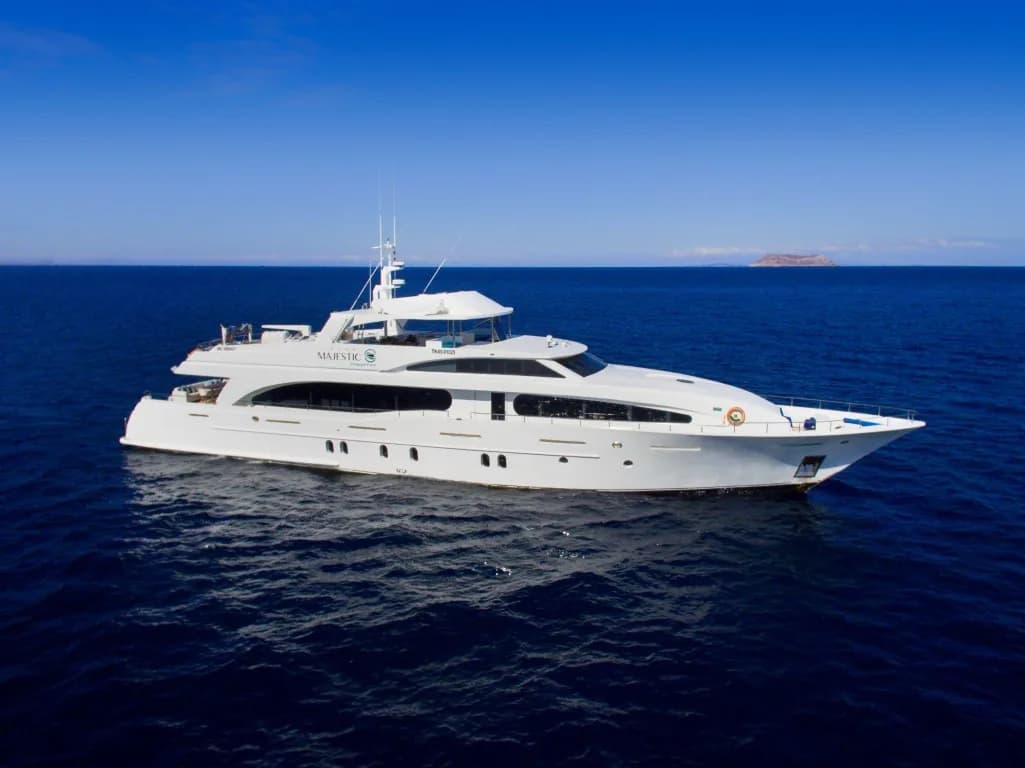
November 30, 2026 · Grand Majestic, 4-Day Southern Islands: El Junco's Freshwater Crater
Rare: Devil's Crown, day 3. 4 spots
from US$3,145 per guest
Check availabilityNovember 30, 2026 · Grand Majestic, 8-Day Southern & Northern: Espanola's Albatross Cliffs
Rare: Devil's Crown, day 3. 2 spots
from US$7,045 per guest
Check availability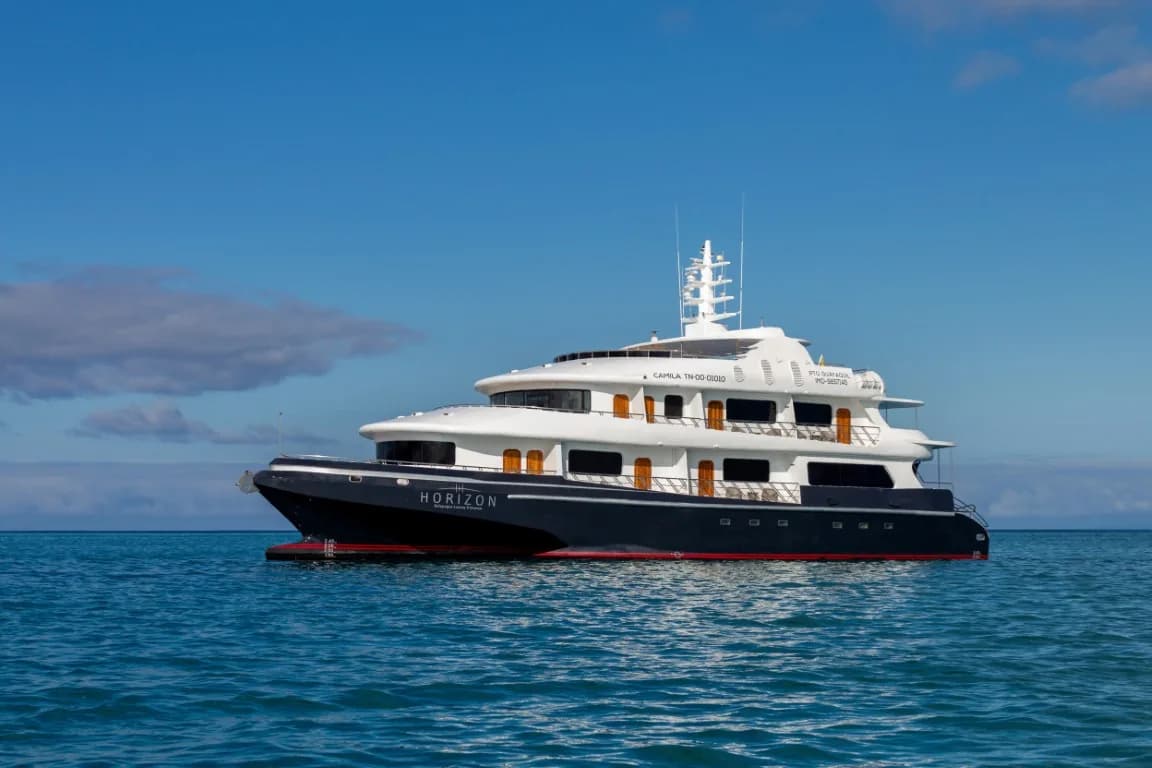
December 12, 2026 · Galapagos Horizon, 8-Day Western & Southern: Devil's Crown's Sunken Cone
Rare: Devil's Crown, day 6. 2 spots
from US$9,445 per guest
Check availability
120 departures
On every departure
Included
All meals on board · Two certified national park naturalist guides · All excursions and landings listed in the itinerary · Snorkelling gear and wetsuit · Kayaks and stand-up paddleboards on board · Coffee, tea and water at any time
How you see them
Snorkelling at 1 site