Flightless Cormorant: Facts and Where to See It
The flightless cormorant (Phalacrocorax harrisi) is the only one of 29 cormorant species that cannot fly, and the heaviest. Its wings are a third of the size it would need to fly, and it lives only on the lava shores of Isabela and Fernandina, about 1,000 breeding pairs. Naturalist guides' sighting records place it at 6 visitor sites on 2 islands, in every month of the year.
Good to know
| Scientific name | Phalacrocorax harrisi (also Nannopterum harrisi) |
|---|---|
| Group | Seabirds |
| Endemic to Galápagos | Yes, Isabela and Fernandina |
| Size | About 90 cm, up to 1 m |
| Weight | About 3 kg, up to 5 kg |
| Lifespan | Up to 50 years |
| Population | About 1,000 breeding pairs |
| Nesting | May to October |
| IUCN status | Vulnerable |
| In Galápagos | All year, at 6 sites (guide sighting records) |
- Galapagos Conservation Trust, flightless cormorant species page (all rows)
- our species data (alternative scientific name)
Why it stopped flying
Adults are black above and dark brown below, with bright turquoise eyes and four webbed toes. The wings are stunted, a third of what flight would need. The Galapagos Conservation Trust explains the loss through natural selection: on islands with very few land predators, there was little need to fly away, and birds that swam better passed on more of their genes.
- Heaviest of its family. No other cormorant weighs as much, up to 5 kg.
- Webbed feet. Four webbed toes, like every cormorant.
- Females smaller. Males are larger than females.
- Galapagos Conservation Trust (plumage, wings, natural selection, weight, toes, sexes)
Where the flightless cormorant lives
Unable to fly, the cormorant is confined to the lava shores and beaches of the northwest coast of Isabela and the east coast of Fernandina, a very small range for a whole species. Nesting runs from May to October.
Fishing, El Niño and oil all hit it hard for the same reason: there is nowhere else for it to go.
- Galapagos Conservation Trust (range, nesting season, vulnerability of a small concentrated population)
Where to see flightless cormorants
Guide sighting records list flightless cormorants at 6 sites, all on the western islands. 2 are rated Likely: Punta Espinosa on Fernandina, often at the nest, and Urbina Bay on Isabela. Tagus Cove, Punta Moreno, Elizabeth Bay and Punta Vicente Roca on Isabela are rated Possible, mostly seen from a panga along the shore.
- Our guide sighting data
Likely
- Punta Espinosa, Fernandina.Landing. Seen all year.Likely
- Urbina Bay, Isabela.Landing. Seen all year.Likely
Possible
- Elizabeth Bay, Isabela.Panga ride. Seen all year.Possible
- Punta Moreno, Isabela.Landing, panga ride. Seen all year.Possible
- Punta Vicente Roca, Isabela.Panga ride, snorkelling. Seen all year.Possible
- Tagus Cove, Isabela.Panga ride, hiking. Seen all year.Possible
How you see them: panga ride at 4 sites, landing at 3 sites, snorkelling at 1 site, hiking at 1 site.
When to see them
Flightless cormorants can be seen all year round, and nesting takes place from May to October. In the next twelve months, 328 departures stop at a site where they are seen.
- Galapagos Conservation Trust
- our guide sighting and departure data
- 15
- departures in November 2026
Show the November 2026 departures - 24
- departures in December 2026
Show the December 2026 departures - 19
- departures in January 2027
Show the January 2027 departures - 21
- departures in February 2027
Show the February 2027 departures - 249
- departures in the other 8 months
Choose a month in the list - 328
- departures in the next twelve months stop where they are seen
Show all departures
Is the flightless cormorant endangered?
It is listed as Vulnerable. With a small population packed into one stretch of coast, it is exposed to any change: the severe El Niño of 1983 killed half of all flightless cormorants. Fishing reduces its food and tangles birds in gear, and nest flooding, volcanic eruptions, illegal fishing, oil spills and plastic are further risks. On land, snakes, owls, hawks, cats and rats can take eggs or young; at sea, sharks.
The population has stabilised and grown since invasive species were controlled around nesting sites. Park rules keep visitors on the trail and at least 2 metres (6 feet) from nests.
- Galapagos Conservation Trust (status, El Niño 1983, threats, predators, recovery)
- Galápagos National Park Rules
Mistakes to avoid
- Booking a route without the west. They live only on Isabela and Fernandina.
- Skipping the panga rides. Several sites are seen from the water.
- Crowding a nest. At Punta Espinosa the guides often see them at the nest; keep the 2-metre distance.
- Galapagos Conservation Trust
- our guide sighting data
Frequently asked questions
Why can't flightless cormorants fly?
Its wings are only a third of the size needed for flight. With very few land predators on the islands, birds that swam better did better, and over generations the wings shrank.
How many flightless cormorants are left?
About 1,000 breeding pairs, on Isabela and Fernandina. The population has stabilised and increased since invasive species were controlled around nesting sites.
Where can I see flightless cormorants?
Only on the western islands. The guide records rate Punta Espinosa on Fernandina and Urbina Bay on Isabela as Likely.
- Our guide sighting data
Is the flightless cormorant endangered?
It is listed as Vulnerable. A small population on one stretch of coast makes it sensitive to El Niño, which killed half the birds in 1983, and to fishing, oil and plastic.
Where do flightless cormorants live?
Only on the lava shores and beaches of the northwest coast of Isabela and the east coast of Fernandina, a very small range for a whole species.
Availability and prices updated
Departures that take you to them
Every Galápagos cruise in this list stops at least once at a site where our guides see the Flightless Cormorant. The best chances come first, and each departure shows the site and the day. Found one that suits you? Ask us about it. There is no booking and no payment: we check the departure and reply.
Next departures with a good chance
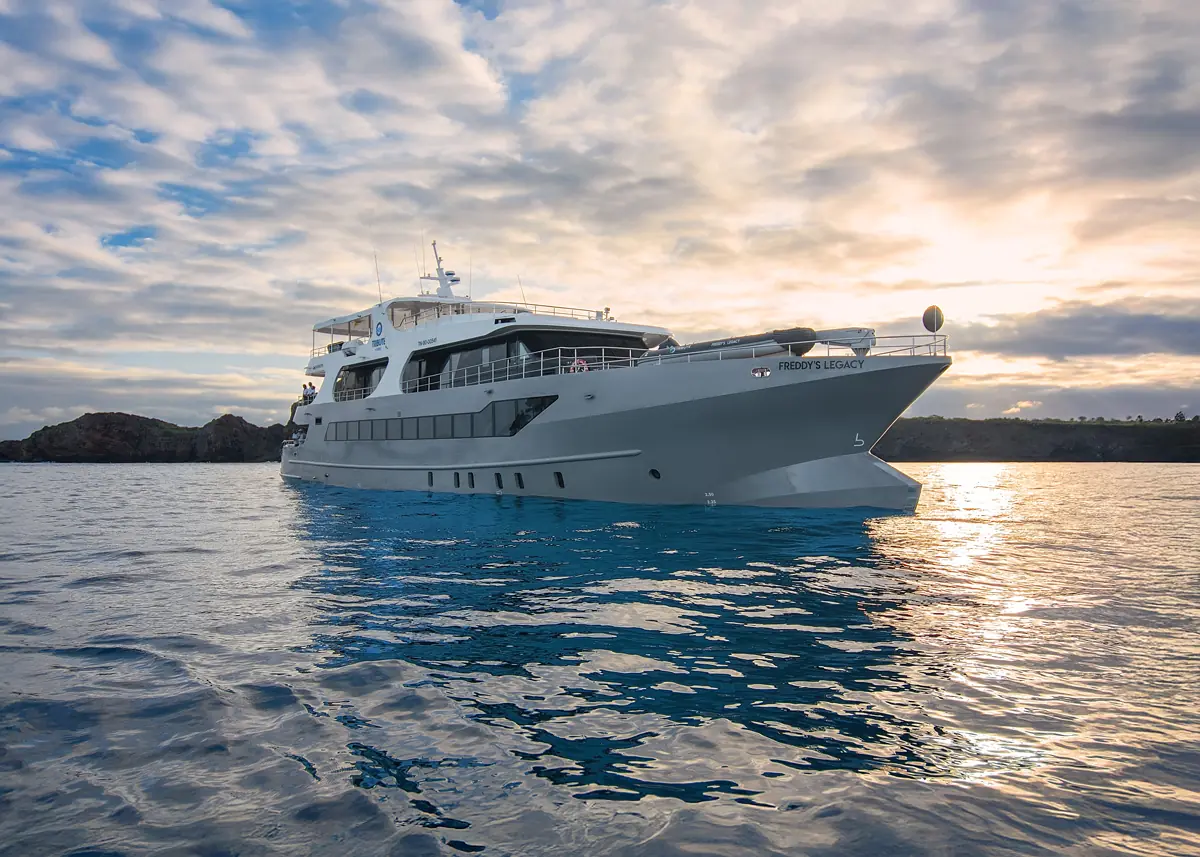
November 12, 2026 · Tribute, 7-Day Western Islands: Fernandina's Marine Iguanas
Possible: Punta Moreno, day 3. 5 spots
from US$7,916 per guest
Check availability
November 14, 2026 · Grand Ocean Spray, 6-Day Western Islands: Fernandina's Underwater Iguanas
Possible: Punta Vicente Roca, day 2. 7 spots
from US$7,191 per guest
Check availability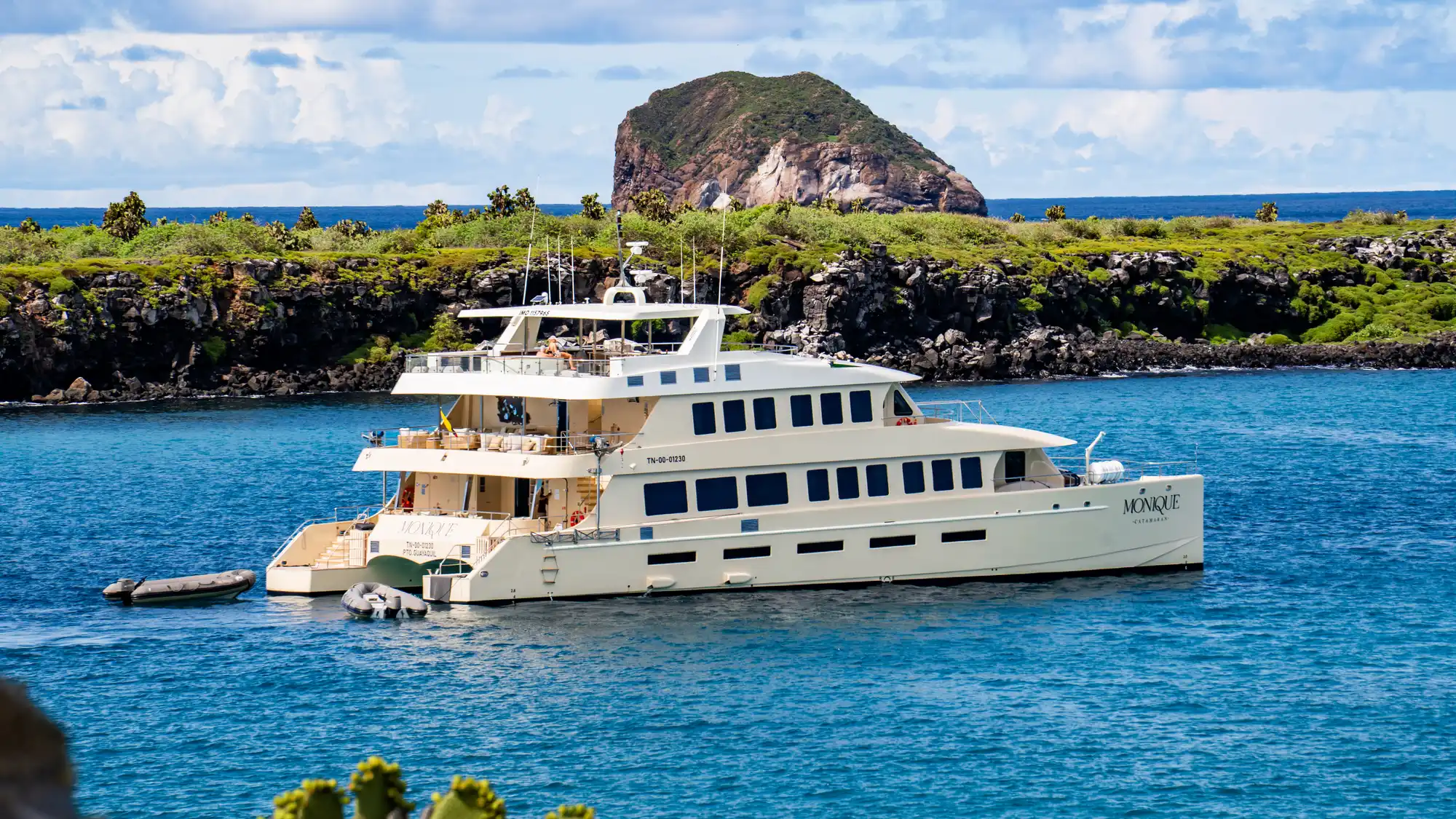
November 19, 2026 · Monique, 8-Day Western Islands: Elizabeth Bay's Penguins
Possible: Punta Vicente Roca, day 3. 8 spots
from US$6,632 per guest
Check availability
1,161 departures
On every departure
Included
All meals on board · Two certified national park naturalist guides · All excursions and landings listed in the itinerary · Snorkelling gear and wetsuit · Kayaks and stand-up paddleboards on board · Coffee, tea and water at any time
How you see them
Panga ride at 4 sites · Landing at 3 sites · Snorkelling at 1 site · Hiking at 1 site
Best chance
Punta Espinosa · Urbina Bay