Galápagos Bullhead Shark: Facts and Where to See It
The Galápagos bullhead shark (Heterodontus quoyi) is a small, bottom-dwelling shark up to about 1.1 metres long that rests motionless on rocky reefs by day and hunts shellfish and crabs at night. It belongs to a lineage that dates back to the early Jurassic, and it is the only shark in Galápagos that lays eggs. Naturalist guides' sighting records list it at 1 site, rated Rare.
Good to know
| Scientific name | Heterodontus quoyi |
|---|---|
| Group | Sharks and rays |
| Range | Galápagos and the Peruvian coast (possibly a separate species there) |
| Size | Up to about 1.1 m |
| Diet | Shellfish, crabs, small invertebrates, at night |
| Reproduction | Lays corkscrew-shaped eggs |
| IUCN status | Least Concern (before: Data Deficient) |
| In Galápagos | Shallow water across the archipelago; most around western Isabela and Fernandina |
- Galapagos Conservation Trust, Galápagos bullhead shark species page (all rows)
A shark that crawls and lays eggs
Unlike larger sharks, bullheads are poor swimmers. They spend most of the day resting on flat, rocky, boulder-strewn reefs and use their large pectoral fins to crawl along the bottom. At night they forage for shellfish, crabs and small invertebrates and spit out the hard shells.
- Corkscrew eggs. They are the only egg-laying sharks in Galápagos. The eggs are shaped like corkscrews and wedged into crevices, out of reach of predators.
- An old family. The lineage has existed since the early Jurassic.
- Possibly endemic. If the Peruvian bullheads prove to be a separate species, this would be the only shark found only in Galápagos.
- Galapagos Conservation Trust (swimming, fins, diet, shells, eggs, Jurassic, endemic question)
Forgotten by science, rediscovered by divers
Although described about 175 years ago, the species was almost forgotten by science and was long assessed as Data Deficient. The Galapagos Bullhead Shark Project, supported by the Galapagos Conservation Trust, has since used research cruises, exploratory dives and citizen science to learn how many there are and where they live. In 2025 the team performed ultrasounds on more than 120 sharks to study their breeding cycle, and its data fed into the latest IUCN assessment and the identification of important shark and ray areas in Galápagos.
- Galapagos Conservation Trust (history, Data Deficient, project, ultrasounds 2025, IUCN and ISRA)
Where to see Galápagos bullhead sharks
Guide sighting records list the bullhead at 1 site: Buccaneer Cove on Santiago, visited by panga with a snorkel, rated Rare. The Galapagos Conservation Trust names the waters west of Isabela and Fernandina as a hotspot. Because it rests motionless on the bottom by day, it is easy to swim over without noticing.
- Our guide sighting data
- Galapagos Conservation Trust
Rare
- Buccaneer Cove, Santiago.Panga ride, snorkelling. Seen all year.Rare
How you see them: panga ride at 1 site, snorkelling at 1 site.
When to see them
Bullheads live in Galápagos all year, resting by day and feeding at night. In the next twelve months, 47 departures stop at the site where they are recorded.
- Galapagos Conservation Trust
- our guide sighting and departure data
- 1
- departure in November 2026
Show the November 2026 departures - 3
- departures in December 2026
Show the December 2026 departures - 3
- departures in January 2027
Show the January 2027 departures - 2
- departures in February 2027
Show the February 2027 departures - 38
- departures in the other 8 months
Choose a month in the list - 47
- departures in the next twelve months stop where they are seen
Show all departures
Is the Galápagos bullhead shark endangered?
It is listed as Least Concern. Fishing boats do not target it, but it can end up as bycatch. Deep water limits its movements, so the populations around isolated islands such as Española and Fernandina are smaller and less genetically diverse, and more exposed to climate change or pollution.
- Galapagos Conservation Trust (status, bycatch, isolation, genetic diversity)
Mistakes to avoid
- Looking in open water. Bullheads lie still on the bottom among boulders.
- Expecting it on most snorkels. The guide records rate the one site Rare.
- Disturbing crevices. They hide their eggs there; keep hands off the reef.
- Galapagos Conservation Trust
- our guide sighting data
Frequently asked questions
Do bullhead sharks lay eggs?
Yes. The Galápagos bullhead is the only egg-laying shark in Galápagos; its corkscrew-shaped eggs are wedged into crevices.
Where can you see a Galápagos bullhead shark?
In shallow, rocky water, most of all west of Isabela and Fernandina. The guide records list Buccaneer Cove on Santiago, rated Rare.
- Galapagos Conservation Trust
- our guide sighting data
How big do bullhead sharks get?
It grows up to about 1.1 metres, a small shark that rests on rocky reefs by day.
What does the Galápagos bullhead shark eat?
Shellfish, crabs and small invertebrates, which it hunts at night. It spits out the hard shells.
How old is the bullhead shark family?
Very old: the bullhead shark lineage has existed since the early Jurassic.
Availability and prices updated
Departures that take you to them
Every Galápagos cruise in this list stops at least once at a site where our guides see the Galápagos Bullhead Shark. The best chances come first, and each departure shows the site and the day. Found one that suits you? Ask us about it. There is no booking and no payment: we check the departure and reply.
Next departures with a good chance
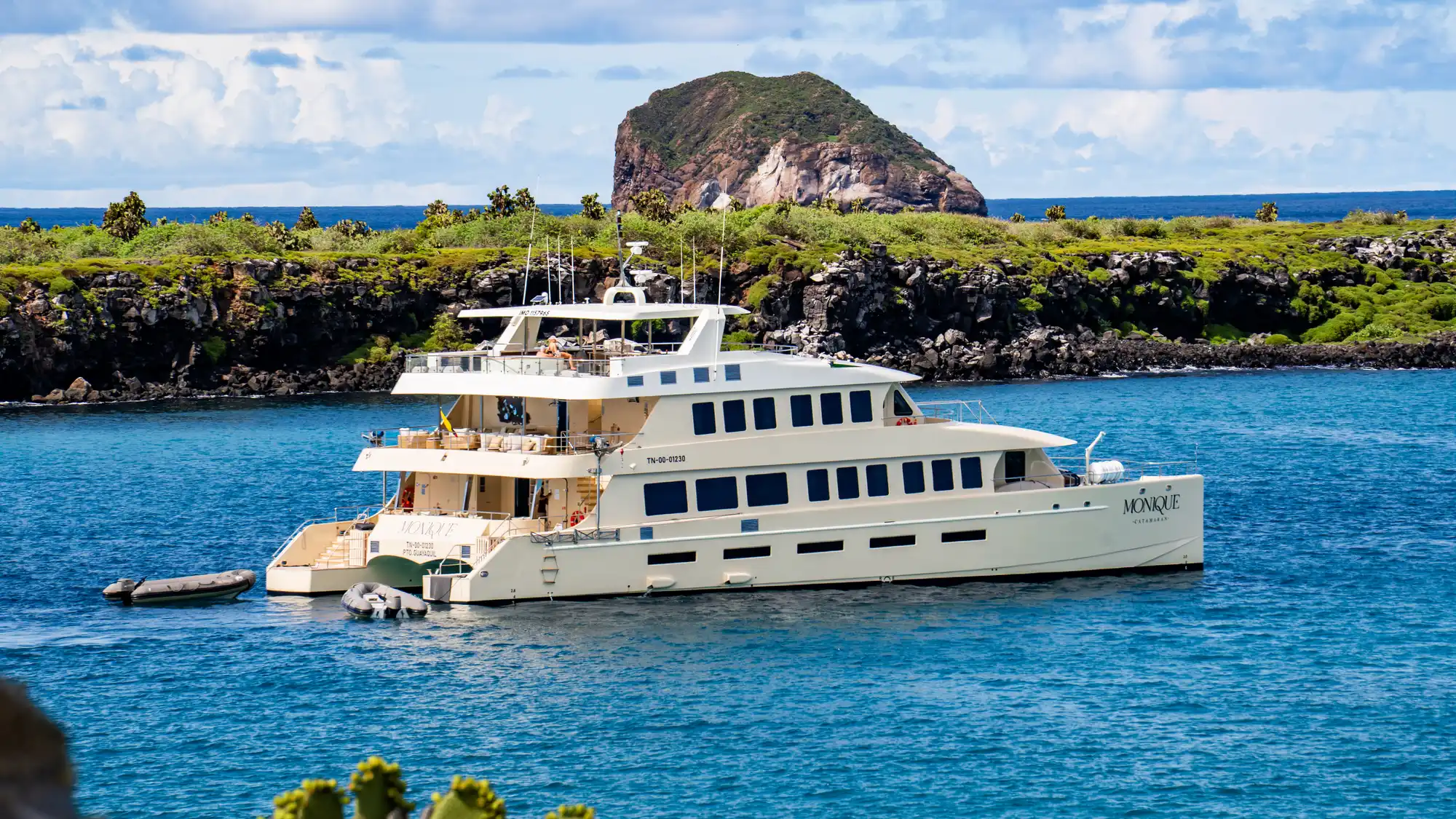
November 19, 2026 · Monique, 8-Day Western Islands: Elizabeth Bay's Penguins
Rare: Buccaneer Cove, day 6. 8 spots
from US$6,632 per guest
Check availabilityDecember 3, 2026 · Monique, 8-Day Western Islands: Elizabeth Bay's Penguins
Rare: Buccaneer Cove, day 6. 12 spots
from US$6,632 per guest
Check availability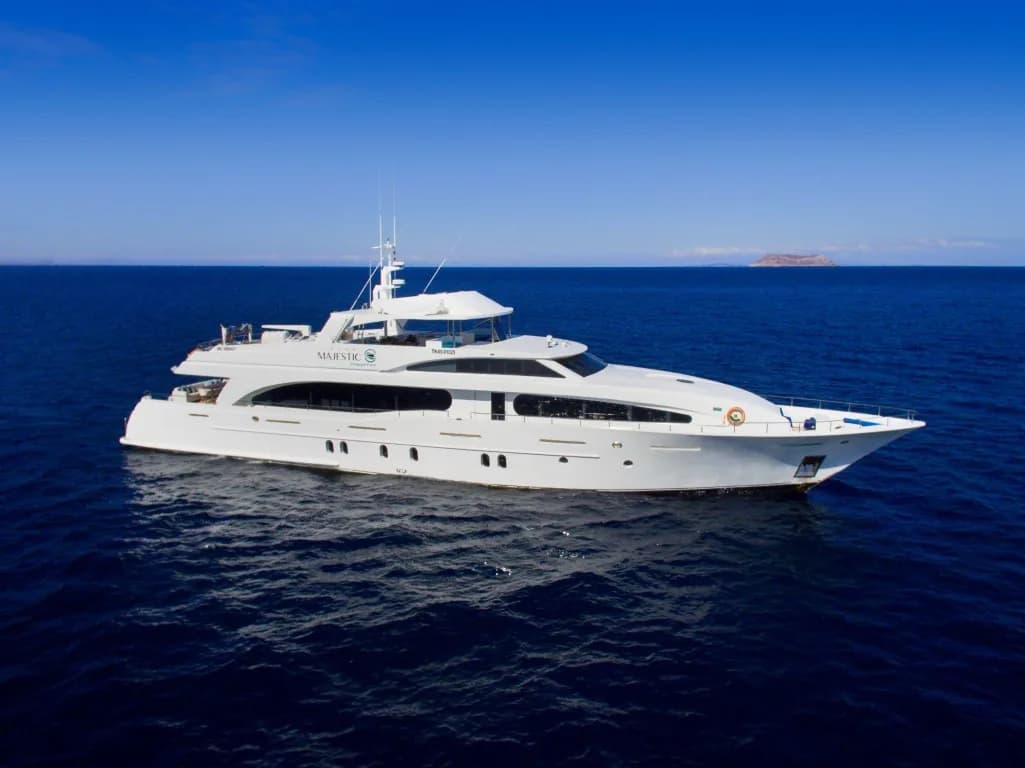
December 7, 2026 · Grand Majestic, 8-Day Western & Northern: Buccaneer Cove's Fur Seals
Rare: Buccaneer Cove, day 6. 2 spots
from US$7,045 per guest
Check availability
144 departures
On every departure
Included
All meals on board · Two certified national park naturalist guides · All excursions and landings listed in the itinerary · Snorkelling gear and wetsuit · Kayaks and stand-up paddleboards on board · Coffee, tea and water at any time
How you see them
Panga ride at 1 site · Snorkelling at 1 site