Galápagos Dove: Facts and Where to See It
The Galápagos dove (Zenaida galapagoensis) is a small, boldly marked dove found only in the islands, 18 to 23 cm long, with reddish-brown upperparts, a pink breast and deep blue skin around the eye. It spends most of its time on the ground in the dry lowlands, feeding on seeds and cactus. Naturalist guides' sighting records place it at 4 visitor sites on 4 islands.
Good to know
| Scientific name | Zenaida galapagoensis |
|---|---|
| Group | Land birds |
| Endemic to Galápagos | Yes, two subspecies |
| Size | 18 to 23 cm |
| Weight | 67 to 92 g |
| Diet | Seeds; caterpillars and cactus flowers in the wet season |
| Eggs | Usually two, in most months |
| Status | Near Threatened (BirdLife), decreasing |
| In Galápagos | All year, at 4 sites (guide sighting records) |
- BirdLife International DataZone (subspecies, diet, eggs, status, trend)
- Wikipedia, Galápagos dove (size, weight)
A dove of the ground
The Galápagos dove has dark reddish-brown upperparts, a pinkish neck and breast, a buff belly and brown wings streaked with black and white. The skin around its brown eye is deep blue with a black border, and an iridescent patch shines on the side of the neck. Its long, slightly down-curved black bill suits a life on the ground.
- Reluctant flier. It flies only as a last resort and spends most of its time on the ground searching for food.
- Seed spreader. It crushes most seeds before eating them, but some pass through whole and grow, which makes the dove a plant disperser.
- Acting injured. When its nest is threatened, it pretends to be hurt to lure the predator away.
- Wikipedia, Galápagos dove (plumage, eye, bill, flight, seeds, distraction display)
Where the Galápagos dove lives
Galápagos doves live in dry, rocky lowlands with scattered trees, bushes and Opuntia cactus. One subspecies lives on Culpepper (Darwin) and Wenman (Wolf); the other on all the other major islands. They are rare on some islands and common on others, and do best away from settlements and on islands free of predators. Nests sit on the ground, in rock cavities, or in old mockingbird nests.
- BirdLife International DataZone (habitat, subspecies, distribution, nests)
Where to see Galápagos doves
Guide sighting records list doves at 4 sites, all rated Possible: Punta Suárez on Española, Darwin Bay on Genovesa, Santa Fé Bay and Rábida Beach. Watch the ground along the trail.
- Our guide sighting data
Possible
- Darwin Bay, Genovesa.Landing, snorkelling. Seen all year.Possible
- Punta Suárez, Española.Landing. Seen all year.Possible
- Rábida Beach, Rábida.Landing, snorkelling. Seen all year.Possible
- Santa Fé Bay, Santa Fé.Landing, snorkelling. Seen all year.Possible
How you see them: landing at 4 sites, snorkelling at 3 sites.
When to see them
Galápagos doves live in the islands all year, and active nests have been found in most months. In the next twelve months, 773 departures stop at a site where they are seen.
- BirdLife International DataZone (nests)
- our guide sighting and departure data
- 35
- departures in November 2026
Show the November 2026 departures - 51
- departures in December 2026
Show the December 2026 departures - 59
- departures in January 2027
Show the January 2027 departures - 52
- departures in February 2027
Show the February 2027 departures - 576
- departures in the other 8 months
Choose a month in the list - 773
- departures in the next twelve months stop where they are seen
Show all departures
Is the Galápagos dove endangered?
BirdLife lists it as Near Threatened and declining, by an estimated 20 to 29 percent over three generations. The main driver is probably predation by feral cats. In the past, its tameness made it easy to hunt; sailors once killed 60 to 70 in a single morning, and the birds would sit on their heads and shoulders. Doves are much less tame today, and hunting has decreased. The parasitic fly Philornis downsi also affects nestlings.
- BirdLife International DataZone (status, decline, cats, hunting, Philornis)
- Wikipedia, Galápagos dove (sitting on sailors)
Mistakes to avoid
- Looking in the trees. Doves feed on the ground.
- Feeding them. Park rules forbid feeding wildlife.
- Walking straight at one. Keep at least 2 metres away, as park rules ask.
- Wikipedia
- Galápagos National Park Rules
Frequently asked questions
What bird is only found in the Galapagos Islands?
The Galápagos dove is one of them, along with Darwin's finches, the Galápagos mockingbirds, the flightless cormorant and the Galápagos penguin.
What does the Galápagos dove look like?
A small dove, 18 to 23 cm, with reddish-brown upperparts, a pinkish breast, wings streaked black and white, an iridescent neck patch and deep blue skin around the eye.
- Wikipedia, Galápagos dove
What does the Galápagos dove eat?
Mainly seeds, and in the wet season also caterpillars and cactus flowers.
Is the Galápagos dove endangered?
BirdLife lists it as Near Threatened and decreasing, mainly because of feral cats.
Why does the Galápagos dove stay on the ground?
It is a reluctant flier that flies only as a last resort and spends most of its time on the ground searching for seeds, caterpillars and cactus flowers.
- Wikipedia, Galápagos dove
- BirdLife International DataZone
Availability and prices updated
Departures that take you to them
Every Galápagos cruise in this list stops at least once at a site where our guides see the Galápagos Dove. The best chances come first, and each departure shows the site and the day. Found one that suits you? Ask us about it. There is no booking and no payment: we check the departure and reply.
Next departures with a good chance
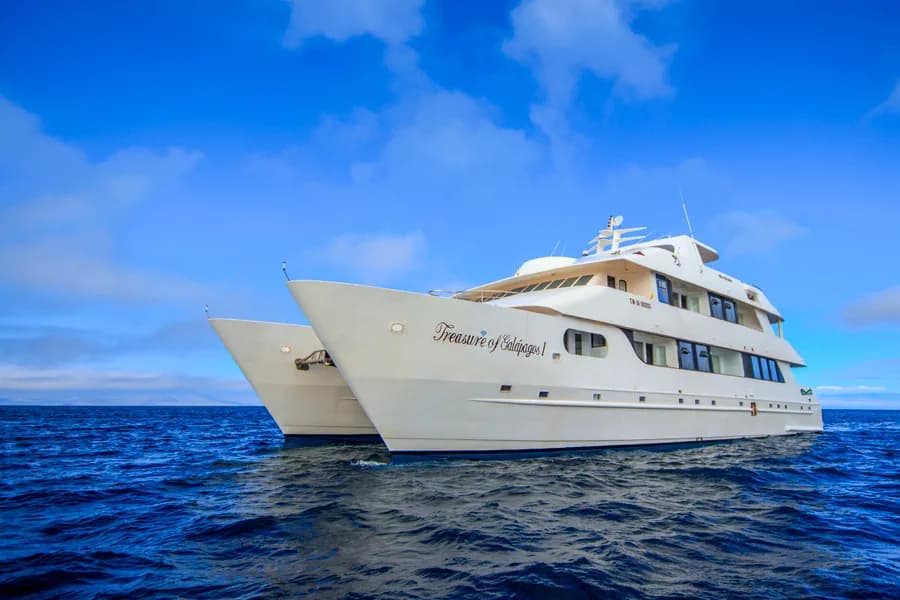
November 10, 2026 · Treasure, 5-Day Southern Islands: Los Gemelos' Daylight Owl
Possible: Punta Suárez, day 2. 16 spots
from US$4,150 per guest
Check availability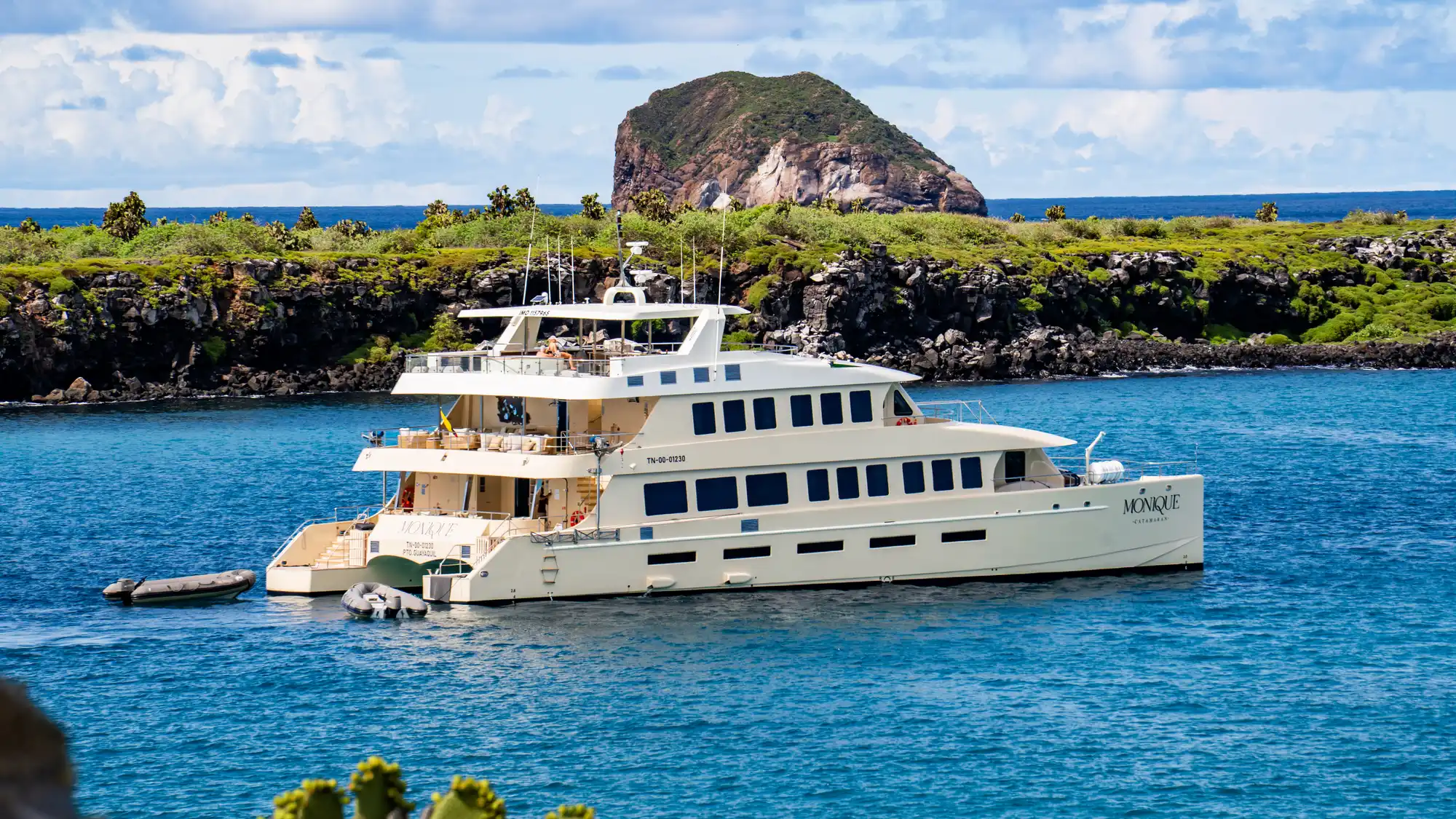
November 12, 2026 · Monique, 4-Day Southern Islands: Santa Cruz's Wild Tortoises
Possible: Punta Suárez, day 3. 6 spots
from US$3,352 per guest
Check availability
November 12, 2026 · Galaxy Sirius, 6-Day Western & Northern: Rabida's Red Sand Beach
Possible: Rábida Beach, day 2. 6 spots
from US$5,680 per guest
Check availability
2,302 departures
On every departure
Included
All meals on board · Two certified national park naturalist guides · All excursions and landings listed in the itinerary · Snorkelling gear and wetsuit · Kayaks and stand-up paddleboards on board · Coffee, tea and water at any time
How you see them
Landing at 4 sites · Snorkelling at 3 sites