Galápagos Mockingbird: Facts and Where to See It
The Galápagos mockingbird (Mimus parvulus) is the most common of the four mockingbird species of Galápagos, none of which live anywhere else. It is a grey and white bird up to 26 cm long, with a long tail, curved bill and black face mask, and it often runs rather than flies. Naturalist guides note it across the islands and list it at 3 visitor sites on 3 islands.
Good to know
| Scientific name | Mimus parvulus |
|---|---|
| Group | Land birds |
| Endemic to Galápagos | Yes |
| Size | Up to 26 cm |
| Weight | About 52 g |
| Diet | Insects, fruit, small lizards, crabs |
| Groups | 2 to 20 birds, breeding together |
| IUCN status | Least Concern |
| In Galápagos | All year, on Santa Cruz, Isabela, Genovesa, Santa Fé, Santiago, Fernandina and smaller islands |
- Galapagos Conservation Trust, Galápagos mockingbird species page (all rows)
Four mockingbirds and Darwin
Galápagos has four mockingbird species, each on its own islands. On the Beagle voyage in 1835, Darwin described the Floreana mockingbird first and then found three more; the differences between them, all from one ancestor, became part of his evidence for evolution by natural selection.
The Galápagos mockingbird looks very like the others but has a mostly unmarked belly; young birds carry chevron marks on the breast and sides.
- Galapagos Conservation Trust, Galápagos and Floreana mockingbird pages (four species, Darwin 1835, evidence for evolution, plumage)
Where it lives and what it eats
Galápagos mockingbirds live in dry lowlands with scattered trees or Opuntia cactus, sometimes in the highlands. They eat insects, fruit, small lizards and crabs, peck ticks from iguanas, and on Santa Fé have been seen drinking blood from marine and land iguanas. They live in groups of 2 to 20 birds that defend a territory together; several pairs breed in each group, nesting in cactus or acacia, and other members help raise the young.
- Galapagos Conservation Trust (habitat, diet, iguanas, Santa Fé, groups, nests, helpers)
Where to see Galápagos mockingbirds
The guide sighting records note Galápagos mockingbirds as present across their islands and rate them Possible on most landings there. Of the 3 sites listed by name, Darwin Bay on Genovesa, Santa Fé Bay and Rábida Beach are rated Rare as specific sightings. On Española, around Floreana and on San Cristóbal, other mockingbird species take their place.
- Our guide sighting data
- Galapagos Conservation Trust (islands
- species pages for the Española, Floreana and San Cristóbal mockingbirds)
Rare
- Darwin Bay, Genovesa.Landing, snorkelling. Seen all year.Rare
- Rábida Beach, Rábida.Landing, snorkelling. Seen all year.Rare
- Santa Fé Bay, Santa Fé.Landing, snorkelling. Seen all year.Rare
How you see them: landing at 3 sites, snorkelling at 3 sites.
When to see them
Galápagos mockingbirds can be seen all year round. In the next twelve months, 602 departures stop at a site where they are recorded.
- Galapagos Conservation Trust
- our guide sighting and departure data
- 28
- departures in November 2026
Show the November 2026 departures - 39
- departures in December 2026
Show the December 2026 departures - 49
- departures in January 2027
Show the January 2027 departures - 39
- departures in February 2027
Show the February 2027 departures - 447
- departures in the other 8 months
Choose a month in the list - 602
- departures in the next twelve months stop where they are seen
Show all departures
Is the Galápagos mockingbird endangered?
No. It is listed as Least Concern and the population is stable. Rats and cats eat the birds and their eggs, the larvae of the avian vampire fly kill nestlings, and avian pox raises deaths among young birds after they leave the nest. The species benefits from work to remove invasive animals and is protected by the national park.
- Galapagos Conservation Trust (status, threats, protection)
Mistakes to avoid
- Feeding a curious mockingbird. Park rules forbid feeding wildlife.
- Bringing food ashore. Park rules make visitors responsible for not introducing food into the archipelago.
- Assuming all mockingbirds are the same. Each island group has its own species.
Frequently asked questions
Did Darwin discover that the Galapagos mockingbirds were different species?
Darwin described the Floreana mockingbird first on the Beagle voyage in 1835 and found three other mockingbird species in Galápagos. His observations of their differences, all from a common ancestor, became part of his evidence for evolution by natural selection.
- Galapagos Conservation Trust, Floreana mockingbird
What bird is only found in the Galapagos Islands?
Many, among them all four Galápagos mockingbirds, Darwin's finches, the Galápagos penguin, the flightless cormorant and the lava gull.
Why are mockingbirds so special in Galápagos?
Because they helped Darwin see that species change. Each of the four Galápagos species lives on its own islands, and the differences between them were part of his evidence for natural selection.
What do Galápagos mockingbirds eat?
Insects, fruit, small lizards and crabs; they also pick ticks off iguanas, and on Santa Fé they have been seen drinking iguana blood.
How many mockingbird species live in Galápagos?
Four, each on its own islands: the Galápagos, Floreana, Española and San Cristóbal mockingbirds, all descended from one ancestor.
Availability and prices updated
Departures that take you to them
Every Galápagos cruise in this list stops at least once at a site where our guides see the Galápagos Mockingbird. The best chances come first, and each departure shows the site and the day. Found one that suits you? Ask us about it. There is no booking and no payment: we check the departure and reply.
Next departures with a good chance
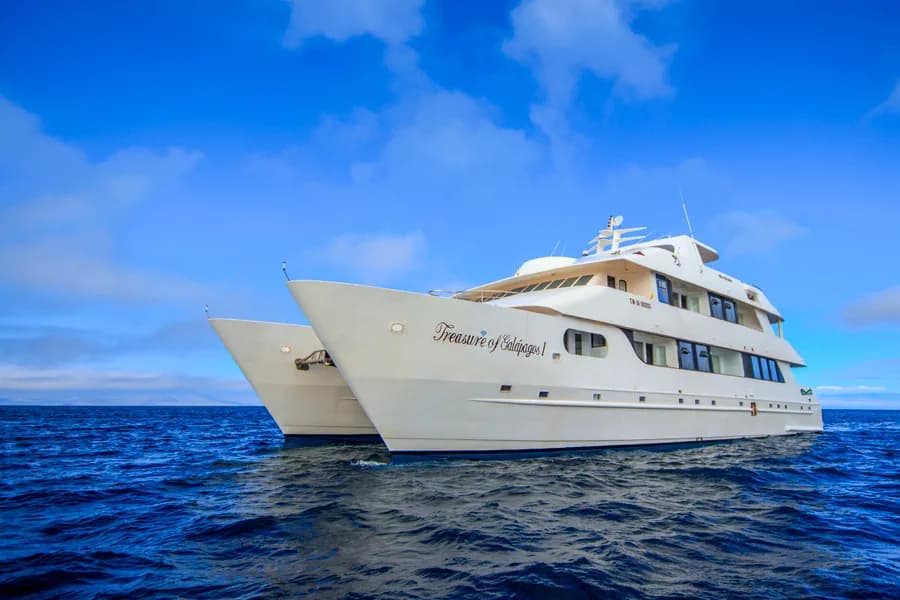
November 10, 2026 · Treasure, 5-Day Southern Islands: Los Gemelos' Daylight Owl
Rare: Santa Fé Bay, day 4. 16 spots
from US$4,150 per guest
Check availability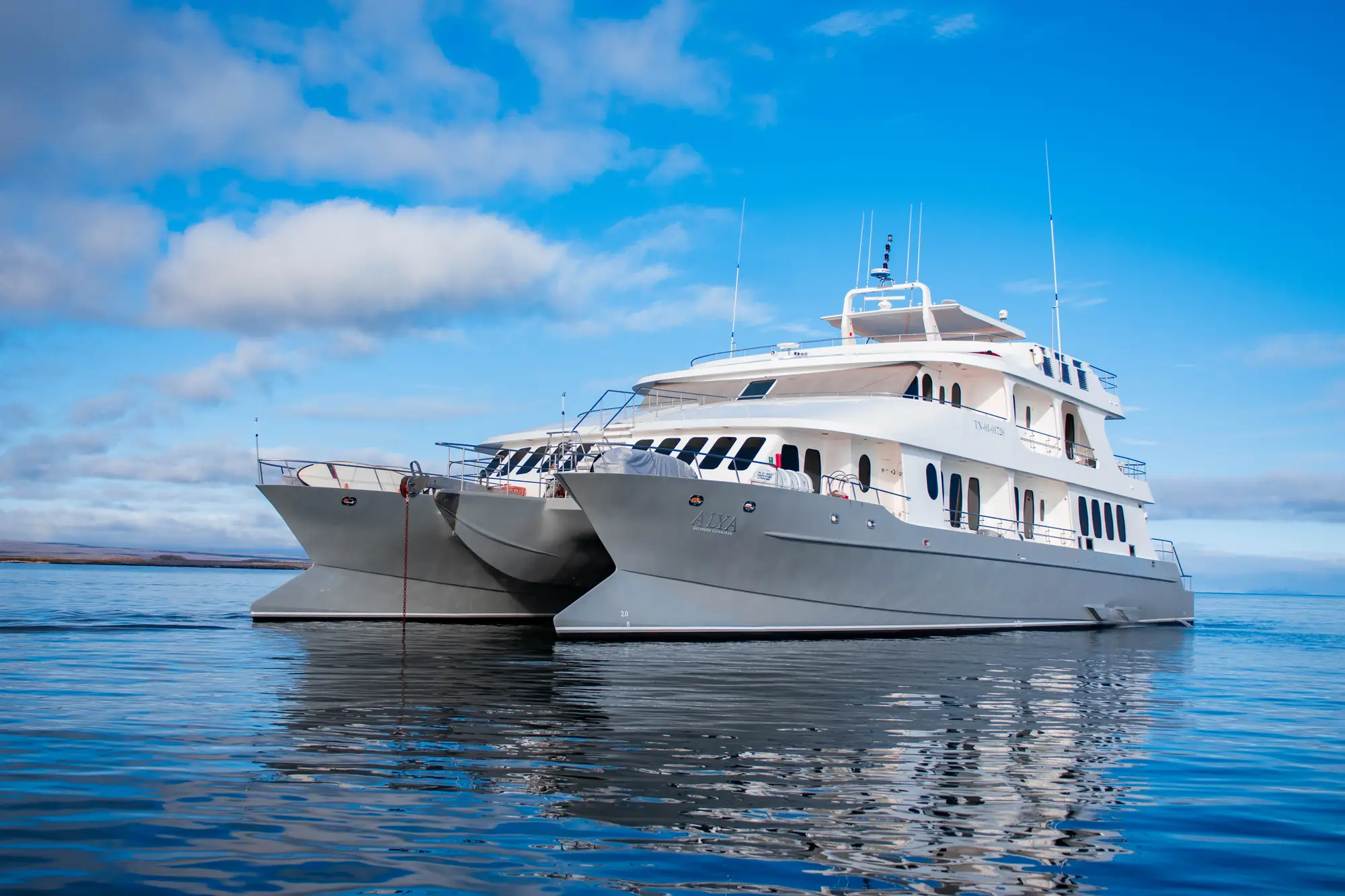
November 12, 2026 · Galaxy Sirius, 6-Day Western & Northern: Rabida's Red Sand Beach
Rare: Rábida Beach, day 2. 6 spots
from US$5,680 per guest
Check availability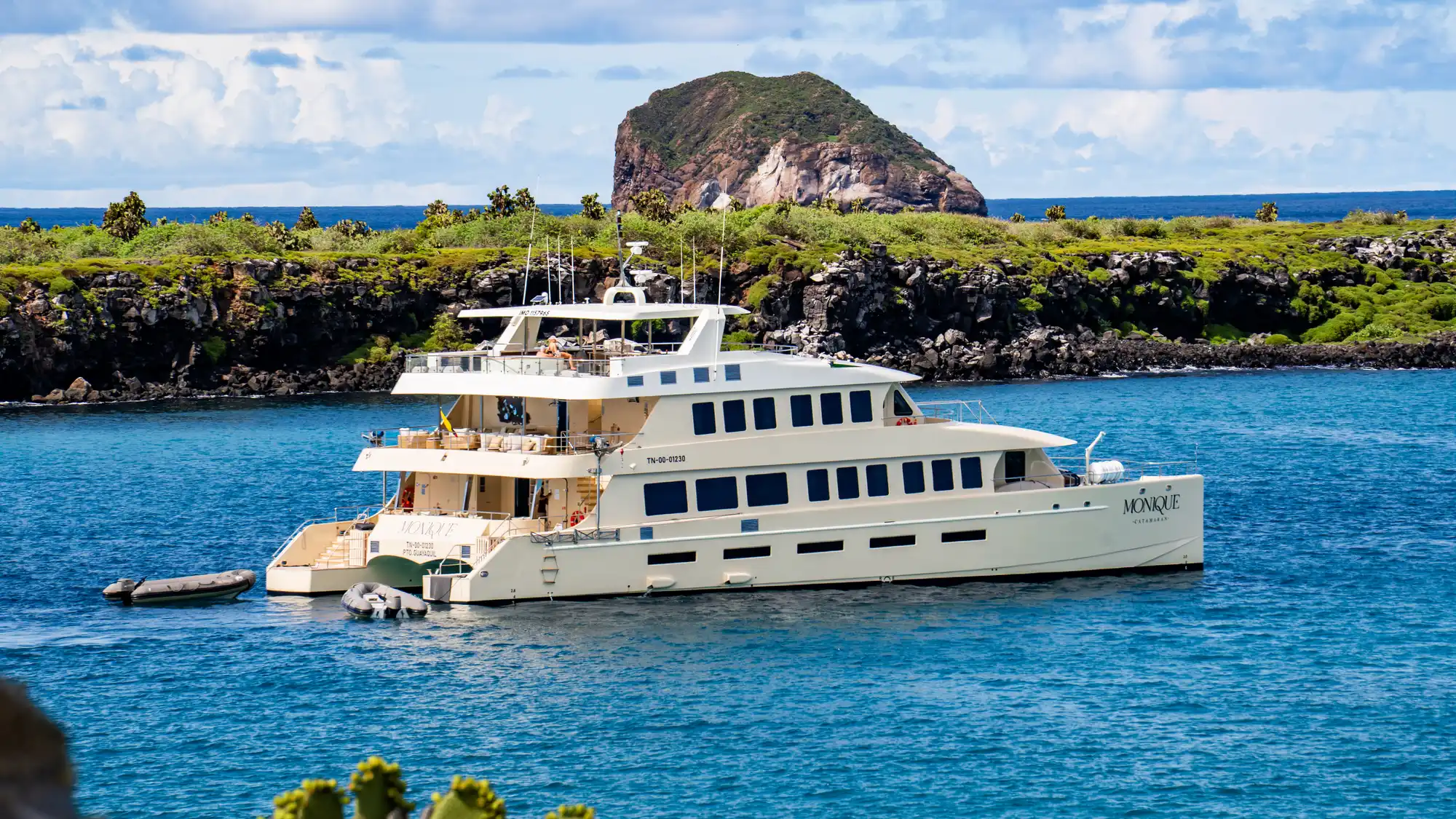
November 15, 2026 · Monique, 5-Day Southern & Western: Kicker Rock's Swim Channel
Rare: Santa Fé Bay, day 2. 1 spot
Check availability
1,877 departures
On every departure
Included
All meals on board · Two certified national park naturalist guides · All excursions and landings listed in the itinerary · Snorkelling gear and wetsuit · Kayaks and stand-up paddleboards on board · Coffee, tea and water at any time
How you see them
Landing at 3 sites · Snorkelling at 3 sites