Galápagos Penguin: Facts and Where to See It
The Galápagos penguin (Spheniscus mendiculus) is the most northerly penguin in the world and one of the smallest, about 49 cm tall and 2.5 kg. It nests entirely in the tropics, some colonies on the northern tip of Isabela even north of the equator, and it lives nowhere else. Naturalist guides' sighting records place it at 8 visitor sites on 5 islands, in every month of the year.
Good to know
| Scientific name | Spheniscus mendiculus |
|---|---|
| Group | Birds |
| Endemic to Galápagos | Yes |
| Galápagos penguin height | About 49 cm on average, up to 55 cm |
| Weight | About 2.5 kg |
| Lifespan | About 20 years on average |
| Diet | Small schooling fish: anchovies, sardines, mullet |
| IUCN status | Endangered, last assessed 2020 |
| Population trend | Decreasing |
| Population | Likely between 1,800 and 4,700 birds (2009 estimate) |
| In Galápagos | All year, at 8 visitor sites on 5 islands (guide sighting records) |
- Galapagos Conservation Trust, Galápagos penguin species page (size, weight, lifespan, diet)
- BirdLife International DataZone for the IUCN Red List (status, year, trend, population)
A penguin on the equator
A penguin can live on the equator because the sea around western Galápagos is cold. The Humboldt Current and upwelling water from the deep bring cool, nutrient-rich water to the coasts of Isabela and Fernandina, and with it the schools of small fish the penguins hunt. About 95 percent of all Galápagos penguins live on these two western islands.
- Close relatives. The African, Humboldt and Magellanic penguins, all of which dig burrows.
- No burrows. Galápagos has no soft peat to dig in, so the penguins nest in caves and crevices in the coastal lava, just above sea level.
- Fast swimmers. Underwater they reach 35 km/h when hunting, and during chick rearing they feed mostly within 1 km of the shore.
- Galapagos Conservation Trust (relatives, lava caves, speed, diet, Humboldt Current)
- BirdLife International DataZone (95 percent on Isabela and Fernandina, upwelling, nests above sea level, foraging within 1 km)
Pairs, eggs and chicks
Galápagos penguins mate for life. They breed at any time of year, whenever upwelling brings enough fish, rather than in a fixed season. The female lays one or two eggs, which are incubated for 35 to 40 days. The dark brown chicks leave the nest at eight to nine weeks, and if food is available, the parents go on feeding them after they fledge. While breeding, a pair stays close to its nest site; birds that are not breeding move further away, up to 64 km from the colony.
- Galapagos Conservation Trust (pairs, eggs, incubation, chicks)
- BirdLife International DataZone (breeding with upwelling, feeding after fledging, distances)
Where the Galápagos penguin lives and what it eats
Galápagos penguin habitat is the cool western coast of the archipelago. The main breeding range runs along about 400 km of coastline on Isabela and Fernandina, where 96 percent of all nests are found, with smaller numbers on Floreana, Santiago, Bartolomé and offshore islets. Their diet is small schooling fish such as anchovies, sardines and mullet, which live in the Galápagos Marine Reserve because the Humboldt Current keeps the water cold.
Because the food depends on cold water, the penguins depend on it too. When the sea warms, the fish move away and the penguins starve.
- BirdLife International DataZone (breeding range, 400 km, 96 percent of nests)
- Galapagos Conservation Trust (islands, diet, Humboldt Current)
Where to see Galápagos penguins
Guide sighting records list Galápagos penguins at 8 visitor sites on 5 islands. 3 sites are rated Likely, with sightings on most visits, all of them on the western islands: Tagus Cove and Elizabeth Bay on Isabela, and Punta Espinosa on Fernandina. Pinnacle Rock on Bartolomé, Punta Vicente Roca and Los Túneles are rated Possible; at Pinnacle Rock, snorkellers often swim near them. Chinese Hat and Post Office Bay are rated Rare.
- Our guide sighting data
- Galapagos Conservation Trust (swimming at Pinnacle Rock)
More active than usual, June to November
Tagus Cove
Likely
- Tagus Cove, Isabela.Panga ride, hiking. More active than usual, June to November.Likely
- Elizabeth Bay, Isabela.Panga ride. Seen all year.Likely
- Punta Espinosa, Fernandina.Landing. Seen all year.Likely
Possible
- Los Túneles, Isabela.Snorkelling. Seen all year.Possible
- Pinnacle Rock, Bartolomé.Snorkelling. Seen all year.Possible
- Punta Vicente Roca, Isabela.Panga ride, snorkelling. Seen all year.Possible
Rare
- Chinese Hat, Chinese Hat.Landing, snorkelling. Seen all year.Rare
- Post Office Bay, Floreana.Landing. Seen all year.Rare
How you see them: snorkelling at 4 sites, panga ride at 3 sites, landing at 3 sites, hiking at 1 site.
When to see them
Galápagos penguins live and breed in Galápagos all year, so no month rules them out. The guide records note that at Tagus Cove they are more active than usual from June to November. In the next twelve months, 746 departures stop at a site where they are seen.
- Galapagos Conservation Trust (all year)
- our guide sighting and departure data (Tagus Cove, months)
- 33
- departures in November 2026
Show the November 2026 departures - 84
- departures in June 2027
Show the June 2027 departures - 92
- departures in July 2027
Show the July 2027 departures - 88
- departures in August 2027
Show the August 2027 departures - 50
- departures in September 2027
Show the September 2027 departures - 91
- departures in October 2027
Show the October 2027 departures - 308
- departures in the other 6 months
Choose a month in the list - 746
- departures in the next twelve months stop where they are seen
Show all departures
Is the Galápagos penguin endangered?
Yes. BirdLife International lists the Galápagos penguin as Endangered on the IUCN Red List, with a decreasing trend. The species declined by 60 percent between 1970 and 2004. A head count in 2007 found 1,009 penguins, half the number counted in 1970 and 1971.
Why the numbers fall. El Niño years warm the sea and drive away the fish: after the strong El Niño of 1982, 77 percent of the population starved. Introduced cats and rats attack adults and eggs, and at one breeding site a single feral cat killed 49 percent of the adults. Fishing nets drown penguins, and mosquitoes that arrived in the 1980s can carry avian malaria. A model by Vargas and colleagues predicts a decline of more than 80 percent over the next 100 years if strong El Niño events become twice as frequent. Galápagos National Park rules keep visitors at least 2 metres (6 feet) from wildlife, in the water as on land.
- BirdLife International DataZone for the IUCN Red List (status, trend, decline, 2007 count, cats, nets, mosquitoes, model by Vargas et al. 2007)
- Galapagos Conservation Trust (1982 El Niño)
- Galápagos Conservancy, Galápagos National Park Rules (distance)
Mistakes to avoid when planning to see them
- Choosing a route without the west. All Likely sites are on Isabela and Fernandina, where about 95 percent of the penguins live. A route that stays in the central or eastern islands makes a sighting a matter of luck.
- Looking for a colony on a beach. The penguins nest in lava caves and crevices, and most sightings come from a panga ride along the shore or while snorkelling.
- Expecting large numbers. With a few thousand birds at most, a sighting usually means a handful of penguins, not a crowd.
- Swimming up to them. Park rules set at least 2 metres between visitors and wildlife, and that applies when snorkelling.
- Our guide sighting data
- BirdLife International DataZone
- Galápagos Conservancy, Galápagos National Park Rules
Frequently asked questions
How many Galapagos penguins are left?
A few thousand. BirdLife International estimates the population at likely between 1,800 and 4,700 birds in 2009, and the Galapagos Conservation Trust gives about 2,000. A head count in 2007 found 1,009 penguins. The exact number is hard to know because it rises and falls with the supply of fish.
What is special about Galapagos penguins?
They are the most northerly penguins in the world and the only ones that nest entirely in the tropics, some of them north of the equator on Isabela. They are also among the smallest penguins, about 49 cm tall, and instead of digging burrows like their relatives, they nest in caves and crevices in the lava.
Do Galapagos penguins mate for life?
Yes. According to the Galapagos Conservation Trust, Galápagos penguins mate for life. The female lays one or two eggs, both are incubated for 35 to 40 days, and breeding pairs stay close to their nest site.
Why are Galapagos penguins in danger?
Mainly because of El Niño. Warm water drives away the small fish they eat, and after the strong El Niño of 1982, 77 percent of the population starved. Introduced cats and rats, fishing nets, oil spills and diseases carried by mosquitoes add to the risk. The species is listed as Endangered.
Availability and prices updated
Departures that take you to them
Every Galápagos cruise in this list stops at least once at a site where our guides see the Galápagos Penguin. The best chances come first, and each departure shows the site and the day. Found one that suits you? Ask us about it. There is no booking and no payment: we check the departure and reply.
Next departures with a good chance
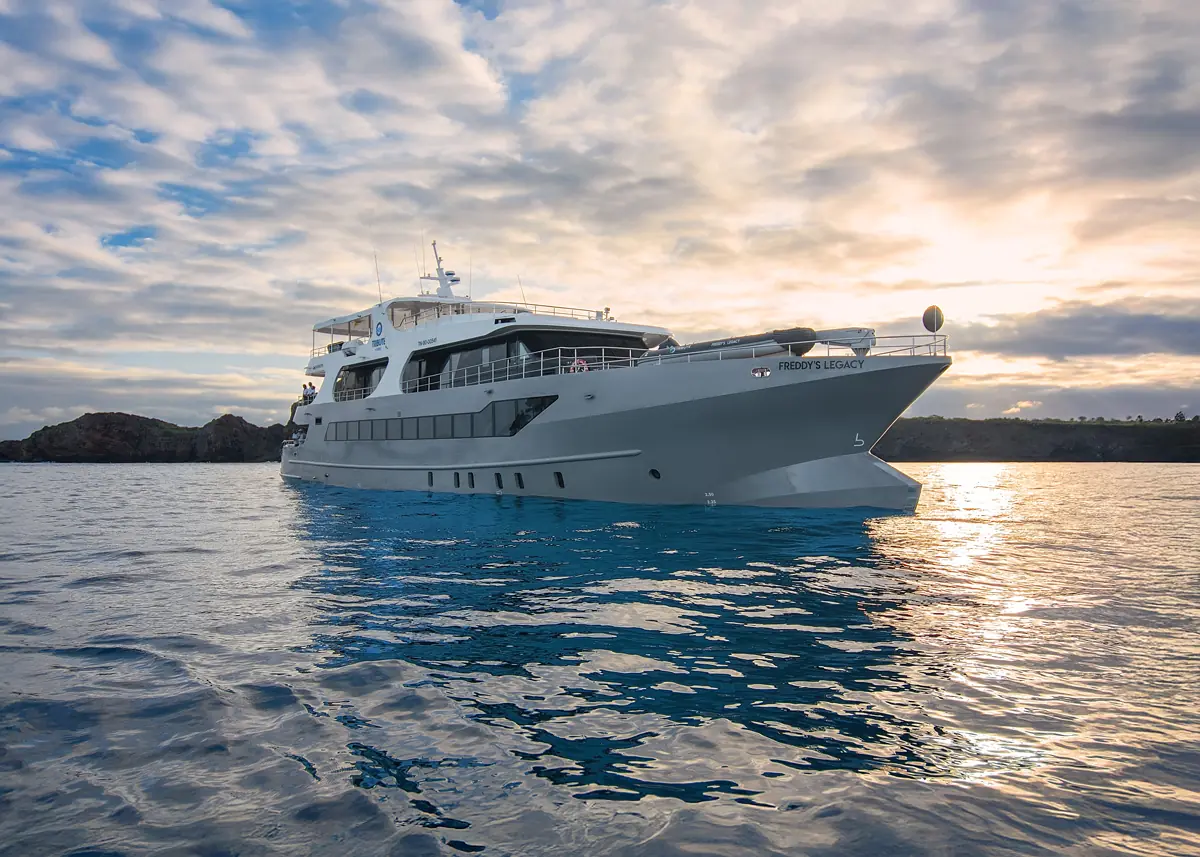
November 12, 2026 · Tribute, 7-Day Western Islands: Fernandina's Marine Iguanas
Likely: Tagus Cove, day 4. 5 spots
from US$7,916 per guest
Check availability
November 14, 2026 · Grand Ocean Spray, 6-Day Western Islands: Fernandina's Underwater Iguanas
Likely: Tagus Cove, day 3. 7 spots
from US$7,191 per guest
Check availability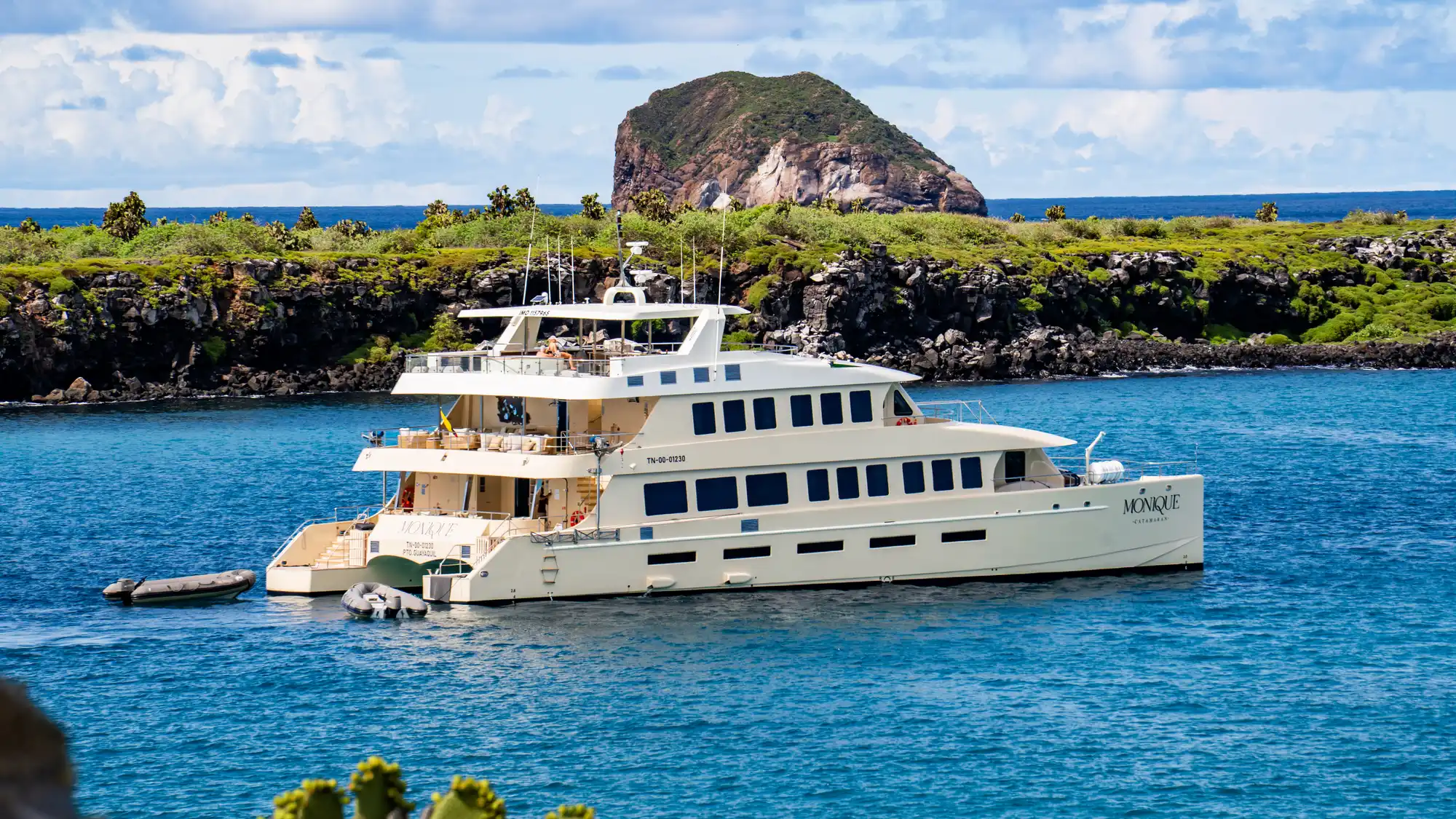
November 19, 2026 · Monique, 8-Day Western Islands: Elizabeth Bay's Penguins
Likely: Tagus Cove, day 5. 8 spots
from US$6,632 per guest
Check availability
2,306 departures
On every departure
Included
All meals on board · Two certified national park naturalist guides · All excursions and landings listed in the itinerary · Snorkelling gear and wetsuit · Kayaks and stand-up paddleboards on board · Coffee, tea and water at any time
How you see them
Snorkelling at 4 sites · Panga ride at 3 sites · Landing at 3 sites · Hiking at 1 site
Best chance
More active than usual from June to November on Tagus Cove.