Giant Manta Ray in Galápagos: Facts and Where to See It
The giant manta ray, or oceanic manta (Mobula birostris), is the largest ray in the world, 4.5 to 7 metres across and up to 9 metres. It feeds on zooplankton in open water and comes to cleaning stations near the coast, including in the waters off Wolf, Darwin and Isabela. Naturalist guides' sighting records place it at 5 sites on 5 islands.
Good to know
| Scientific name | Mobula birostris |
|---|---|
| Group | Sharks and rays |
| Endemic to Galápagos | No |
| Giant manta ray size | 4.5 to 7 m across, up to 9 m |
| Weight | 1,350 to 2,000 kg |
| Lifespan | About 40 years |
| Diet | Zooplankton |
| IUCN status | Endangered |
| In Galápagos | At 5 sites on 5 islands (guide sighting records) |
- Galapagos Conservation Trust, oceanic manta ray species page (all rows)
How a manta feeds
A manta is a diamond-shaped body with two wide, wing-like fins and white markings on the shoulders that form a dark T. It spends much of its life in open ocean, diving hundreds of metres to find zooplankton.
- Cephalic lobes. Two fleshy lobes beside the mouth steer plankton-rich water into it while it feeds.
- Somersaults and chains. Mantas barrel-roll through dense plankton and line up in feeding chains with other mantas to catch more.
- Cleaning stations. They visit reef spots where small fish clean parasites and dirt from their bodies.
- A fingerprint. The spot pattern on each manta's underside is unique, so researchers can tell individuals apart.
- Galapagos Conservation Trust (shape, markings, diving, lobes, barrel rolling, feeding chains, cleaning stations, spot pattern)
Where the giant manta lives
Giant mantas live in tropical and subtropical seas worldwide, including the nutrient-rich waters around Galápagos. They are mostly solitary but gather at cleaning stations and to feed or mate. The Galapagos Conservation Trust names the waters off Wolf and Darwin, the channel between Santiago and the islet of Sombrero Chino, and an aggregation off Isabela as places to see them.
- Galapagos Conservation Trust (range, behaviour, where to see)
Where to see giant manta rays in Galápagos
Guide sighting records list giant mantas at 5 sites. 2 are rated Possible from June to November, in the plankton-rich season: the dive sites at Wolf and Darwin Arch. The others are rated Rare: Pinnacle Rock on Bartolomé and Kicker Rock off San Cristóbal, both snorkelling sites, and Punta Vicente Roca on Isabela, where they appear occasionally from June to November.
- Our guide sighting data
Plankton-rich season, June to November
Wolf Dive Site
Possible
- Darwin Arch, Darwin.Diving. Plankton-rich season, June to November.Possible
- Wolf Dive Site, Wolf.Diving. Plankton-rich season, June to November.Possible
Rare
- Punta Vicente Roca, Isabela.Panga ride, snorkelling. Occasionally, June to November.Rare
- Kicker Rock (León Dormido), San Cristóbal.Snorkelling, diving. Seen all year.Rare
- Pinnacle Rock, Bartolomé.Snorkelling. Seen all year.Rare
How you see them: diving at 3 sites, snorkelling at 3 sites, panga ride at 1 site.
When to see them
The sources disagree on the best season. The guide sighting records put the plankton-rich months of June to November first, at Wolf, Darwin and Punta Vicente Roca. The Galapagos Conservation Trust names December to May, when the water is a little warmer and clearer. Both agree that mantas are a matter of luck. In the next twelve months, 291 departures stop at a site where they are recorded.
- Our guide sighting and departure data
- Galapagos Conservation Trust (December to May)
- 11
- departures in November 2026
Show the November 2026 departures - 35
- departures in June 2027
Show the June 2027 departures - 50
- departures in July 2027
Show the July 2027 departures - 52
- departures in August 2027
Show the August 2027 departures - 34
- departures in September 2027
Show the September 2027 departures - 59
- departures in October 2027
Show the October 2027 departures - 50
- departures in the other 6 months
Choose a month in the list - 291
- departures in the next twelve months stop where they are seen
Show all departures
Is the giant manta ray endangered?
Yes, it is listed as Endangered. Outside the Galápagos Marine Reserve, commercial fishing, including longline fishing, threatens rays, and microplastics may harm them too, though that is not yet confirmed. Research off Isabela has found mantas being struck by boats, including tourist boats.
Protection. In 2025, the oceanic manta was moved to CITES Appendix I, which prohibits all international commercial trade. On Isabela, the Galapagos Conservation Trust supports research to track mantas and works with local tour operators on safer practices. Park rules keep visitors at least 2 metres (6 feet) from wildlife.
- Galapagos Conservation Trust (status, fishing, microplastics, boat strikes, CITES 2025, Isabela project)
- Galápagos National Park Rules
Mistakes to avoid when planning to see them
- Counting on a snorkel. The snorkelling sites in the records are rated Rare; the better chances are dives at Wolf and Darwin.
- Ignoring the season. The guide records rate Wolf and Darwin Possible from June to November only.
- Chasing a manta. Mantas that are left alone often stay; chasing drives them off, and park rules ask for distance.
- Our guide sighting data
- Galápagos National Park Rules
Frequently asked questions
What is the biggest manta ray ever recorded?
The giant or oceanic manta is the largest ray in the world. The Galapagos Conservation Trust gives a usual width of 4.5 to 7 metres and a maximum of 9 metres, with a weight of 1,350 to 2,000 kg.
What threatens giant manta rays?
People are the main threat: fishing outside the marine reserve and collisions with boats. In 2025 the species was moved to CITES Appendix I to stop international trade.
Availability and prices updated
Departures that take you to them
Every Galápagos cruise in this list stops at least once at a site where our guides see the Giant Manta Ray. The best chances come first, and each departure shows the site and the day. Found one that suits you? Ask us about it. There is no booking and no payment: we check the departure and reply.
Next departures with a good chance
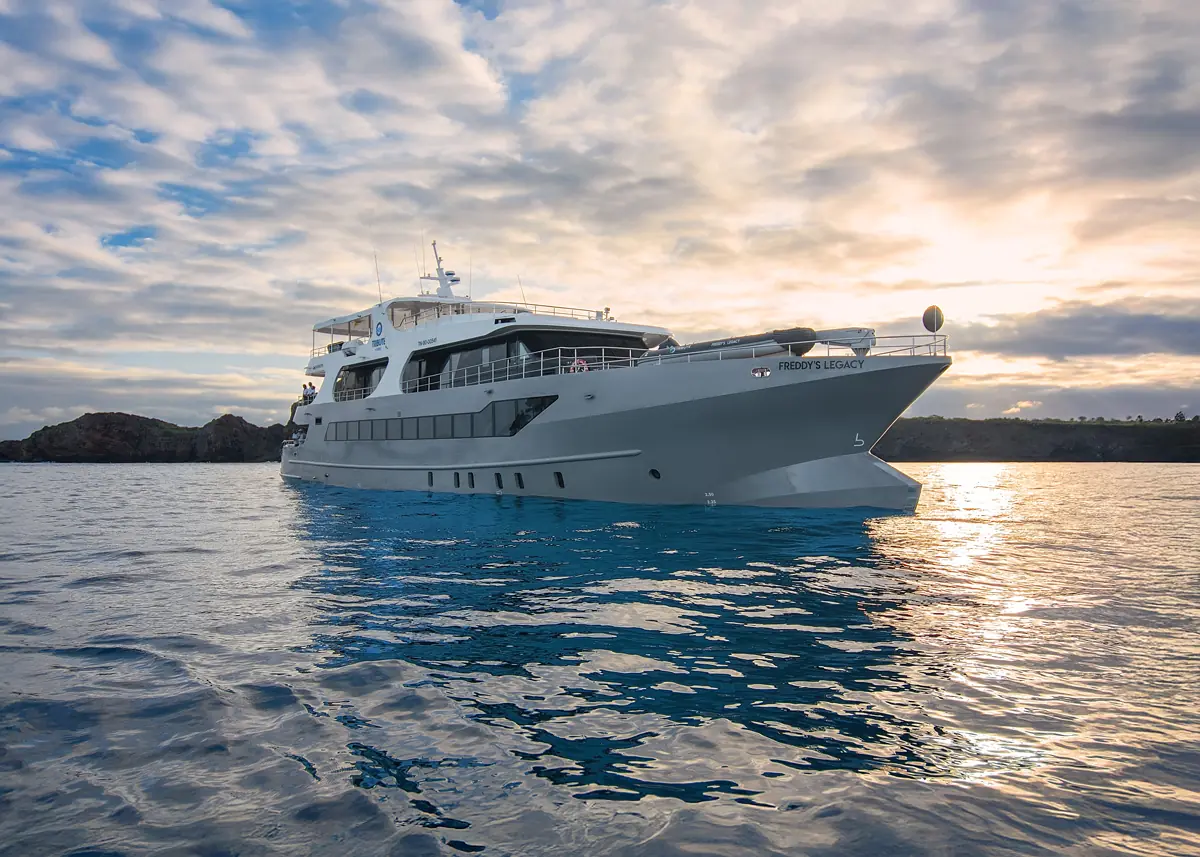
November 12, 2026 · Tribute, 7-Day Western Islands: Fernandina's Marine Iguanas
Rare: Punta Vicente Roca, day 4. 5 spots
from US$7,916 per guest
Check availability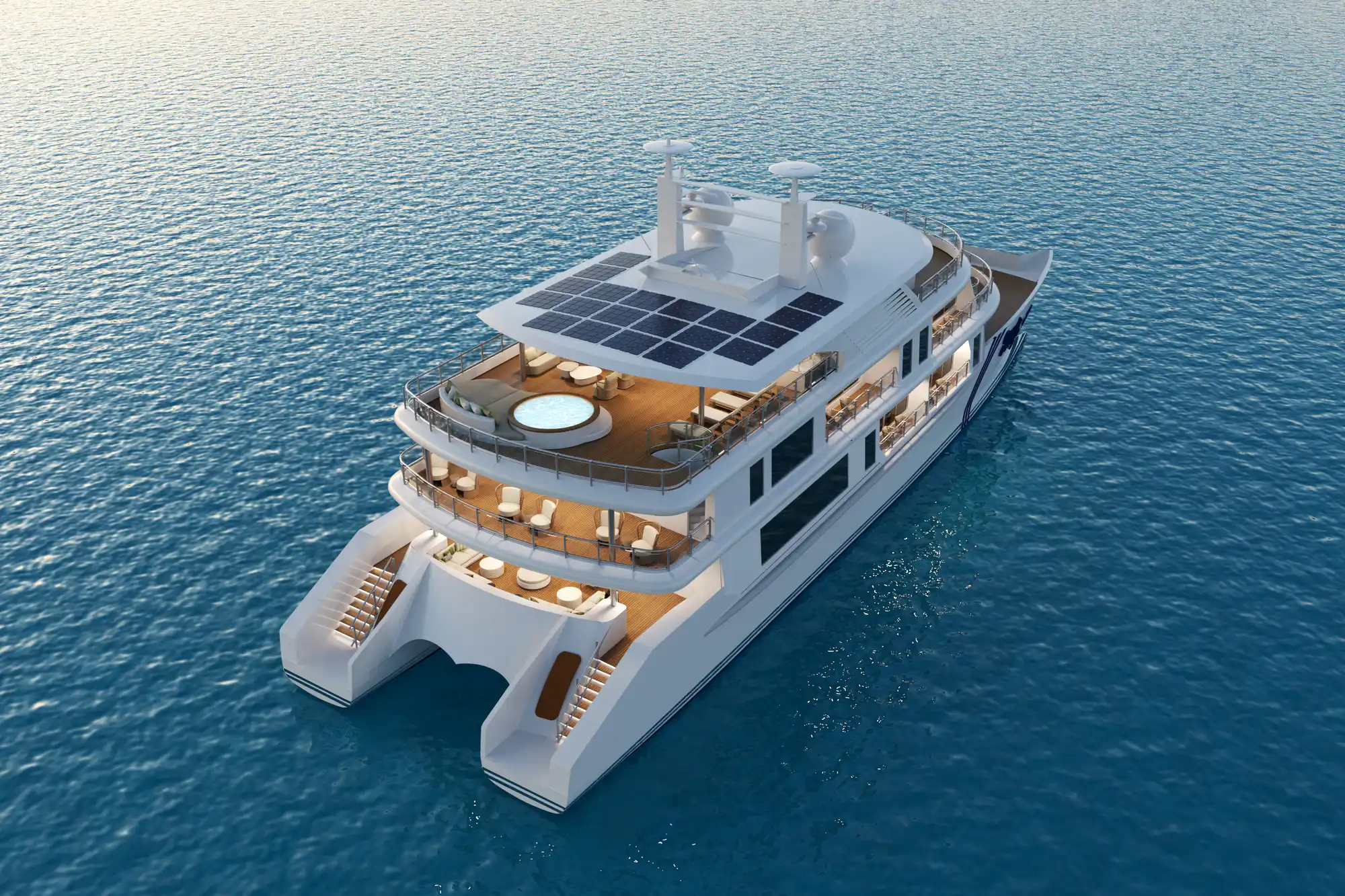
November 14, 2026 · Grand Ocean Spray, 6-Day Western Islands: Fernandina's Underwater Iguanas
Rare: Punta Vicente Roca, day 2. 7 spots
from US$7,191 per guest
Check availability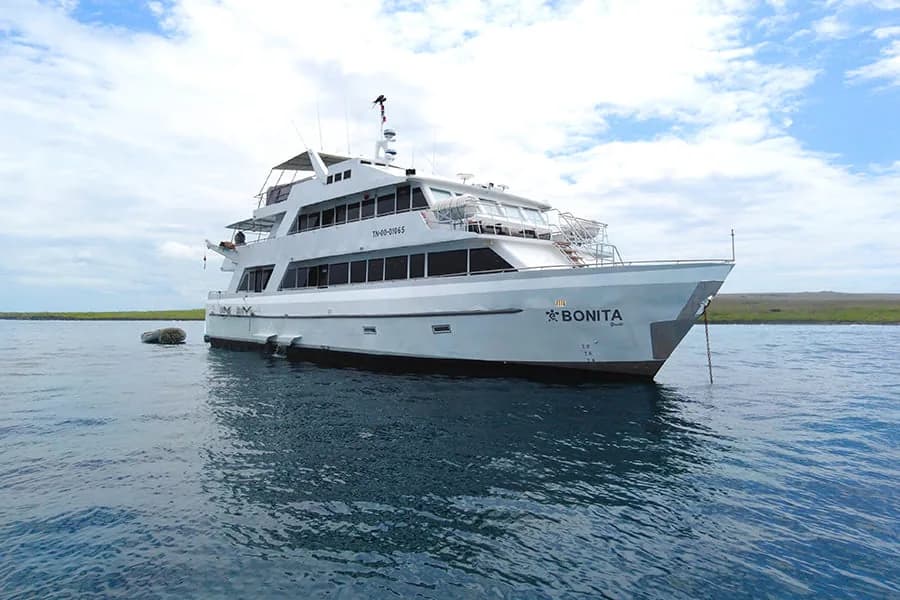
November 14, 2026 · Bonita, 5-Day Southern Islands: Isla Lobos' Coastal Trail
Rare: Kicker Rock (León Dormido), day 4. 2 spots
from US$2,465 per guest
Check availability
902 departures
On every departure
Included
All meals on board · Two certified national park naturalist guides · All excursions and landings listed in the itinerary · Snorkelling gear and wetsuit · Kayaks and stand-up paddleboards on board · Coffee, tea and water at any time
How you see them
Diving at 3 sites · Snorkelling at 3 sites · Panga ride at 1 site
Best chance
Plankton-rich season from June to November on Wolf Dive Site.