Galápagos Giant Tortoise: Facts and Where to See It
The Galápagos giant tortoise (Chelonoidis) is the largest tortoise in the world, up to 1.8 metres long and 260 kg, and it lives on average more than 100 years. 13 species survive, each on its own island or volcano, and the islands themselves are named after them: galápago is Spanish for tortoise. Naturalist guides' sighting records place them at 10 visitor sites on 5 islands, in every month of the year.
Good to know
| Scientific name | Chelonoidis, 13 living species |
|---|---|
| Group | Reptiles |
| Endemic to Galápagos | Yes |
| Galápagos tortoise size | Up to 1.8 m long (six feet) |
| Weight | Up to 260 kg (573 pounds) |
| Lifespan | More than 100 years on average, oldest on record 175 |
| Diet | Grass, leaves and cactus |
| IUCN status | Vulnerable to Critically Endangered, depending on the species |
| Population today | 10 to 15 percent of the 200,000 to 300,000 that once lived on the islands |
| In Galápagos | All year, at 10 visitor sites on 5 islands (guide sighting records) |
- National Geographic, Galápagos tortoise facts (size, weight, lifespan, diet, species, status)
- Galápagos Conservancy, Giant Tortoise Restoration (population, status)
Domed and saddle-backed shells
Galápagos tortoises come in two main shell shapes, and the shape follows the island. Domed tortoises live in the cooler, greener uplands, where grass and leaves grow close to the ground. Saddle-backed tortoises live in dry coastal country, and the front of their shell flares upwards like a saddle, so the neck can stretch high towards the pads of tall prickly pear cactus.
- Domed. The type seen in the Santa Cruz highlands, a rounded shell for grazing at ground level.
- Saddle-backed. A raised front edge that lets the head reach upwards, found where cactus is the main food.
- Built to carry the weight. Small air chambers inside the shell help the thick legs hold up a body of up to 260 kg.
A tortoise moves at about 0.26 km/h (0.16 miles per hour), rests for nearly 16 hours a day and can go up to a year without food or water. That last ability made them a store of fresh meat for passing ships.
- National Geographic (shells, air chambers, speed after San Diego Zoo, rest, a year without food)
- Max Planck Institute for Ornithology (food for seamen)
The yearly walk, nests and young
Up to the highlands and back
On Santa Cruz, adult tortoises migrate. A study by Stephen Blake of the Max Planck Institute for Ornithology and Washington Tapia of the Galápagos National Park fitted 17 adults with GPS loggers and followed them for two years. In June, at the start of the cool dry season, the large adults begin a walk of up to 10 km up the slopes and spend the dry months around 400 metres above sea level, where fog keeps the vegetation growing. When the rains begin, they walk back down to the lowlands, where the plants are then more nutritious. Young tortoises stay in the lowlands all year.
The guide sighting records follow the same rhythm: in the Santa Cruz highlands, wild tortoises are rated Likely from June to December and Possible from January to May, when many are lower down.
- Max Planck Institute for Ornithology, "Galapagos tortoises are a migrating species" (study by Blake and Tapia)
- our guide sighting data (months and ratings)
Eggs and young tortoises
Tortoises reach maturity at about 20 to 25 years and mate in the hot season from January to May. The female walks to dry, sandy ground, digs a hole and lays 2 to 16 eggs, which hatch after around 130 days. The temperature of the nest decides the sex: warmer nests produce more females. Females on Santa Cruz stay in the lowlands until they have laid, then follow the males uphill.
Hatchlings face rats, pigs, dogs and fire ants on many islands, so the national park collects eggs and young from wild nests. They grow up in breeding centres on Santa Cruz and Isabela and return to the wild at 4 to 5 years old.
- National Geographic (maturity, season, eggs, incubation, nest temperature)
- Max Planck Institute for Ornithology (females)
- Galápagos Conservancy (predators, rearing, release age)
Where the giant tortoise lives and what it eats
Each species lives on its own island or volcano: Santa Cruz alone has two, and northern and southern Isabela have five between them. Their food is grass, leaves and cactus, and the seeds pass through the gut and grow where the dung lands, which makes the tortoises gardeners of their islands. Darwin's finches hop onto them and pick ticks from the folds of the skin.
In the green highlands of Santa Cruz, tortoises graze in open pasture. At the El Chato reserve a pond is often ringed with tortoises, and sometimes full of them, wallowing in the cool water.
- Galápagos Conservancy (species by island and volcano)
- National Geographic (diet, seed dispersal, finches)
- Galapatours, El Chato Giant Tortoise Reserve (ponds)
Where to see giant tortoises in Galápagos
Guide sighting records list giant tortoises at 10 visitor sites on 5 islands. 3 of them are rated Likely, with sightings on most visits: the wild tortoises of the Santa Cruz highlands, the Charles Darwin Station on Santa Cruz and La Galapaguera on San Cristóbal. The other sites are rated Possible or Rare, among them Urbina Bay on Isabela, where wild tortoises appear only occasionally.
The highlands of Santa Cruz are the place to see tortoises living wild. The breeding and rearing centres on Santa Cruz and San Cristóbal show the young ones that will later be released.
- Our guide sighting data
Wild, partly in the lowlands, January to May
Santa Cruz Highlands
Likely
- Santa Cruz Highlands, Santa Cruz.Landing. Wild in the highlands, June to December.Likely
- Charles Darwin Station, Santa Cruz.Seen all year.Likely
- La Galapaguera, San Cristóbal.Landing. Seen all year.Likely
Possible
- David Rodriguez Tortoise Breeding Center, San Cristóbal.Seen all year.Possible
Rare
- Asilo de la Paz, Floreana.Landing. Seen all year.Rare
- Bartolomé Summit, Bartolomé.Seen all year.Rare
- Isabela Interpretation Center, Isabela.Seen all year.Rare
- Post Office Bay, Floreana.Landing. Seen all year.Rare
- Tagus Cove, Isabela.Panga ride, hiking. Seen all year.Rare
- Urbina Bay, Isabela.Landing. Seen all year.Rare
How you see them: landing at 5 sites, panga ride at 1 site, hiking at 1 site.
When to see them
Giant tortoises are in Galápagos in all 12 months, and the breeding centres show them at any time of year. The wild tortoises of the Santa Cruz highlands are easiest to find from June to December, after the adults have walked uphill. From January to May many stay lower down, and the guide records rate the highlands Possible for those months. In the next twelve months, 906 departures stop at a site where they are seen.
- Our guide sighting and departure data
- Max Planck Institute for Ornithology (season of the walk)
- 67
- departures in January 2027
Show the January 2027 departures - 63
- departures in February 2027
Show the February 2027 departures - 46
- departures in March 2027
Show the March 2027 departures - 72
- departures in April 2027
Show the April 2027 departures - 71
- departures in May 2027
Show the May 2027 departures - 587
- departures in the other 7 months
Choose a month in the list - 906
- departures in the next twelve months stop where they are seen
Show all departures
Are Galápagos giant tortoises endangered?
Yes. Depending on the species, the IUCN lists them as Vulnerable to Critically Endangered; both Santa Cruz species are Critically Endangered. Pirates, whalers and traders took between 100,000 and 200,000 tortoises from the 17th to the 19th century, and introduced pigs, dogs, cats, rats, goats and donkeys still eat eggs and young or compete for food.
Recovery. The Pinta tortoise died out in 2012 with Lonesome George, the last of his kind. On Española, a breeding programme has raised the population from 14 tortoises to more than 1,000, and a tortoise found on Fernandina in 2019 belongs to a species thought extinct for more than a century. Galápagos National Park rules keep visitors at least 2 metres (6 feet) from the animals and on marked trails with a naturalist guide.
- National Geographic (status, hunting, introduced animals, Lonesome George, Española, Fernandina)
- Galápagos Conservancy (Santa Cruz species)
- Galápagos Conservancy, Galápagos National Park Rules (distance, trails)
Mistakes to avoid when planning to see them
- Counting on a beach landing. Most wild tortoises live inland. A route with a visit to the Santa Cruz highlands decides whether you see them in the wild.
- Expecting the highlands to be the same all year. From January to May many adults are lower down, and the guide records rate the highlands Possible.
- Taking a breeding centre for the wild. The centres show young tortoises in pens. Both are worth it, but they are different visits.
- Getting too close. Park rules set at least 2 metres between visitors and wildlife, even when a tortoise crosses the trail.
- Our guide sighting data
- Galápagos Conservancy, Galápagos National Park Rules
Frequently asked questions
How many giant Galapagos tortoises are left?
Galápagos Conservancy puts today's population at 10 to 15 percent of the 200,000 to 300,000 tortoises that once lived on the islands. National Geographic gives a lower figure of about 15,000 in the wild. Some species are recovering: on Española, numbers rose from 14 tortoises to more than 1,000 through captive breeding.
How big was the biggest Galapagos tortoise?
National Geographic gives a size of up to six feet, about 1.8 metres, and a weight of up to 573 pounds, about 260 kg, which makes them the largest tortoises in the world. Many adults exceed five feet in length and 500 pounds.
Can you have a giant Galapagos tortoise as a pet?
Not from Galápagos. The tortoises are protected by Ecuadorian law, and under CITES all international trade in them is prohibited. In Galápagos they can be seen in the wild in the Santa Cruz highlands and at breeding centres on Santa Cruz, San Cristóbal and Isabela.
- National Geographic
- our guide sighting data
Can tortoises live up to 500 years?
No record supports that. Galápagos giant tortoises live on average more than 100 years, and the oldest on record reached 175. That makes them among the longest-lived land vertebrates.
Availability and prices updated
Departures that take you to them
Every Galápagos cruise in this list stops at least once at a site where our guides see the Galápagos Giant Tortoise. The best chances come first, and each departure shows the site and the day. Found one that suits you? Ask us about it. There is no booking and no payment: we check the departure and reply.
Next departures with a good chance
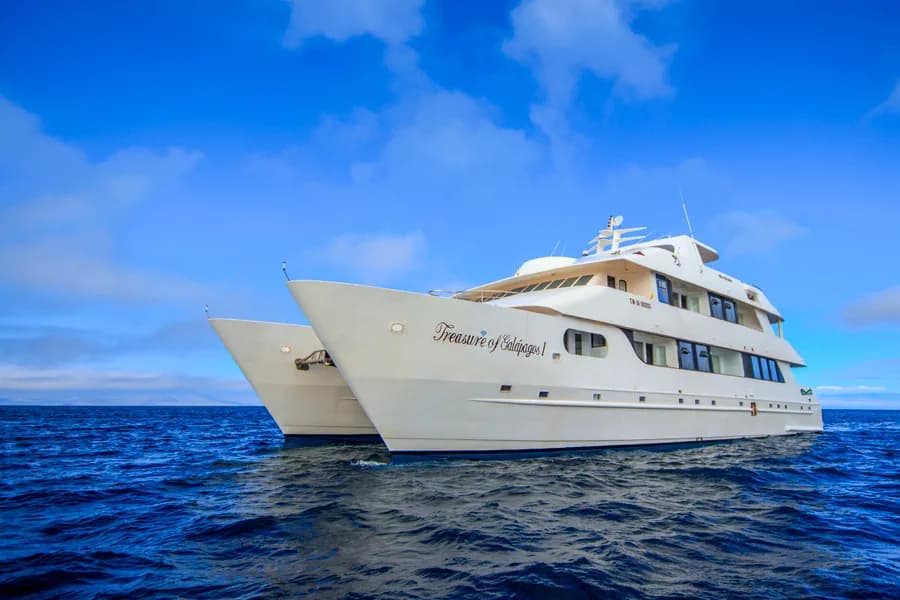
November 10, 2026 · Treasure, 5-Day Southern Islands: Los Gemelos' Daylight Owl
Likely: Santa Cruz Highlands, day 4. 16 spots
from US$4,150 per guest
Check availability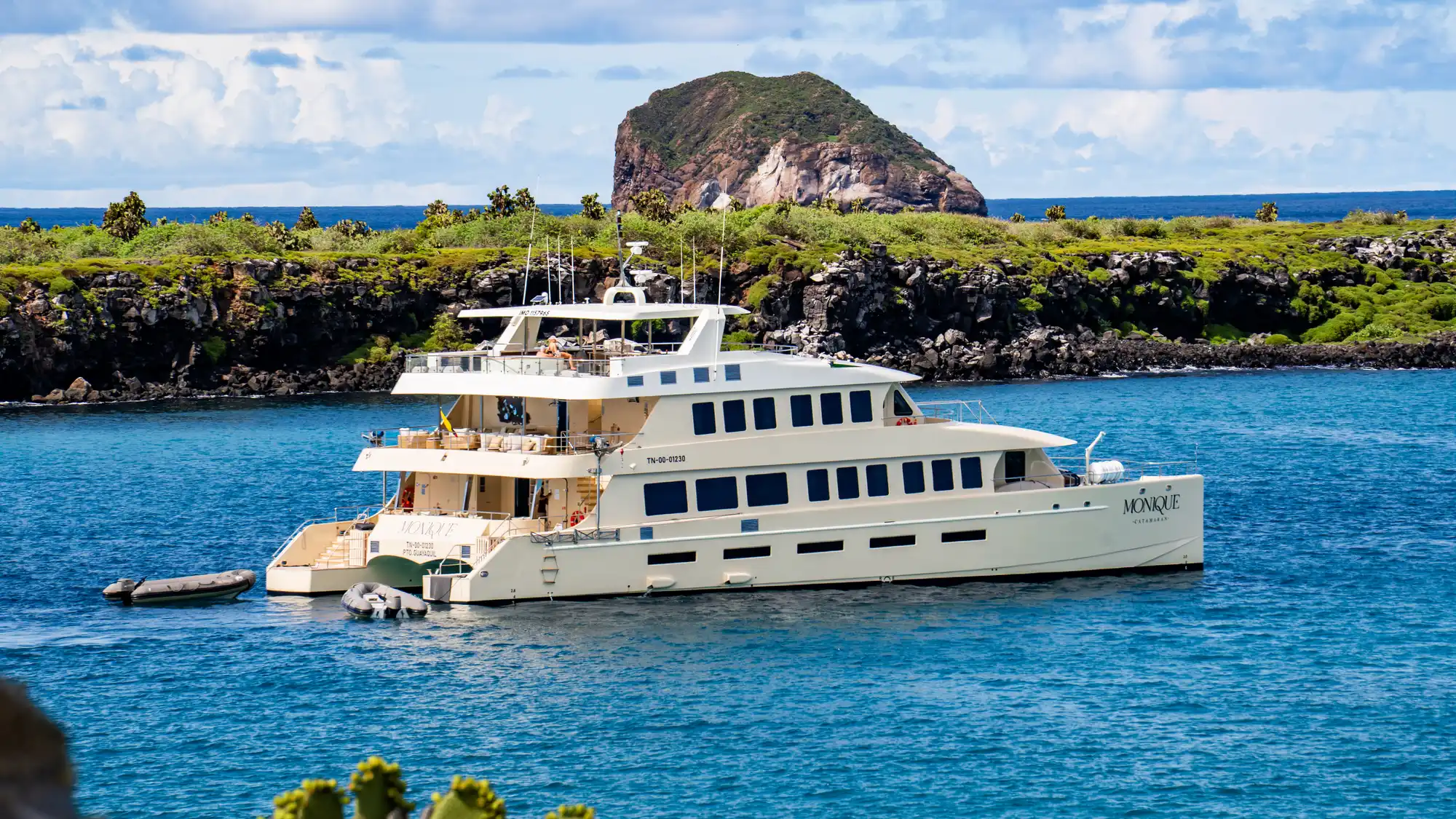
November 12, 2026 · Monique, 4-Day Southern Islands: Santa Cruz's Wild Tortoises
Likely: Santa Cruz Highlands, day 1. 6 spots
from US$3,352 per guest
Check availability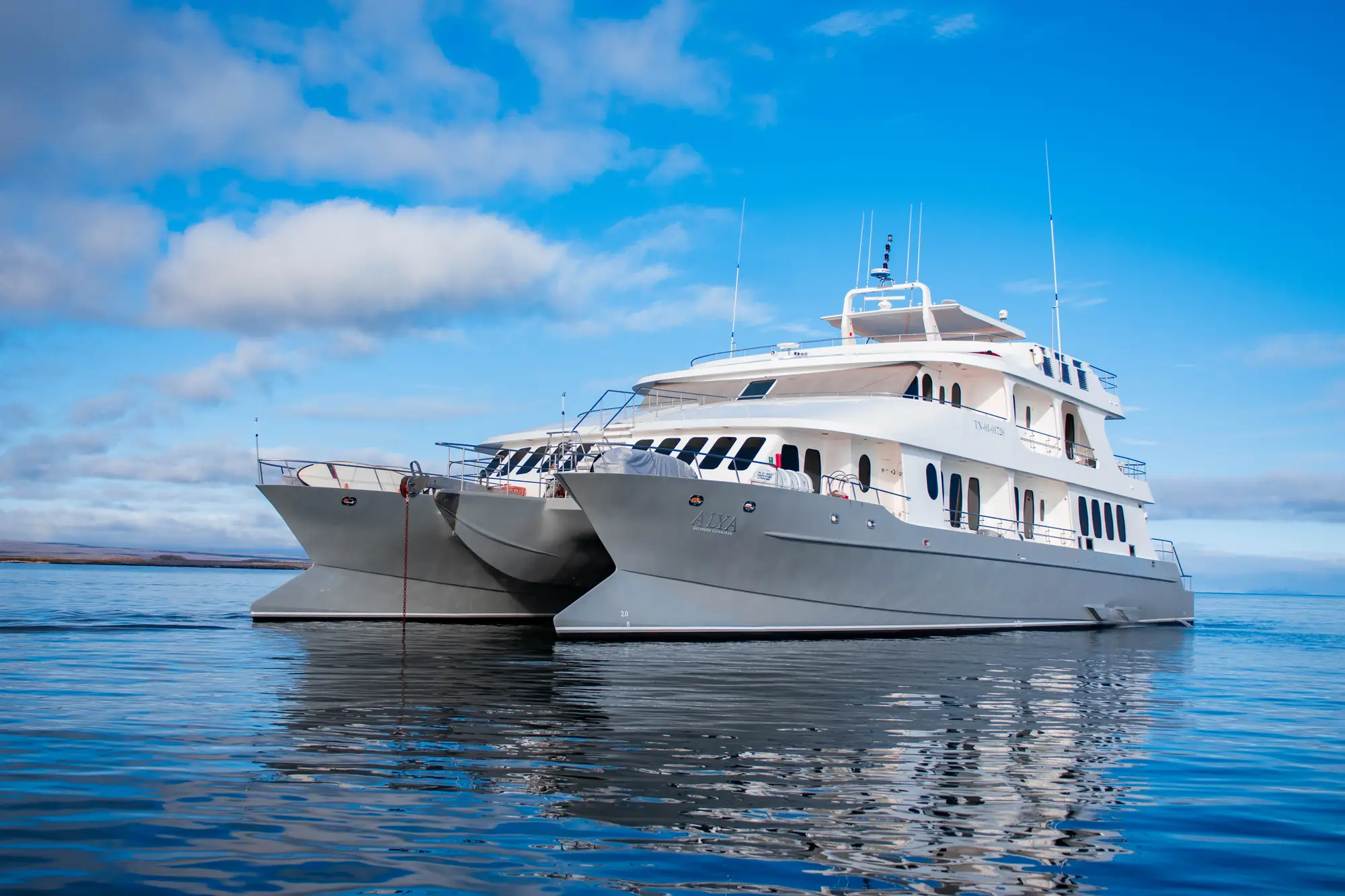
November 12, 2026 · Galaxy Sirius, 6-Day Western & Northern: Rabida's Red Sand Beach
Likely: Santa Cruz Highlands, day 3. 6 spots
from US$5,680 per guest
Check availability
2,674 departures
On every departure
Included
All meals on board · Two certified national park naturalist guides · All excursions and landings listed in the itinerary · Snorkelling gear and wetsuit · Kayaks and stand-up paddleboards on board · Coffee, tea and water at any time
How you see them
Landing at 5 sites · Panga ride at 1 site · Hiking at 1 site
Best chance
Wild, partly in the lowlands from January to May on Santa Cruz Highlands.