Golden Cownose Ray in Galápagos: Facts and Where to See It
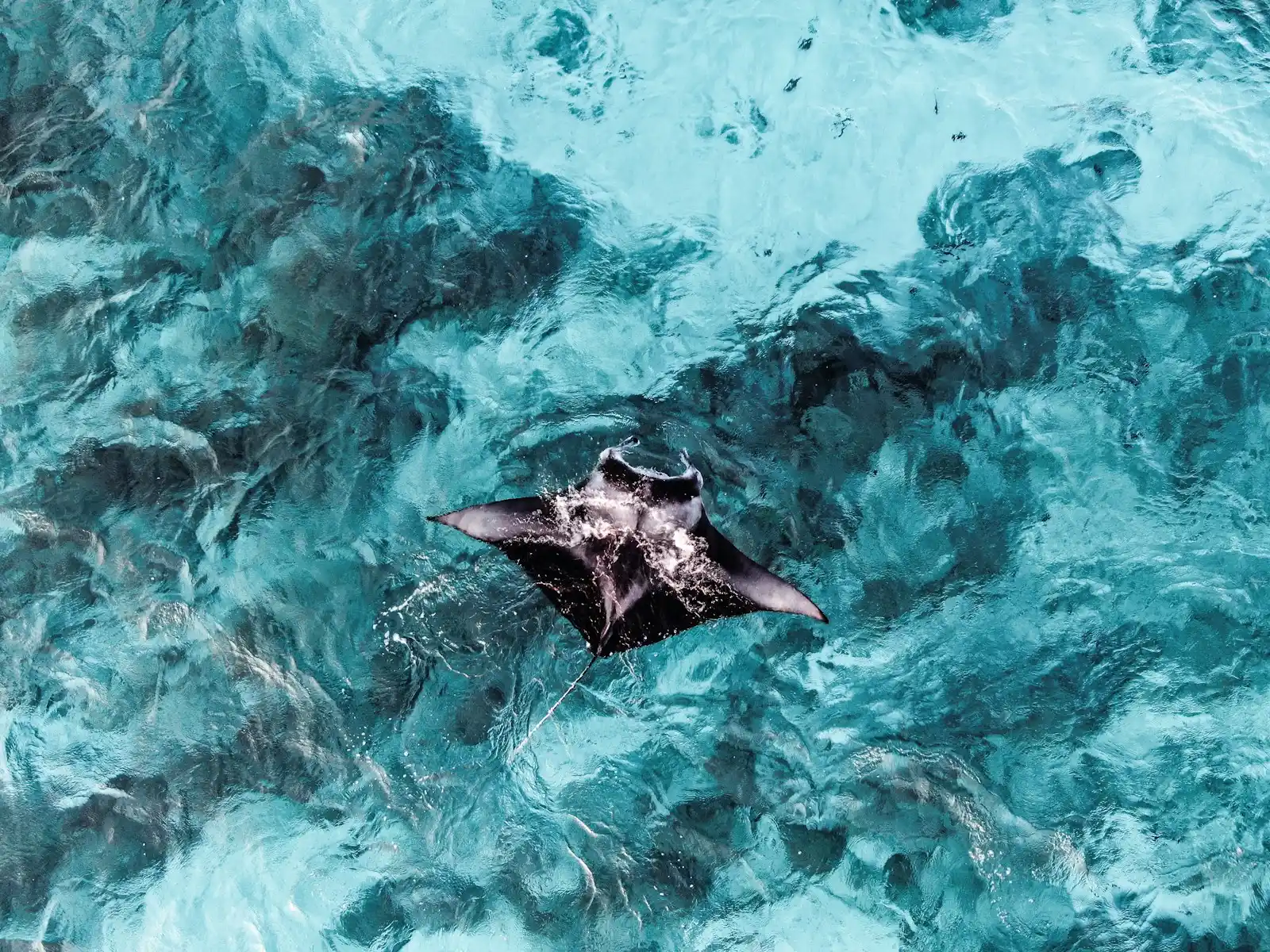
The golden cownose ray (Rhinoptera steindachneri), also called the Pacific cownose ray, is a ray of the eastern Pacific that often swims in schools. In Galápagos, golden rays glide in groups through calm mangrove coves, and naturalist guides' sighting records place them at 3 visitor sites, mostly seen from a panga or while snorkelling.
Good to know
| Scientific name | Rhinoptera steindachneri |
|---|---|
| Other name | Pacific cownose ray |
| Group | Rays, related to eagle rays |
| Endemic to Galápagos | No; eastern Pacific from Mexico to Peru |
| Social | Often in schools |
| Young | Born live, May to July |
| Danger to people | Harmless |
| IUCN status | Near Threatened |
| In Galápagos | At 3 sites (guide sighting records) |
- Wikipedia, Golden cownose ray (names, range, schools, reproduction, harmless, status)
- Galapagos Conservation Trust (golden rays in Galápagos)
Rays that travel together
Golden cownose rays are often found in schools, and sometimes swim together with spotted eagle rays. They live in a wide range of coastal waters: open and shallow seas, seagrass and other underwater beds, estuaries, marshes and coastal lagoons. In Galápagos, our guides most often record them in calm mangrove coves, seen from a panga.
- Born live. Like all eagle rays, the young develop inside the mother and are born live. Births have been recorded in May, June and July.
- Few young. They have low fecundity and are already large when they mature and when they are born.
- Relatives. Read more about the spotted eagle ray.
- Wikipedia, Golden cownose ray (schools, spotted eagle rays, habitats, ovoviviparity, birth months, fecundity)
- our guide sighting data (mangroves)
Where to see golden rays
Guide sighting records list 3 sites:
- Black Turtle Cove on Santa Cruz, rated Likely: the guides note rays schooling among the mangroves, seen from a panga.
- Elizabeth Bay on Isabela, rated Possible: a panga ride, with rays in schools.
- Los Túneles on Isabela, rated Possible: a snorkelling site, with rays in schools.
The Galapagos Conservation Trust also names Elizabeth Bay and Black Turtle Cove as places to see golden rays.
- Our guide sighting data
- Galapagos Conservation Trust, rays
Likely
- Black Turtle Cove, Santa Cruz.Panga ride. Seen all year.Likely
Possible
- Elizabeth Bay, Isabela.Panga ride. Seen all year.Possible
- Los Túneles, Isabela.Snorkelling. Seen all year.Possible
How you see them: panga ride at 2 sites, snorkelling at 1 site.
When to see them
The guide records list golden rays at all three sites in every month. In the next twelve months, 449 departures stop at a site where they are seen.
- Our guide sighting and departure data
- 13
- departures in November 2026
Show the November 2026 departures - 32
- departures in December 2026
Show the December 2026 departures - 30
- departures in January 2027
Show the January 2027 departures - 32
- departures in February 2027
Show the February 2027 departures - 342
- departures in the other 8 months
Choose a month in the list - 449
- departures in the next twelve months stop where they are seen
Show all departures
Is the golden cownose ray endangered?
It is listed as Near Threatened. The main threats are overexploitation and habitat destruction, and it has few young. In the Galápagos Marine Reserve, park rules ask visitors to keep at least 2 metres (6 feet) from wildlife.
- Wikipedia, Golden cownose ray (status, threats, fecundity)
- Galápagos National Park Rules
Mistakes to avoid
- Talking loudly in the panga. In the mangrove coves, quiet gets you closer views.
- Chasing a school while snorkelling. Let the rays pass; they move faster than you.
- Confusing them with stingrays. Golden rays swim in open water in groups; stingrays rest on the bottom.
- Wikipedia, Golden cownose ray
- Galápagos National Park Rules
Frequently asked questions
Is the cownose ray venomous?
The golden cownose ray is described as harmless to humans. Even so, keep your distance and never touch a ray.
- Wikipedia, Golden cownose ray
- Galápagos National Park Rules
Are cownose rays rare?
The golden cownose ray is listed as Near Threatened. In Galápagos, our guides rate it Likely at Black Turtle Cove and Possible at Elizabeth Bay and Los Túneles.
- Wikipedia, Golden cownose ray
- our guide sighting data
Where can I see golden rays in Galápagos?
Our guides rate Black Turtle Cove on Santa Cruz as Likely, and Elizabeth Bay and Los Túneles on Isabela as Possible.
- Our guide sighting data
How are golden cownose rays born?
Like all eagle rays, the young develop inside the mother and are born live. Ovulation and birth have been recorded in May, June and July, and each female has only a few young, which are already large at birth.
- Wikipedia, Golden cownose ray
Where do golden cownose rays live?
Along the eastern Pacific coast from Mexico to Peru, in open and shallow seas, underwater beds, estuaries, marshes and coastal lagoons. In Galápagos they gather in mangrove coves.
- Wikipedia, Golden cownose ray
- our guide sighting data
Do golden rays swim with other rays?
Yes, golden cownose rays are sometimes found together with spotted eagle rays, which also live in Galápagos.
- Wikipedia, Golden cownose ray
- our guide sighting data
Are golden cownose rays protected?
They are listed as Near Threatened worldwide. In Galápagos they live inside the marine reserve, where park rules ask visitors to keep at least 2 metres from wildlife.
- Wikipedia, Golden cownose ray
- Galápagos National Park Rules
Availability and prices updated
Departures that take you to them
Every Galápagos cruise in this list stops at least once at a site where our guides see the Golden Cownose Ray. The best chances come first, and each departure shows the site and the day. Found one that suits you? Ask us about it. There is no booking and no payment: we check the departure and reply.
Next departures with a good chance
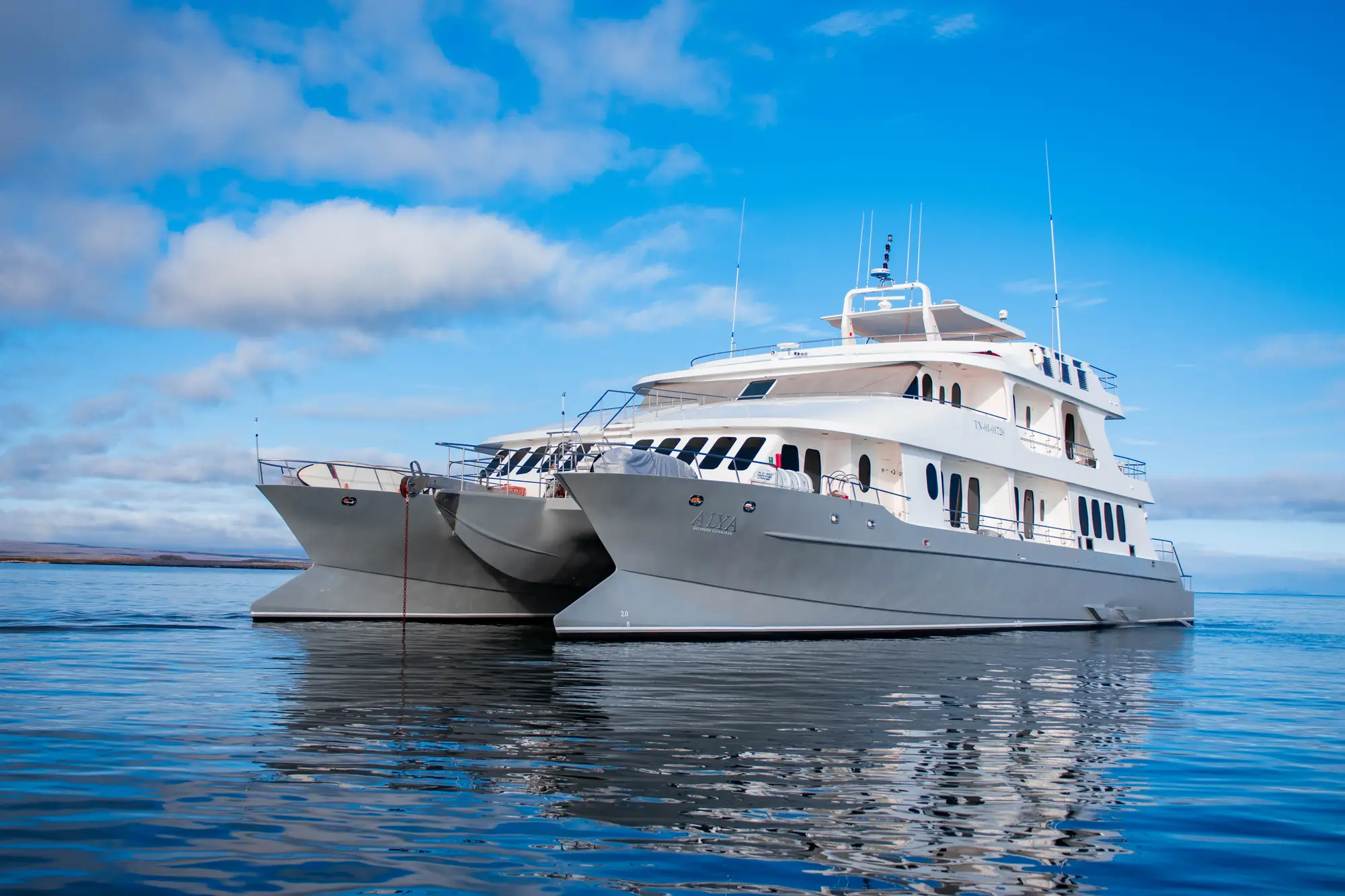
November 12, 2026 · Galaxy Sirius, 6-Day Western & Northern: Rabida's Red Sand Beach
Likely: Black Turtle Cove, day 1. 6 spots
from US$5,680 per guest
Check availability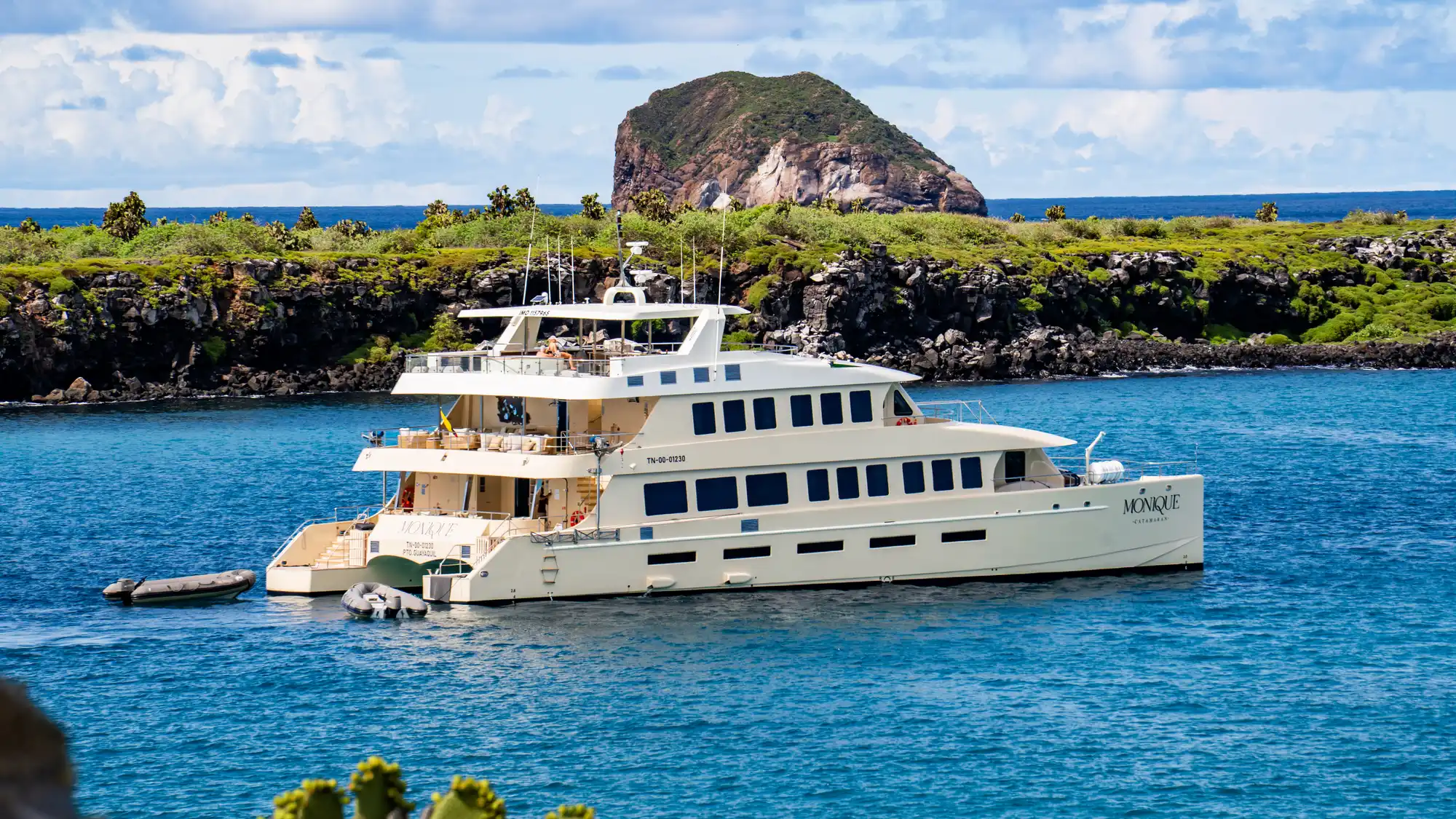
November 15, 2026 · Monique, 5-Day Southern & Western: Kicker Rock's Swim Channel
Likely: Black Turtle Cove, day 5. 1 spot
Check availability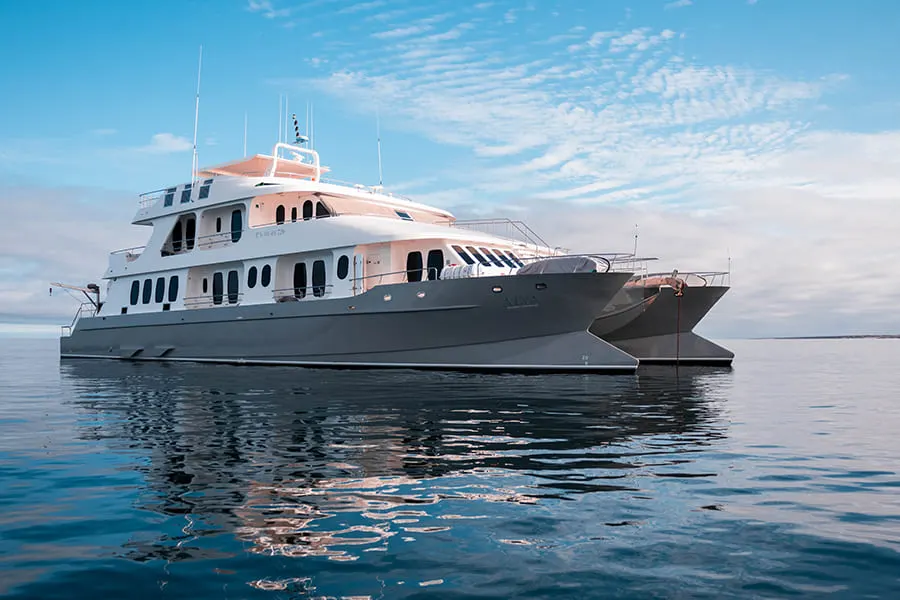
November 19, 2026 · Alya, 5-Day Northern & Western: Bartolome's Endemic Plant
Likely: Black Turtle Cove, day 1. 8 spots
from US$4,140 per guest
Check availability
1,404 departures
On every departure
Included
All meals on board · Two certified national park naturalist guides · All excursions and landings listed in the itinerary · Snorkelling gear and wetsuit · Kayaks and stand-up paddleboards on board · Coffee, tea and water at any time
How you see them
Panga ride at 2 sites · Snorkelling at 1 site
Best chance
Black Turtle Cove