Great Frigatebird in Galápagos: Facts and Where to See It
The great frigatebird (Fregata minor) is one of two frigatebirds in Galápagos, a black seabird with a 2.2-metre wingspan whose males inflate a red throat pouch. It soars over the sea for hours with hardly a wingbeat and steals fish from other seabirds. Naturalist guides' sighting records place it at 6 visitor sites on 3 islands, with the largest numbers on Genovesa.
Good to know
| Scientific name | Fregata minor |
|---|---|
| Group | Seabirds |
| Endemic to Galápagos | No; Pacific and Indian Oceans, a few in the South Atlantic |
| Wingspan | About 2.2 m, up to 2.3 m |
| Weight | About 1.3 kg |
| Lifespan | 30 to 35 years |
| Diet | Fish, scraps, food stolen from other birds, eggs and chicks |
| IUCN status | Least Concern |
| In Galápagos | All year, at 6 sites (guide sighting records) |
- Galapagos Conservation Trust, great frigatebird species page (all rows)
Great or magnificent?
The two Galápagos frigatebirds look very alike: black plumage, and red throat pouches on the males. The surest sign is the sheen on a male's back, green on the great frigatebird and purple on the magnificent. Females of both are larger than the males and have white breasts; young birds have white chests and heads.
- Soaring. The huge wings carry them over the ocean with barely a flap, but on land their short legs make walking nearly impossible.
- Drying out. Their plumage is not waterproof. A wet frigatebird has to dry its feathers in the sun, wings spread like a cormorant, before it can fly.
- Kleptoparasitism. They harass boobies and other birds until they drop their catch, and also take eggs and chicks.
- Galapagos Conservation Trust (identification, flight, legs, feathers, piracy)
Where the great frigatebird lives and nests
Great frigatebirds forage alone or in pairs and gather when shoals of fish rise to the surface; they also follow fishing boats and haunt ports for scraps. They nest in trees and bushes, sometimes on bare ground. The female builds a platform of sticks that the male brings her; both incubate the single egg and care for the chick, which takes up to four months to fledge and is fed while it learns to hunt.
The Galapagos Conservation Trust names Española, San Cristóbal, Genovesa, Darwin, Wolf and Daphne Major as the places they are seen most.
- Galapagos Conservation Trust (foraging, nesting, chick, islands)
Where to see great frigatebirds in Galápagos
Guide sighting records list great frigatebirds at 6 sites. 2 are rated Likely, both on Genovesa: Darwin Bay and Prince Philip's Steps. At Darwin Bay, males with inflated red pouches are rated Possible from March to June. North Seymour and Punta Pitt are rated Possible; Isla Lobos and Frigatebird Hill on San Cristóbal Rare.
- Our guide sighting data
Males displaying inflated red throat pouches, March to June
Darwin Bay
Likely
- Darwin Bay, Genovesa.Landing, snorkelling. Males displaying inflated red throat pouches, March to June.Likely
- Prince Philip's Steps, Genovesa.Landing. Seen all year.Likely
Possible
- North Seymour Trail, North Seymour.Landing. Seen all year.Possible
- Punta Pitt, San Cristóbal.Landing. Seen all year.Possible
Rare
- Frigatebird Hill (Cerro Tijeretas), San Cristóbal.Landing. Seen all year.Rare
- Isla Lobos, San Cristóbal.Landing, snorkelling. Seen all year.Rare
How you see them: landing at 6 sites, snorkelling at 2 sites.
When to see them
Great frigatebirds are in Galápagos all year. The guide records place displaying males at Darwin Bay from March to June. In the next twelve months, 226 departures stop there in those months, and 679 stop at a site where great frigatebirds are seen at all.
- Galapagos Conservation Trust (all year)
- our guide sighting and departure data
- 36
- departures in March 2027
Show the March 2027 departures - 56
- departures in April 2027
Show the April 2027 departures - 57
- departures in May 2027
Show the May 2027 departures - 77
- departures in June 2027
Show the June 2027 departures - 453
- departures in the other 8 months
Choose a month in the list - 679
- departures in the next twelve months stop where they are seen
Show all departures
Is the great frigatebird endangered?
No, it is listed as Least Concern and protected by the Galápagos National Park. Some populations elsewhere are under pressure from climate change and human disturbance, El Niño may affect survival and breeding, and marine plastic is a possible threat. On Genovesa, park rules keep visitors on the marked trail and at least 2 metres (6 feet) from the birds.
- Galapagos Conservation Trust (status, threats, protection)
- Galápagos National Park Rules
Mistakes to avoid
- Calling every frigatebird great. Check the back of a male: green means great, purple magnificent.
- Leaving out Genovesa. Both Likely sites are there.
- Expecting red pouches all year. The guide records place displays at Darwin Bay from March to June.
- Galapagos Conservation Trust
- our guide sighting data
Frequently asked questions
What is special about the frigate bird?
Its flight: huge wings let it soar over the ocean almost without flapping. It also steals food from other birds, and males inflate a bright red throat pouch to court.
Why can't frigatebirds get wet?
Their plumage is not waterproof. A wet great frigatebird must spread its wings in the sun to dry, like a cormorant, before it can fly again.
Are frigate birds rare?
No. The great frigatebird is listed as Least Concern and found across the Pacific and Indian Oceans; in Galápagos it is seen all year, most of all on Genovesa.
- Galapagos Conservation Trust
- our guide sighting data
Availability and prices updated
Departures that take you to them
Every Galápagos cruise in this list stops at least once at a site where our guides see the Great Frigatebird. The best chances come first, and each departure shows the site and the day. Found one that suits you? Ask us about it. There is no booking and no payment: we check the departure and reply.
Next departures with a good chance
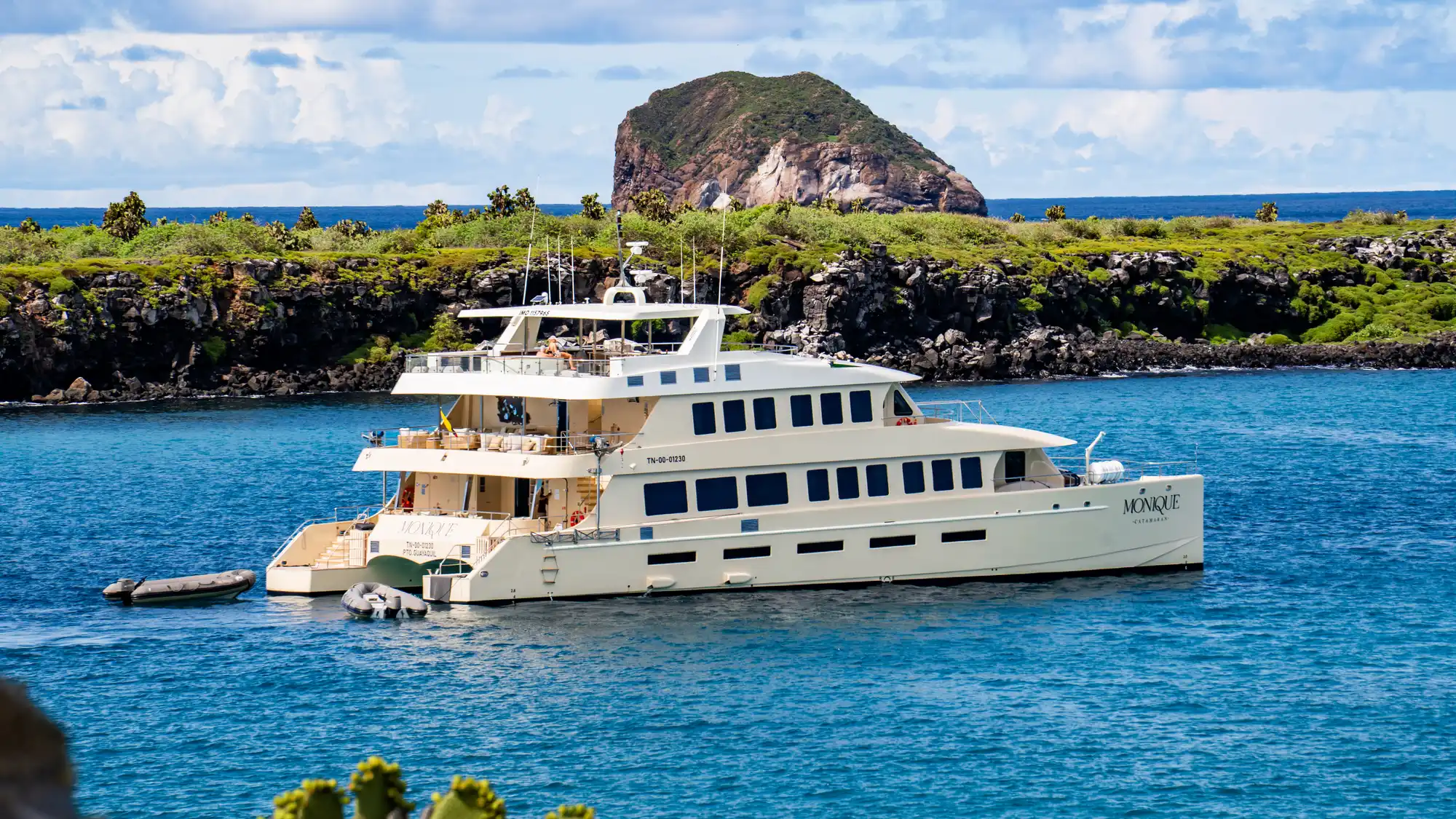
November 15, 2026 · Monique, 5-Day Southern & Western: Kicker Rock's Swim Channel
Likely: Darwin Bay, day 4. 1 spot
Check availability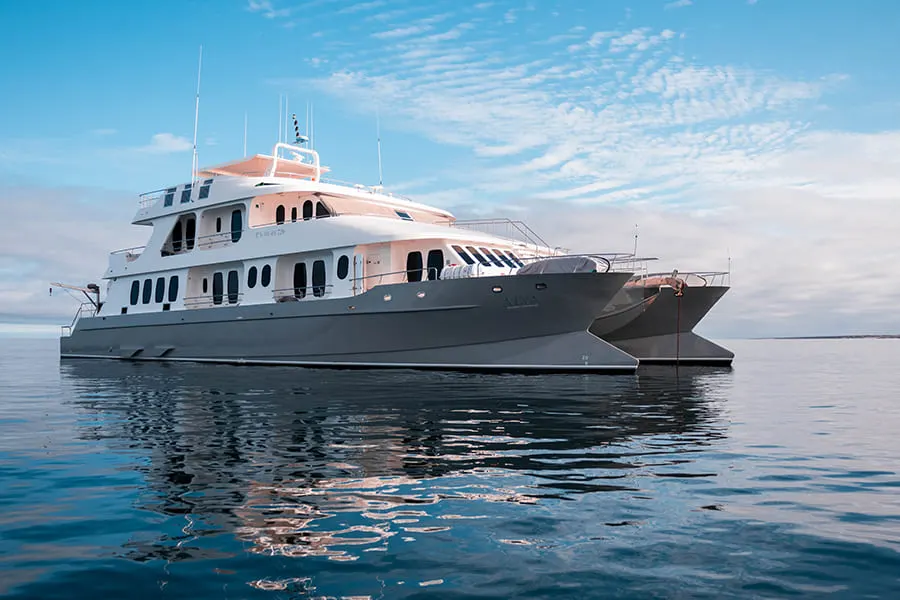
November 19, 2026 · Alya, 5-Day Northern & Western: Bartolome's Endemic Plant
Likely: Darwin Bay, day 2. 8 spots
from US$4,140 per guest
Check availabilityDecember 3, 2026 · Alya, 5-Day Northern & Western: Bartolome's Endemic Plant
Likely: Darwin Bay, day 2. 1 spot
from US$4,370 per guest
Check availability
2,062 departures
On every departure
Included
All meals on board · Two certified national park naturalist guides · All excursions and landings listed in the itinerary · Snorkelling gear and wetsuit · Kayaks and stand-up paddleboards on board · Coffee, tea and water at any time
How you see them
Landing at 6 sites · Snorkelling at 2 sites
Best chance
Males displaying inflated red throat pouches from March to June on Darwin Bay.