Galápagos Flycatcher: Facts and Where to See It
The Galápagos flycatcher (Myiarchus magnirostris), also called the large-billed flycatcher, is a small bird found only in the islands, 14 to 16 cm long, grey-brown with a small crest and a sulphur-yellow belly. It is famously tame and curious, often perching within 2 metres of people. Naturalist guides' sighting records place it at 2 visitor sites on 2 islands.
Good to know
| Scientific name | Myiarchus magnirostris |
|---|---|
| Group | Land birds |
| Endemic to Galápagos | Yes |
| Size | 14 to 16 cm |
| Weight | 12 to 18.5 g |
| Diet | Insects, other arthropods, fruit |
| Eggs | 3 to 5, mostly December to May |
| IUCN status | Least Concern, decreasing |
| In Galápagos | All islands except Darwin, Wolf and Genovesa |
- Wikipedia, Galapagos flycatcher (size, weight, diet, eggs, islands)
- BirdLife International DataZone (status, trend)
A bird that comes to you
The Galápagos flycatcher is described as extremely tame and inquisitive. It often perches within 2 metres of people while scanning for prey, sometimes flies into buildings to catch insects, and has been known to land on a person's shoulder and try to pull hair, possibly for its nest.
- Look. Grey-brown to olive-brown above, with a small crest, two pale wing bars, a grey throat and a sulphur-yellow belly.
- Bill. Thick, dark brown to black, with a pinkish base to the lower half.
- Hunting. It usually forages in pairs within about 3 metres of the ground, picking prey and fruit while briefly hovering.
- Wikipedia, Galapagos flycatcher (tameness, buildings, hair pulling, look, foraging)
Where the flycatcher lives and nests
Galápagos flycatchers live in every vegetated habitat of their islands, from sea level to at least 1,000 metres, most numerous in the moister lowlands. They nest in cavities: holes in trees and cactus, and even in concrete power poles, lining the nest with plants, hair and feathers. Breeding peaks in the warm wet season from December to May. BirdLife lists dry shrubland as the main habitat.
- Wikipedia, Galapagos flycatcher (habitats, elevation, nests, season)
- BirdLife International DataZone (main habitat)
Where to see Galápagos flycatchers
Guide sighting records list flycatchers at 2 sites: Tagus Cove on Isabela and Punta Cormorant on Floreana, both rated Rare. Because the species lives on most islands and is curious, it may turn up on many other landings too.
- Our guide sighting data
- Wikipedia (range, tameness)
Rare
- Punta Cormorant, Floreana.Landing. Seen all year.Rare
- Tagus Cove, Isabela.Panga ride, hiking. Seen all year.Rare
How you see them: landing at 1 site, panga ride at 1 site, hiking at 1 site.
When to see them
Flycatchers are present all year and breed mostly from December to May. In the next twelve months, 579 departures stop at a site where they are recorded.
- Wikipedia
- our guide sighting and departure data
- 28
- departures in November 2026
Show the November 2026 departures - 41
- departures in December 2026
Show the December 2026 departures - 38
- departures in January 2027
Show the January 2027 departures - 39
- departures in February 2027
Show the February 2027 departures - 433
- departures in the other 8 months
Choose a month in the list - 579
- departures in the next twelve months stop where they are seen
Show all departures
Is the Galápagos flycatcher endangered?
No, it is listed as Least Concern, but BirdLife suspects a decline due to ongoing habitat degradation and possibly introduced mammals. Its total population has not been counted; it is described as fairly common.
Mistakes to avoid
- Reaching out to a curious bird. Let it come and go; park rules ask for 2 metres of distance.
- Offering food. Feeding wildlife is not allowed.
- Looking on Genovesa. It does not live on Genovesa, Darwin or Wolf.
- Galápagos National Park Rules
- Wikipedia
Frequently asked questions
Where do flycatcher birds live in Galápagos?
The Galápagos flycatcher lives on all the islands except Darwin, Wolf and Genovesa, in every vegetated habitat from sea level to at least 1,000 metres.
- Wikipedia, Galapagos flycatcher
Is the large-billed flycatcher the same as the Galápagos flycatcher?
Yes. Large-billed flycatcher is another name for the Galápagos flycatcher, Myiarchus magnirostris.
- Wikipedia, Galapagos flycatcher
Is the Galápagos flycatcher tame?
Yes, it is extremely tame and inquisitive. It often perches within 2 metres of people and may even land on a shoulder.
- Wikipedia, Galapagos flycatcher
What does the Galápagos flycatcher eat?
Insects, other arthropods and fruit, picked off plants while briefly hovering.
- Wikipedia, Galapagos flycatcher
What bird is only found in the Galapagos Islands?
The Galápagos flycatcher is one of several. Others include the Galápagos dove, Darwin's finches, the Galápagos mockingbirds, the flightless cormorant and the Galápagos penguin.
- Wikipedia, Galapagos flycatcher
- BirdLife International DataZone
Is the Galápagos flycatcher endangered?
No. It is listed as Least Concern and described as fairly common, but BirdLife suspects a slow decline from habitat degradation and possibly introduced mammals.
What does the Galápagos flycatcher look like?
Grey-brown above with a small crest, two pale wing bars, a grey throat and a sulphur-yellow belly, with a thick dark bill.
- Wikipedia, Galapagos flycatcher
Availability and prices updated
Departures that take you to them
Every Galápagos cruise in this list stops at least once at a site where our guides see the Galápagos Flycatcher. The best chances come first, and each departure shows the site and the day. Found one that suits you? Ask us about it. There is no booking and no payment: we check the departure and reply.
Next departures with a good chance
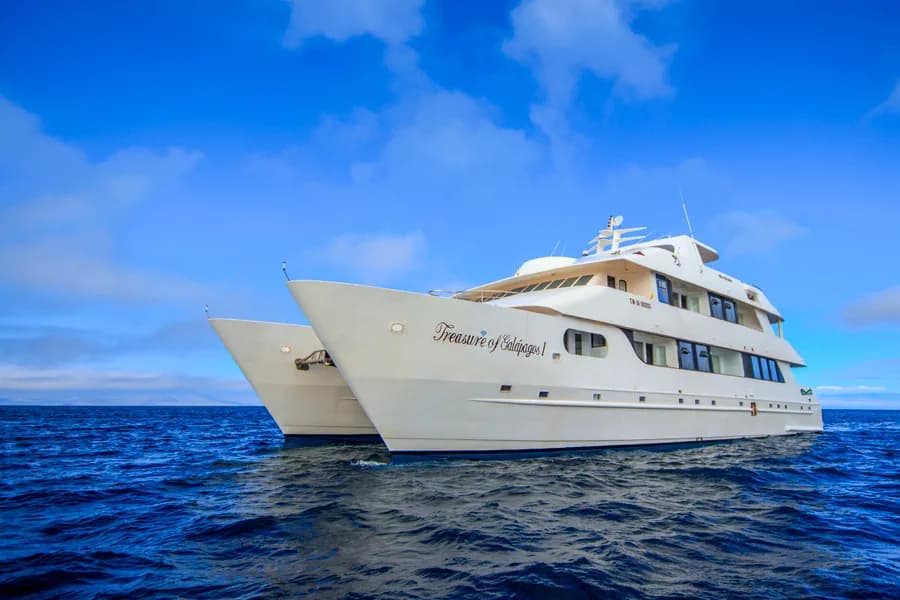
November 10, 2026 · Treasure, 5-Day Southern Islands: Los Gemelos' Daylight Owl
Rare: Punta Cormorant, day 3. 16 spots
from US$4,150 per guest
Check availability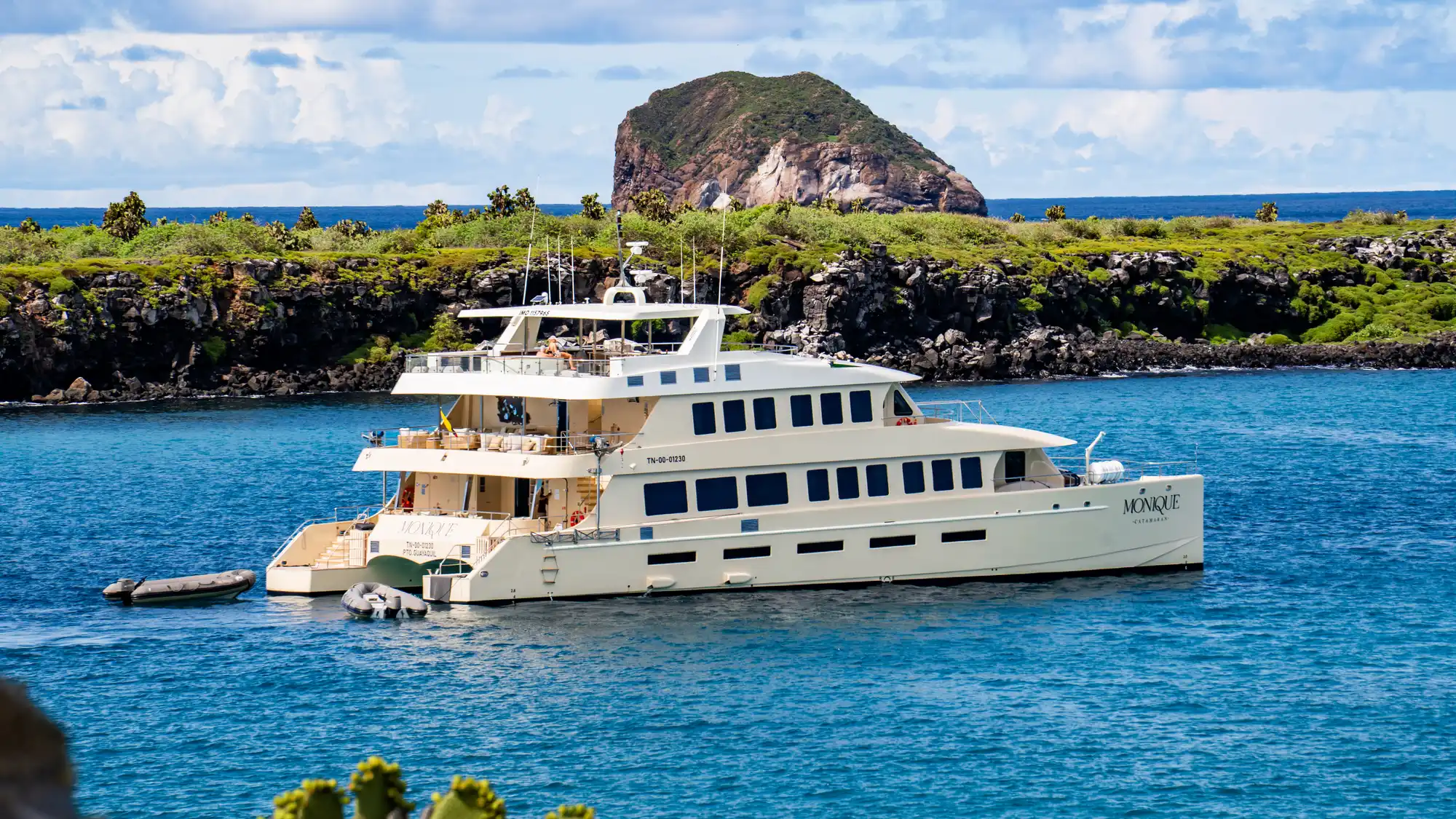
November 12, 2026 · Monique, 4-Day Southern Islands: Santa Cruz's Wild Tortoises
Rare: Punta Cormorant, day 2. 6 spots
from US$3,352 per guest
Check availability
November 12, 2026 · Tribute, 7-Day Western Islands: Fernandina's Marine Iguanas
Rare: Tagus Cove, day 4. 5 spots
from US$7,916 per guest
Check availability
1,829 departures
On every departure
Included
All meals on board · Two certified national park naturalist guides · All excursions and landings listed in the itinerary · Snorkelling gear and wetsuit · Kayaks and stand-up paddleboards on board · Coffee, tea and water at any time
How you see them
Landing at 1 site · Panga ride at 1 site · Hiking at 1 site