Lava Gull in Galápagos: Facts and Where to See It
The lava gull (Leucophaeus fuliginosus) is thought to be the rarest gull in the world, with a total population of 300 to 600 birds, all in Galápagos. It is a dark, sooty gull with a black head, a white line along the front of the wings and a scarlet mouth. Naturalist guides note it mostly around harbours and list it at 2 visitor sites on 2 islands.
Good to know
| Scientific name | Leucophaeus fuliginosus |
|---|---|
| Group | Seabirds |
| Endemic to Galápagos | Yes |
| Size | About 53 cm, up to 55 cm |
| Weight | About 380 g |
| Lifespan | Up to 49 years |
| Population | 300 to 600 birds |
| Diet | Omnivore and scavenger |
| IUCN status | Vulnerable |
| In Galápagos | All year, mainly on Santa Cruz, Isabela, San Cristóbal and Genovesa |
- Galapagos Conservation Trust, lava gull species page (all rows)
A solitary, sooty gull
The lava gull belongs to the hooded gulls. Adults have a sooty brown to black head, dark grey wings with a white leading edge, a pale grey belly, a white upper tail, black bill and legs, white marks above and below the eye, and a scarlet inside to the mouth.
- Alone, not in colonies. Unlike most gulls, lava gulls nest alone, rarely less than 100 metres apart, and defend a territory of about 2,000 square metres.
- Olive eggs. They usually lay two olive-coloured eggs on the ground under coastal plants.
- Anything goes. They steal from nests and fishermen, eat newly hatched iguanas, turtles and lizards, and feed on sea lion placentas.
- Galapagos Conservation Trust (plumage, nesting, territory, eggs, diet)
Where the lava gull lives
Lava gulls are found mainly on four islands, Santa Cruz, Genovesa, San Cristóbal and Isabela, though they turn up across the archipelago. They are often near towns and in harbours, scavenging for food, so the harbour is worth a look before boarding.
- Galapagos Conservation Trust (islands, harbours)
Where to see lava gulls in Galápagos
With only a few hundred birds spread over many islands, no visitor site is a sure bet. The guide sighting records rate lava gulls Rare everywhere and note them mostly around harbours. Of the 2 sites listed by name, both are rated Rare: Darwin Bay on Genovesa and Mosquera Islet.
- Our guide sighting data
Rare
- Darwin Bay, Genovesa.Landing, snorkelling. Seen all year.Rare
- Mosquera Islet, Mosquera.Beach, snorkelling. Seen all year.Rare
How you see them: snorkelling at 2 sites, landing at 1 site, beach at 1 site.
When to see them
Although there are few of them, lava gulls can be seen all year round. In the next twelve months, 444 departures stop at a site where they are recorded.
- Galapagos Conservation Trust
- our guide sighting and departure data
- 13
- departures in November 2026
Show the November 2026 departures - 27
- departures in December 2026
Show the December 2026 departures - 35
- departures in January 2027
Show the January 2027 departures - 34
- departures in February 2027
Show the February 2027 departures - 335
- departures in the other 8 months
Choose a month in the list - 444
- departures in the next twelve months stop where they are seen
Show all departures
Is the lava gull endangered?
It is listed as Vulnerable. With 300 to 600 birds, the population is tiny. Owls, frigatebirds, other lava gulls and introduced mammals prey on them, and plastic in the sea is being studied as a further risk. Park rules forbid feeding wildlife, which matters for a bird that scavenges in harbours.
- Galapagos Conservation Trust (status, population, predators, plastic)
- Galápagos National Park Rules
Mistakes to avoid
- Overlooking it in town. The harbour is one of the likeliest places to see one.
- Feeding it. Park rules forbid feeding wildlife.
- Confusing it with young gulls of other species. Look for the white line on the leading edge of the wing.
Frequently asked questions
How do you recognise a lava gull?
By its dark colours: a sooty brown to black head, dark grey wings with a white line along the leading edge, a pale grey belly and white upper tail, black bill and legs, white marks above and below the eye, and a scarlet inside to the mouth.
What is the rarest seagull?
The lava gull is thought to be the rarest gull in the world, with 300 to 600 birds, all in Galápagos.
Where can I see a lava gull?
Mainly on Santa Cruz, Isabela, San Cristóbal and Genovesa, often near towns and harbours. The guide records list Darwin Bay on Genovesa and Mosquera Islet as sites, both rated Rare.
- Galapagos Conservation Trust
- our guide sighting data
What does a lava gull eat?
Almost anything: food stolen from nests and fishermen, newly hatched iguanas, turtles and lizards, and sea lion placentas.
Is the lava gull endangered?
It is listed as Vulnerable, with a population of only 300 to 600 birds.
Availability and prices updated
Departures that take you to them
Every Galápagos cruise in this list stops at least once at a site where our guides see the Lava Gull. The best chances come first, and each departure shows the site and the day. Found one that suits you? Ask us about it. There is no booking and no payment: we check the departure and reply.
Next departures with a good chance
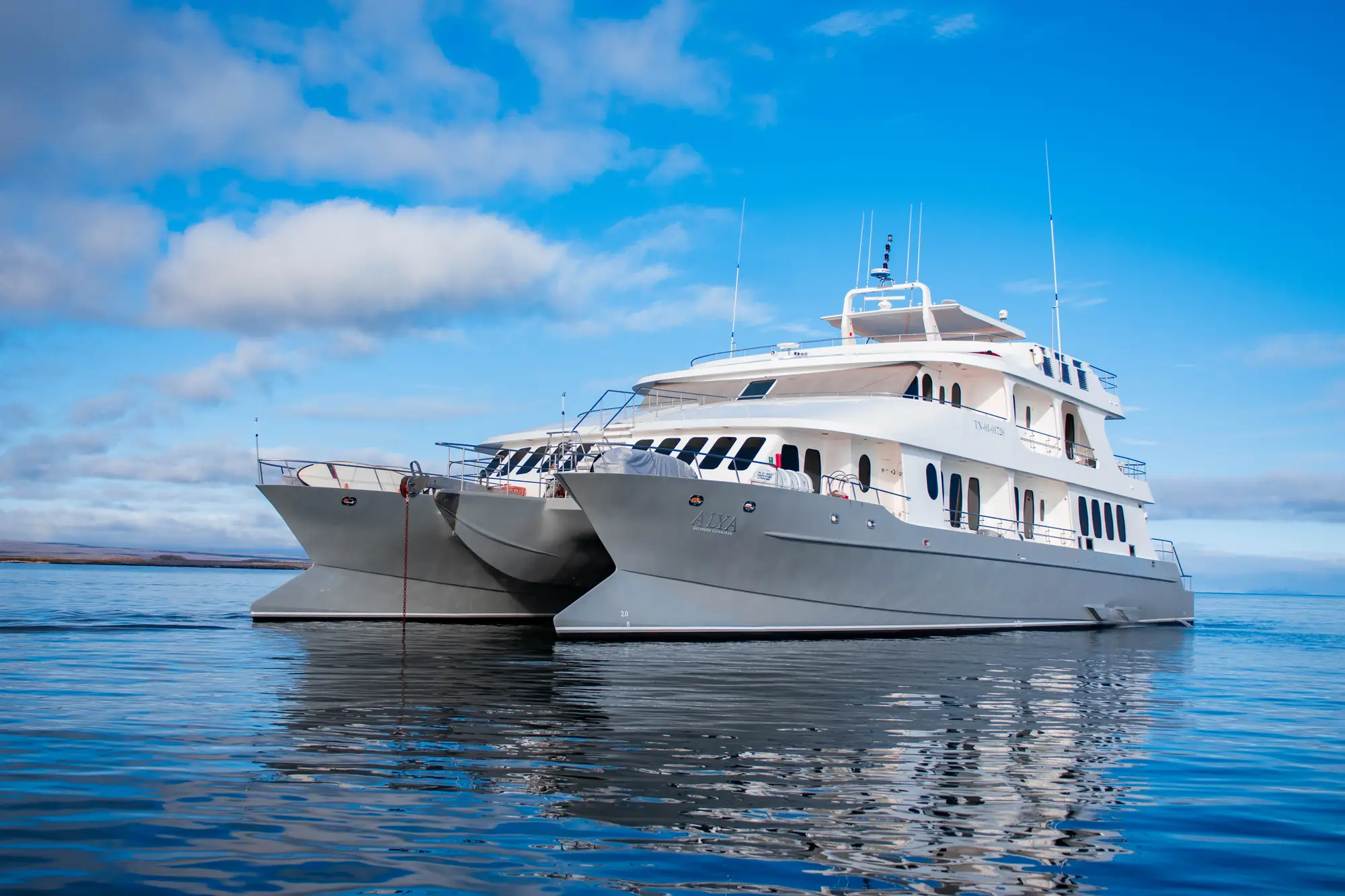
November 12, 2026 · Galaxy Sirius, 6-Day Western & Northern: Rabida's Red Sand Beach
Rare: Darwin Bay, day 5. 6 spots
from US$5,680 per guest
Check availability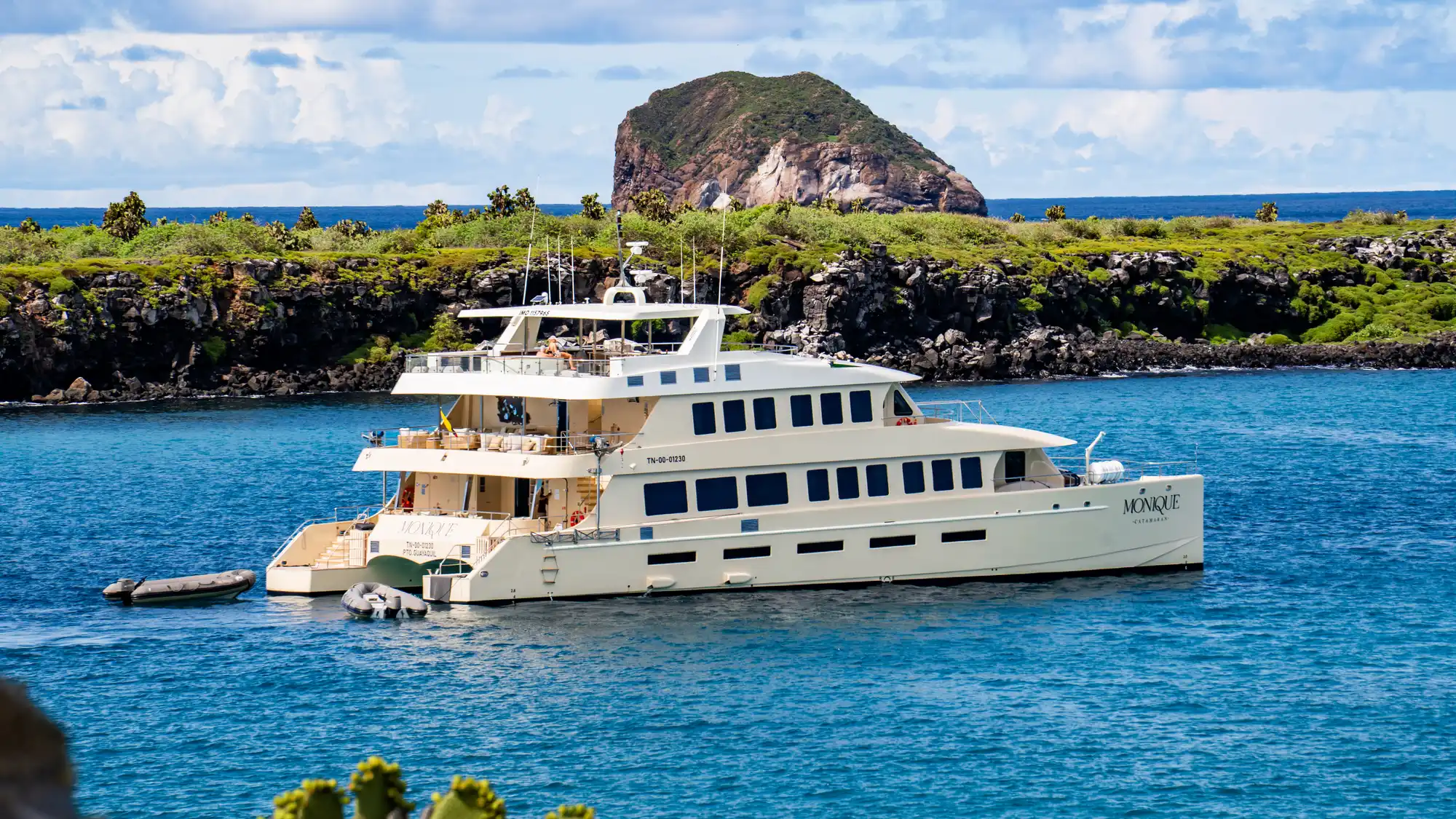
November 15, 2026 · Monique, 5-Day Southern & Western: Kicker Rock's Swim Channel
Rare: Darwin Bay, day 4. 1 spot
Check availability
November 18, 2026 · Galaxy Stella, 5-Day Northern Islands: Kicker Rock's Shark Channel
Rare: Darwin Bay, day 3. 4 spots
from US$4,080 per guest
Check availability
1,337 departures
On every departure
Included
All meals on board · Two certified national park naturalist guides · All excursions and landings listed in the itinerary · Snorkelling gear and wetsuit · Kayaks and stand-up paddleboards on board · Coffee, tea and water at any time
How you see them
Snorkelling at 2 sites · Landing at 1 site · Beach at 1 site