Lava Heron in Galápagos: Facts and Where to See It
The lava heron (Butorides sundevalli), also called the Galápagos heron, is a small grey heron found only in Galápagos, about 35 cm tall. Its uniform grey matches the basalt rocks it hunts on, so it is easy to walk past. Naturalist guides note it around tide pools across the archipelago and list it at 4 visitor sites on 4 islands.
Good to know
| Scientific name | Butorides sundevalli |
|---|---|
| Group | Shore birds |
| Endemic to Galápagos | Yes |
| Size | About 35 cm; wingspan about 63 cm |
| Diet | Small fish and crabs |
| Eggs | 1 to 3, up to three clutches a year |
| Population | Unknown; appears common |
| IUCN status | Least Concern |
| In Galápagos | All year, along the shores of all islands |
- Galapagos Conservation Trust, lava heron species page (all rows)
Grey on grey, and orange legs in season
The lava heron is uniform grey with a short crest, colouring that works as camouflage on the grey basalt of the shore. Males are slightly larger than females, and young birds are brown and streaky.
- Breeding colours. In the breeding season the legs turn from dull grey to bright orange, and the male's bill from grey to black.
- Fast hunter. It stalks slowly, then stabs with its sharp bill, and has been recorded catching two to three crabs a minute.
- Nesting after rain. Pairs breed all year, most often after heavy rain, building a nest together in bushes or mangroves in the male's territory.
- Galapagos Conservation Trust (plumage, crest, sexes, juveniles, breeding colours, hunting, nesting)
Where the lava heron lives
Lava herons live and nest along lava coastlines, saltwater lagoons and mangrove forests on all the islands, feeding in the shore zone on small fish and crabs. They seem common, though nobody knows how many there are.
Pairs tend to stay together. They build the nest jointly, off the ground in a bush or mangrove inside the male's territory, lay one to three eggs at a time, and may raise up to three broods a year. Because they nest in every month, often right after heavy rain, a visitor may see courting birds with orange legs at any time of year.
- Galapagos Conservation Trust (habitat, islands, diet, population unknown)
Where to see lava herons in Galápagos
The guide sighting records note lava herons around tide pools across the archipelago, rated Possible almost anywhere on the shore. Of the 4 sites listed by name, Darwin Bay on Genovesa is rated Likely, Black Turtle Cove on Santa Cruz and Mosquera Islet Possible, and Elizabeth Bay on Isabela Rare.
- Our guide sighting data
Likely
- Darwin Bay, Genovesa.Landing, snorkelling. Seen all year.Likely
Possible
- Black Turtle Cove, Santa Cruz.Panga ride. Seen all year.Possible
- Mosquera Islet, Mosquera.Beach, snorkelling. Seen all year.Possible
Rare
- Elizabeth Bay, Isabela.Panga ride. Seen all year.Rare
How you see them: snorkelling at 2 sites, panga ride at 2 sites, landing at 1 site, beach at 1 site.
When to see them
Lava herons nest all year round, so any month works. In the next twelve months, 635 departures stop at a site where they are seen.
- Galapagos Conservation Trust
- our guide sighting and departure data
- 18
- departures in November 2026
Show the November 2026 departures - 40
- departures in December 2026
Show the December 2026 departures - 46
- departures in January 2027
Show the January 2027 departures - 43
- departures in February 2027
Show the February 2027 departures - 488
- departures in the other 8 months
Choose a month in the list - 635
- departures in the next twelve months stop where they are seen
Show all departures
Is the lava heron endangered?
No, it is listed as Least Concern. Adults have few natural enemies, though introduced cats are a possible threat; rats and pigs eat eggs and chicks. Invasive species are controlled continuously. Park rules keep visitors at least 2 metres (6 feet) from wildlife, which on rocky shores means watching where you step.
- Galapagos Conservation Trust (status, threats, control)
- Galápagos National Park Rules
Mistakes to avoid
- Looking for a big heron. It is small, about 35 cm, and grey like the rock.
- Walking fast along the shore. Scan the tide pools slowly.
- Expecting orange legs every time. They show only in the breeding season.
Frequently asked questions
Do lava herons change colour?
Yes, in the breeding season. Their legs turn from dull grey to bright orange, and the male's bill from grey to black. Young birds are brown and streaky rather than grey.
Where do lava herons live?
Only in Galápagos, along the lava shores, saltwater lagoons and mangroves of all the islands.
What do lava herons eat?
Small fish and crabs from the shore zone. They have been recorded catching two to three crabs a minute.
Why are lava herons grey?
The uniform grey works as camouflage against the grey basalt rocks they hunt on.
How fast does a lava heron hunt?
It stalks slowly, then stabs with its sharp bill, and has been recorded catching two to three crabs a minute.
Availability and prices updated
Departures that take you to them
Every Galápagos cruise in this list stops at least once at a site where our guides see the Lava Heron. The best chances come first, and each departure shows the site and the day. Found one that suits you? Ask us about it. There is no booking and no payment: we check the departure and reply.
Next departures with a good chance
November 18, 2026 · Galaxy Stella, 5-Day Northern Islands: Kicker Rock's Shark Channel
Likely: Darwin Bay, day 3. 4 spots
from US$4,080 per guest
Check availability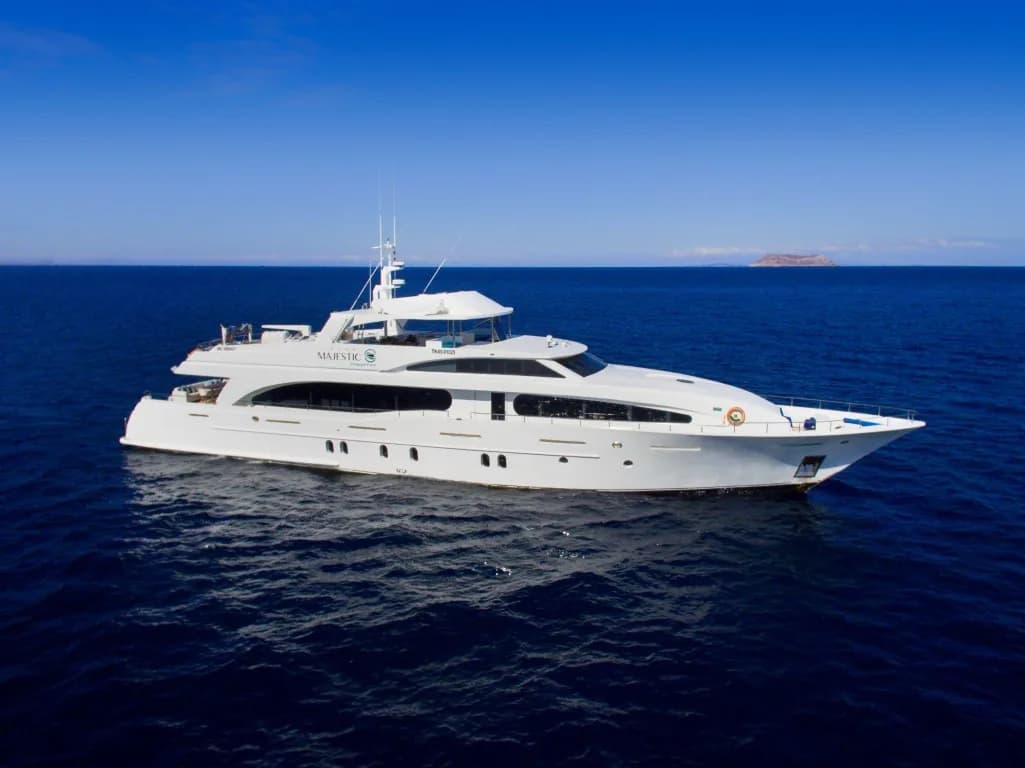
November 30, 2026 · Grand Majestic, 8-Day Southern & Northern: Espanola's Albatross Cliffs
Likely: Darwin Bay, day 5. 2 spots
from US$7,045 per guest
Check availabilityDecember 3, 2026 · Grand Majestic, 5-Day Northern & Eastern: Prince Philip's Steps
Likely: Darwin Bay, day 2. 4 spots
from US$4,545 per guest
Check availability
1,935 departures
On every departure
Included
All meals on board · Two certified national park naturalist guides · All excursions and landings listed in the itinerary · Snorkelling gear and wetsuit · Kayaks and stand-up paddleboards on board · Coffee, tea and water at any time
How you see them
Snorkelling at 2 sites · Panga ride at 2 sites · Landing at 1 site · Beach at 1 site
Best chance
Darwin Bay