Marine Iguana in Galápagos: Facts and Where to See It
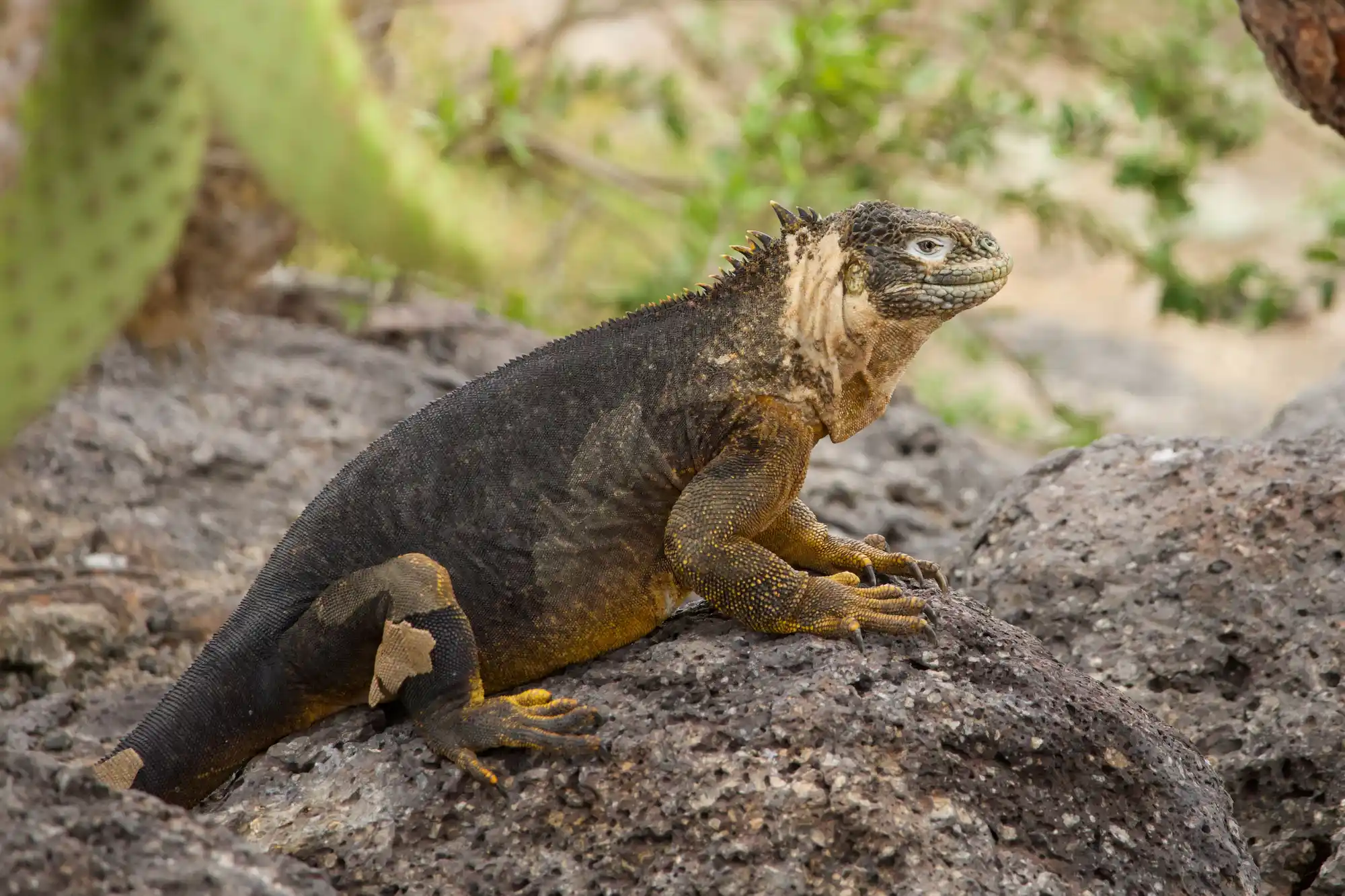
The marine iguana (Amblyrhynchus cristatus) is the only lizard in the world that lives and feeds at sea. It is found only in Galápagos, where it grazes on algae below the tide line, reaches up to 1.5 metres and basks in black heaps on the lava shore. Naturalist guides' sighting records place it at 6 visitor sites on 6 islands, in every month of the year.
Good to know
| Scientific name | Amblyrhynchus cristatus |
|---|---|
| Group | Reptiles |
| Endemic to Galápagos | Yes |
| Marine iguana size | About 0.7 m on average, up to 1.5 m |
| Weight | About 1.5 kg on average |
| Lifespan | 5 to 12 years |
| Diet | Algae and seaweed only |
| Subspecies | Eleven, on different islands; the largest on Isabela and Fernandina |
| IUCN status | Vulnerable |
| In Galápagos | All year, at 6 visitor sites on 6 islands (guide sighting records) |
- Galapagos Conservation Trust, marine iguana species page (size, weight, lifespan, subspecies, status)
- National Geographic, marine iguana facts (diet)
How a lizard lives at sea
Land iguanas from South America are thought to have drifted to Galápagos on logs or other debris millions of years ago, and the marine iguana evolved from them. Charles Darwin called it "hideous-looking" and among the "most disgusting, clumsy lizards". Its body is built for a cold sea.
- Blunt snout, sharp teeth. They scrape algae off the rocks, the only food a marine iguana eats.
- Flat tail, long claws. The tail drives it through the water like a crocodile, and the claws hold on to rocks in strong currents.
- A slower heart. In the water its heartbeat drops to half its normal rate, which saves energy and lets it feed for longer.
- Salt sneezes. Glands at the nose filter the extra salt from the blood, and the iguana sneezes it out, which often leaves white crystals on its head.
Large adults swim out and dive to graze; small ones stay near the shore and feed in rock pools on algae left dry by the low tide.
- National Geographic (origin, Darwin, snout, teeth, tail, claws, salt glands)
- Galapagos Conservation Trust (heart rate, salt sneezing, large and small iguanas)
Basking, colours and the breeding season
Why marine iguanas lie in heaps
Marine iguanas are not truly social, but they gather in large groups, above all on cold nights, when lying close together keeps them warm. In the morning they bask in the sun, their dark grey and black scales soaking up the heat, until they have enough energy to swim out and feed. That is why the shore at Punta Espinosa on Fernandina, the largest colony in the archipelago according to the guide records, can look like a field of dark rock that moves.
- Galapagos Conservation Trust (groups, basking)
- National Geographic (dark colouring)
- our guide sighting data (largest colony)
Red and green males
For most of the year, adults are black. In the mating season, which the Galapagos Conservation Trust places between January and March, males change colour, and each island has its own: on Española and Floreana they turn bright red and green, on Santa Cruz red and black, on Fernandina dull green and brick red. Males fight for dominance over groups of females and defend them fiercely against rivals. The guide records place the red and green males at Punta Suárez on Española from December to March.
- Galapagos Conservation Trust (colours by island, season, males)
- our guide sighting data (Punta Suárez, months)
Where the marine iguana lives and what it eats
Marine iguana habitat is the rocky coast of nearly every island in Galápagos: the lava shore above the waterline for basking, and the sea below it for feeding. Its diet is red and green algae and seaweed, grazed from rocks underwater or in pools at low tide. Each island has iguanas of its own size, shape and colour.
Food decides how many survive. In El Niño years the warm water cuts the algae, and the population can fall by up to 85 percent. Marine iguanas can even shrink their skeleton by up to 20 percent to need less food, and grow back when conditions improve.
- National Geographic (range, diet, island forms)
- Galapagos Conservation Trust (El Niño, skeleton)
Where to see marine iguanas in Galápagos
Guide sighting records list marine iguanas at 6 visitor sites on 6 islands, and the guides note them as present along the coasts of the whole archipelago. 2 sites are rated Likely, with sightings on most visits: Punta Espinosa on Fernandina, with the archipelago's largest colony, and Punta Suárez on Española, where the males turn red and green. The other sites are rated Possible or Rare, among them the trail on South Plaza and Las Tintoreras off Isabela.
- Our guide sighting data
Males in red and green breeding colours, December
Punta Suárez
Likely
- Punta Suárez, Española.Landing. Males in red and green breeding colours, December.Likely
- Punta Espinosa, Fernandina.Landing. Seen all year.Likely
Possible
- South Plaza Trail, South Plaza.Landing. Seen all year.Possible
Rare
- Cerro Brujo, San Cristóbal.Beach. Seen all year.Rare
- Darwin Bay, Genovesa.Landing, snorkelling. Seen all year.Rare
- Las Tintoreras, Isabela.Landing, snorkelling. Seen all year.Rare
How you see them: landing at 5 sites, snorkelling at 2 sites, beach at 1 site.
When to see them
Marine iguanas are in Galápagos in all 12 months, so no month rules them out. The colourful males of Española are the one thing tied to a season: the guide records place them from December to March, and the Galapagos Conservation Trust gives January to March for mating. In the next twelve months, 822 departures stop at a site where they are seen.
- Our guide sighting and departure data
- Galapagos Conservation Trust (mating season)
- 58
- departures in December 2026
Show the December 2026 departures - 764
- departures in the other 11 months
Choose a month in the list - 822
- departures in the next twelve months stop where they are seen
Show all departures
Is the marine iguana endangered?
The marine iguana is listed as Vulnerable. How many there are is not well known; the Galapagos Conservation Trust funds a drone survey, Iguanas from Above, to count them for the first time across the islands. Cats, dogs and rats brought by people eat eggs and young iguanas, which cannot defend themselves against large land predators. El Niño, oil spills and plastic in the sea add to the pressure.
Protection. In 2025, all Galápagos iguana species were moved to CITES Appendix I, the highest level of protection, which prohibits all international commercial trade. Galápagos National Park rules keep visitors at least 2 metres (6 feet) from wildlife and on marked trails with a naturalist guide, which matters on shores where iguanas lie across the path.
- National Geographic (population not well known, predators)
- Galapagos Conservation Trust (status, threats, Iguanas from Above, CITES 2025)
- Galápagos Conservancy, Galápagos National Park Rules (distance, trails)
Mistakes to avoid when planning to see them
- Looking only on the beach. Marine iguanas lie on black lava, and against it they are easy to step past. Watch where you walk.
- Expecting colour all year. The red and green males of Española appear from December to March; the rest of the year they are dark.
- Expecting them to swim in the morning. They bask first and go to sea once they are warm.
- Getting too close. Park rules set at least 2 metres between visitors and wildlife, and a sneezing iguana is a sign to step back.
- Our guide sighting data
- Galapagos Conservation Trust (basking first)
- Galápagos Conservancy, Galápagos National Park Rules
Frequently asked questions
Are marine iguanas aggressive?
Not towards people. National Geographic calls them gentle herbivores despite their fierce look, and they eat only algae. In the mating season from January to March, males fight each other for dominance over groups of females and defend them fiercely. Park rules keep visitors at least 2 metres away in any case.
Why do marine iguanas sneeze?
To get rid of salt. Feeding on algae in the sea, marine iguanas take in far more salt than their bodies need. Glands at the nose filter it from the blood, and the iguana sneezes it out, often leaving white salt crystals on its snout and head.
Is Godzilla based on marine iguana?
Partly, and only the 1998 version. The Godzilla of the 1998 TriStar film, designed by Patrick Tatopoulos, was modelled on iguanas in general, as a lean lizard on two legs.
- Wikipedia, Godzilla (TriStar)
Can I have a marine iguana as a pet?
No. Marine iguanas live only in Galápagos and are protected throughout the archipelago, and since 2025 all Galápagos iguanas are on CITES Appendix I, which prohibits all international commercial trade. They also eat only algae from the sea, which no home could supply.
Availability and prices updated
Departures that take you to them
Every Galápagos cruise in this list stops at least once at a site where our guides see the Marine Iguana. The best chances come first, and each departure shows the site and the day. Found one that suits you? Ask us about it. There is no booking and no payment: we check the departure and reply.
Next departures with a good chance
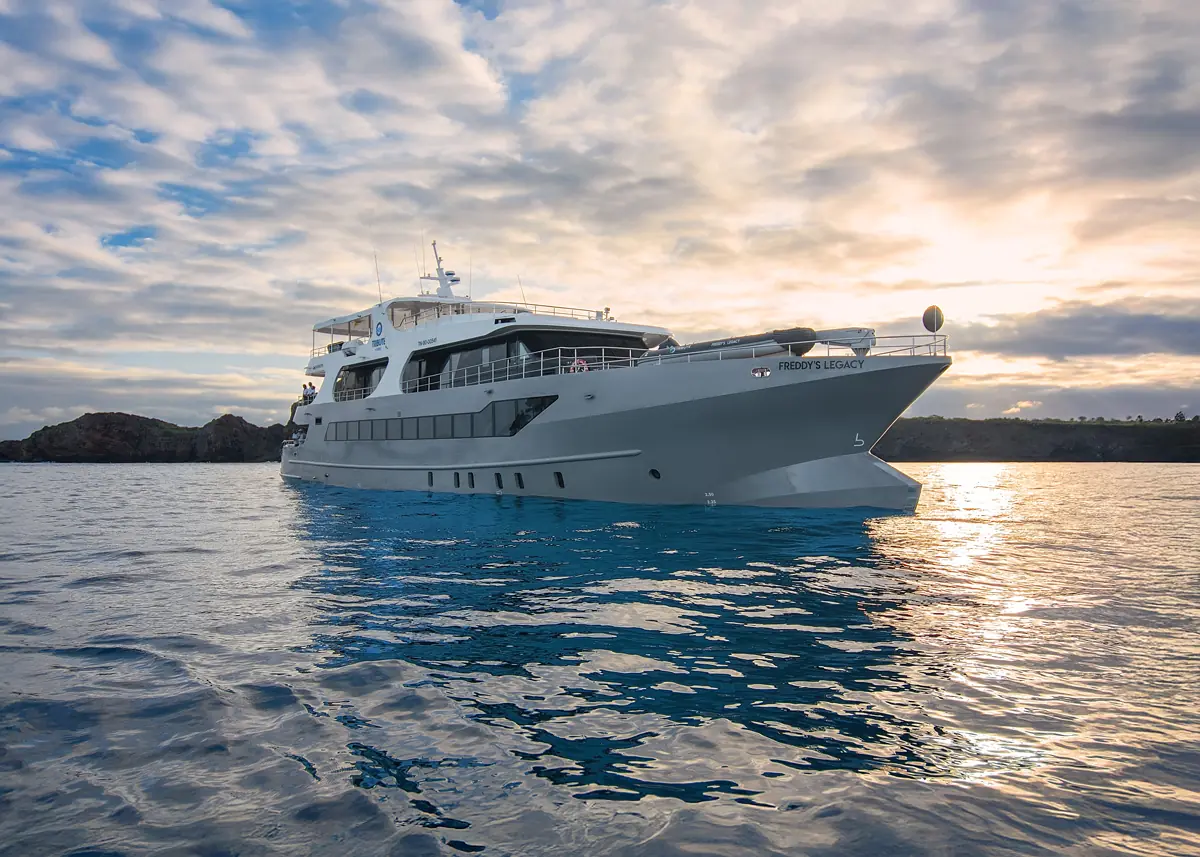
November 12, 2026 · Tribute, 7-Day Western Islands: Fernandina's Marine Iguanas
Likely: Punta Espinosa, day 3. 5 spots
from US$7,916 per guest
Check availability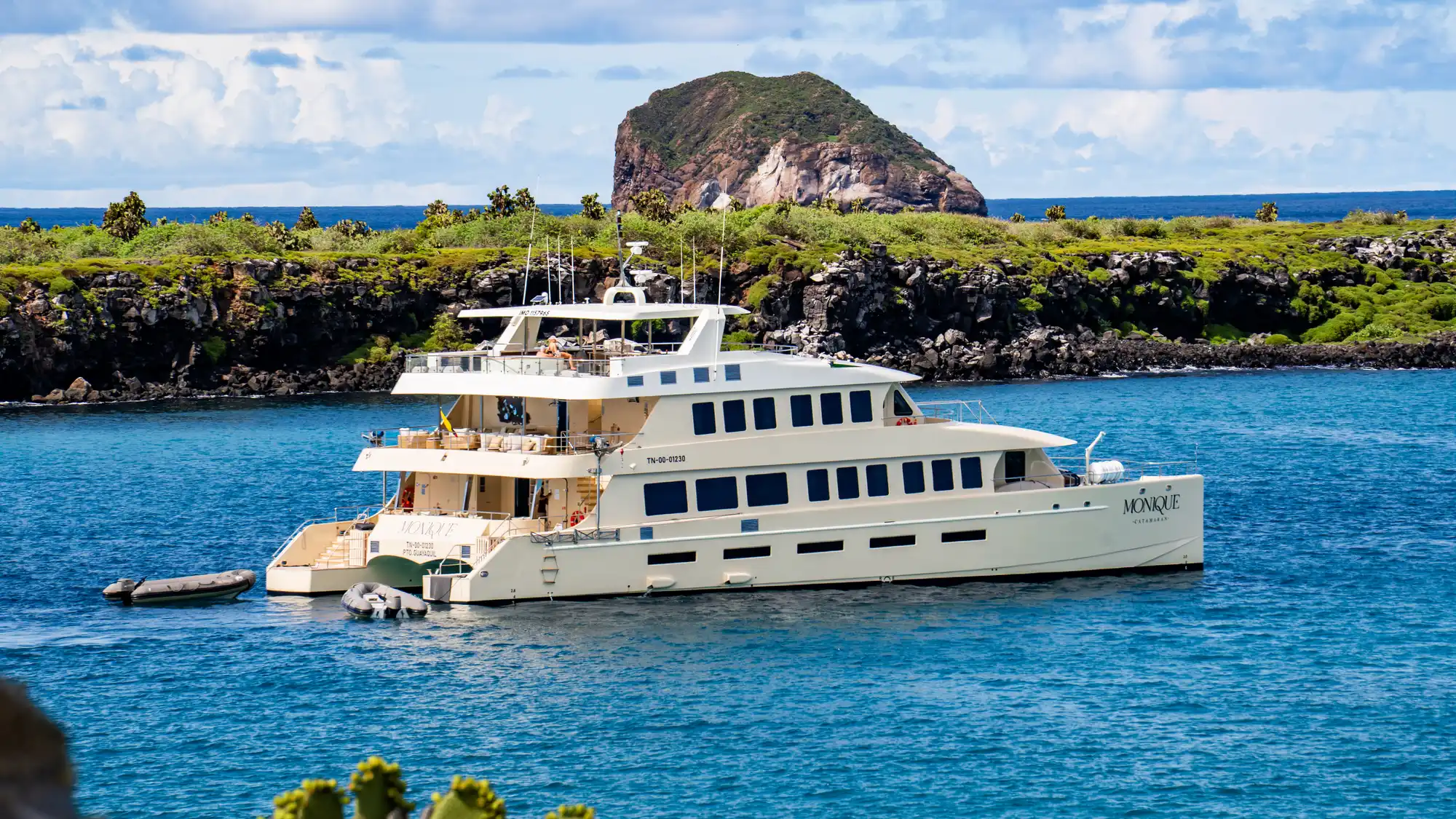
November 19, 2026 · Monique, 8-Day Western Islands: Elizabeth Bay's Penguins
Likely: Punta Espinosa, day 3. 8 spots
from US$6,632 per guest
Check availability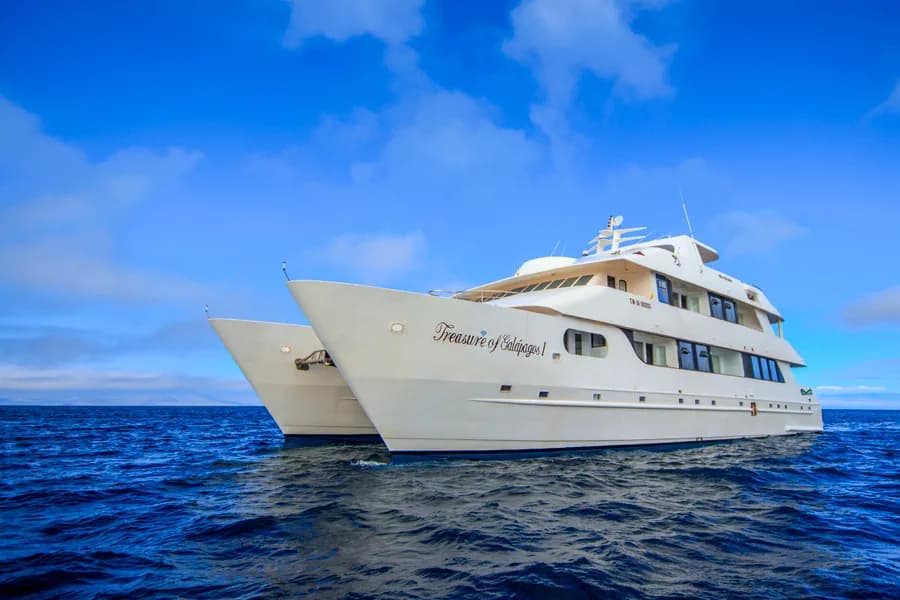
November 24, 2026 · Treasure, 11-Day Southern & Western: La Galapaguera's Young Tortoises
Likely: Punta Espinosa, day 9. 3 spots
from US$10,345 per guest
Check availability
2,509 departures
On every departure
Included
All meals on board · Two certified national park naturalist guides · All excursions and landings listed in the itinerary · Snorkelling gear and wetsuit · Kayaks and stand-up paddleboards on board · Coffee, tea and water at any time
How you see them
Landing at 5 sites · Snorkelling at 2 sites · Beach at 1 site
Best chance
Males in red and green breeding colours from December to December on Punta Suárez.