Pacific Seahorse in Galápagos: Facts and Where to See It
The Pacific seahorse (Hippocampus ingens), also called the giant seahorse, is one of the largest seahorses in the world and the only one in the eastern Pacific. The Galápagos population is the only one known around an oceanic island. In the islands it often clings to mangrove roots, and naturalist guides' sighting records place it at 2 visitor sites.
Good to know
| Scientific name | Hippocampus ingens |
|---|---|
| Other name | Giant seahorse |
| Group | Fish, pipefish and seahorse family |
| Endemic to Galápagos | No; Baja California to Chile |
| Size | Usually 12 to 19 cm tall, up to 30 cm |
| Colours | Green, brown, maroon, grey or yellow |
| Diet | Mysids, small crustaceans, plankton |
| Depth | Down to 60 m |
| IUCN status | Vulnerable |
| In Galápagos | At 2 sites (guide sighting records) |
- Wikipedia, Pacific seahorse (all rows except status)
- our species data (IUCN status)
Fathers that carry the young
As in all seahorses, the female places her eggs in a brood pouch on the male, where he fertilises them and seals them in. Research suggests a Pacific seahorse male can brood up to 2,000 eggs at once and may do so several times in a breeding season. Males can be told apart by a prominent keel; mature females often have a dark patch below the anal fin.
- Ambush hunter. It blends into its surroundings, waits for prey to pass, then sucks it in whole; seahorses have no teeth.
- Night owl. Pacific seahorses are nocturnal.
- The name. Hippocampus comes from the Greek for "horse" and "sea monster".
- Wikipedia, Pacific seahorse (brood pouch, 2,000 eggs, keel, female patch, ambush feeding, no teeth, nocturnal, name)
Where the Pacific seahorse lives
Pacific seahorses live along the coast from Baja California to Chile, and around the Galápagos Islands, the only known population around an oceanic island. They use many shallow habitats down to 60 metres: mangroves, seagrass meadows, rocky reefs, coral reefs and sponges.
- Wikipedia, Pacific seahorse (range, Galápagos population, habitats, depth)
Where to see Pacific seahorses
Guide sighting records list 2 sites, both noting seahorses clinging to mangrove roots. Los Túneles on Isabela, a snorkelling site, is rated Possible; Black Turtle Cove on Santa Cruz, visited by panga, is rated Rare. Look slowly along roots and rock edges; a seahorse holding still is easy to miss.
- Our guide sighting data
Possible
- Los Túneles, Isabela.Snorkelling. Seen all year.Possible
Rare
- Black Turtle Cove, Santa Cruz.Panga ride. Seen all year.Rare
How you see them: snorkelling at 1 site, panga ride at 1 site.
When to see them
The guide records list seahorses at both sites in every month. In the next twelve months, 317 departures stop at a site where they are seen.
- Our guide sighting and departure data
- 9
- departures in November 2026
Show the November 2026 departures - 25
- departures in December 2026
Show the December 2026 departures - 25
- departures in January 2027
Show the January 2027 departures - 26
- departures in February 2027
Show the February 2027 departures - 232
- departures in the other 8 months
Choose a month in the list - 317
- departures in the next twelve months stop where they are seen
Show all departures
Is the Pacific seahorse endangered?
It is listed as Vulnerable. Over 20 million seahorses of all kinds are sold each year for traditional Chinese medicine, aquariums and as dried curios, and the Pacific seahorse is favoured because of its size. Mexico and Peru are the largest exporters. Seahorses are easily over-harvested because they have few young, mate for life, develop slowly and do not spread far. Habitat damage and bycatch in fishing nets add to the pressure. Since 2004 all seahorses have been listed in CITES Appendix II, which controls international trade.
- Wikipedia, Pacific seahorse (trade, exporters, vulnerability, habitat, bycatch, CITES)
- our species data (IUCN status)
Mistakes to avoid
- Grabbing a root to steady yourself. That is where the seahorses hold on.
- Kicking up sediment. Move slowly so you can still see.
- Getting too close. Park rules ask for at least 2 metres of distance.
- Our guide sighting data (mangrove roots)
- Galápagos National Park Rules
Frequently asked questions
Are there seahorses in the Pacific Ocean?
Yes. In the eastern Pacific there is one species, the Pacific seahorse, found from Baja California to Chile and around the Galápagos Islands.
- Wikipedia, Pacific seahorse
How big is the Pacific seahorse?
Adults are usually 12 to 19 cm tall, with a maximum known size of 30 cm, which makes it one of the largest seahorses.
- Wikipedia, Pacific seahorse
Can a sea horse be a pet?
Seahorses are traded for aquariums, and this trade is one of the pressures on the Pacific seahorse. International trade has been controlled under CITES since 2004.
- Wikipedia, Pacific seahorse
Do male seahorses give birth?
Yes. The female deposits her eggs in the male's brood pouch, where he fertilises and carries them. A Pacific seahorse male can brood up to 2,000 eggs.
- Wikipedia, Pacific seahorse
Availability and prices updated
Departures that take you to them
Every Galápagos cruise in this list stops at least once at a site where our guides see the Pacific Seahorse. The best chances come first, and each departure shows the site and the day. Found one that suits you? Ask us about it. There is no booking and no payment: we check the departure and reply.
Next departures with a good chance
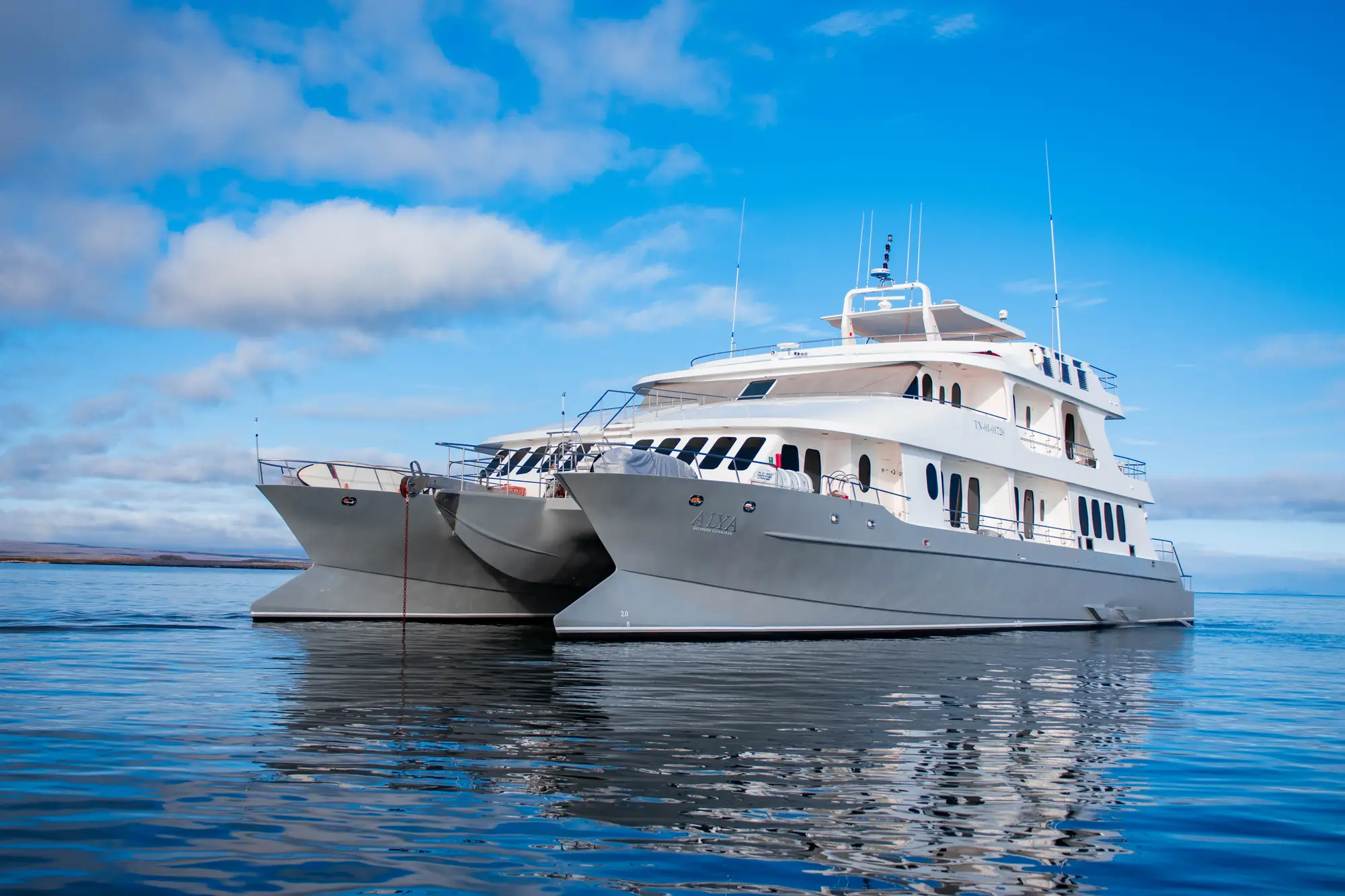
November 12, 2026 · Galaxy Sirius, 6-Day Western & Northern: Rabida's Red Sand Beach
Rare: Black Turtle Cove, day 1. 6 spots
from US$5,680 per guest
Check availability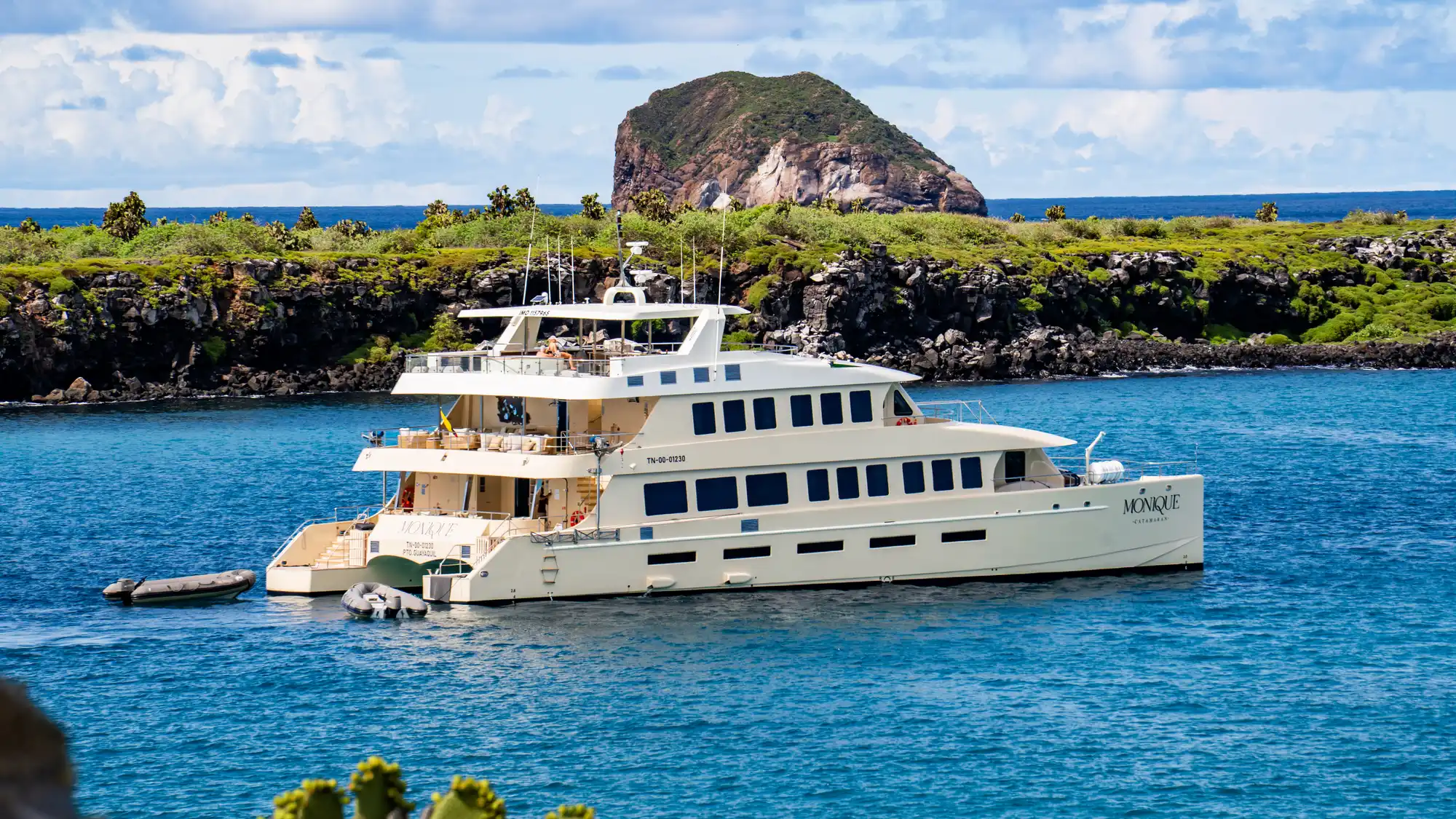
November 15, 2026 · Monique, 5-Day Southern & Western: Kicker Rock's Swim Channel
Rare: Black Turtle Cove, day 5. 1 spot
Check availability
November 19, 2026 · Alya, 5-Day Northern & Western: Bartolome's Endemic Plant
Rare: Black Turtle Cove, day 1. 8 spots
from US$4,140 per guest
Check availability
1,024 departures
On every departure
Included
All meals on board · Two certified national park naturalist guides · All excursions and landings listed in the itinerary · Snorkelling gear and wetsuit · Kayaks and stand-up paddleboards on board · Coffee, tea and water at any time
How you see them
Snorkelling at 1 site · Panga ride at 1 site