Red-Billed Tropicbird in Galápagos: Facts and Where to See It
The red-billed tropicbird (Phaethon aethereus) is a white seabird with a red bill and long tail streamers that nests in crevices in sea cliffs. It plunges into the sea for fish and squid and sometimes snatches flying fish in mid-air. Some of the world's largest colonies are in Galápagos, and naturalist guides' sighting records place it at 5 visitor sites on 4 islands, along the cliffs.
Good to know
| Scientific name | Phaethon aethereus |
|---|---|
| Group | Seabirds |
| Endemic to Galápagos | No; tropical Atlantic, northwest Indian Ocean, eastern Pacific |
| Diet | Small fish, especially flying fish; squid |
| Nests | In rock crevices or on the ground, preferably on cliffs |
| World population | About 16,000 to 30,000 mature birds (preliminary) |
| Trend | Suspected small decline |
| IUCN status | Least Concern |
| In Galápagos | All year, at 5 sites (guide sighting records) |
- BirdLife International DataZone, Red-billed Tropicbird (all rows)
- Audubon Field Guide (look: white with long tail streamers, black barring on the back, red bill)
- our guide sighting data
Cliff nesters that plunge for fish
Adults are white with black barring on the back, a red bill and long tail streamers, though the streamers are sometimes missing. Red-billed tropicbirds live mostly at sea in tropical and subtropical waters. They catch most of their prey by plunge-diving from the air, small fish above all and especially flying fish, which they sometimes take in flight. They also eat squid.
- Loose colonies. They breed in loose colonies on small, remote islands.
- Crevice nests. Nests sit in rock crevices or on the ground, preferably on cliffs, where take-off is easy.
- Galápagos stronghold. The largest colonies, with several thousand pairs, are in Galápagos and the Caribbean.
- BirdLife International DataZone (habitat, diet, plunge-diving, colonies, nests, largest colonies)
- Audubon Field Guide (tail streamers, sometimes missing)
Where the tropicbird lives
The species ranges across the tropical Atlantic, the northwest Indian Ocean and the eastern Pacific. Breeding colonies are found in Galápagos, on Chañaral Island off Chile, off Mexico's Pacific coast, in the Caribbean, Cape Verde, islands of the South Atlantic, off Senegal and on the coasts of Yemen, Oman and Saudi Arabia. In Galápagos, they are seen flying along sea cliffs and in and out of crevices.
- BirdLife International DataZone (range, colonies)
- our guide sighting data (cliffs)
Where to see red-billed tropicbirds in Galápagos
Guide sighting records list tropicbirds at 5 sites. 4 are rated Possible, mostly along the cliffs: South Plaza, Darwin Bay and Prince Philip's Steps on Genovesa, and Punta Suárez on Española. Devil's Crown off Floreana is rated Rare.
- Our guide sighting data
Possible
- Darwin Bay, Genovesa.Landing, snorkelling. Seen all year.Possible
- Prince Philip's Steps, Genovesa.Landing. Seen all year.Possible
- Punta Suárez, Española.Landing. Seen all year.Possible
- South Plaza Trail, South Plaza.Landing. Seen all year.Possible
Rare
- Devil's Crown, Floreana.Snorkelling. Seen all year.Rare
How you see them: landing at 4 sites, snorkelling at 2 sites.
When to see them
The guide records list tropicbirds in every month. In the next twelve months, 741 departures stop at a site where they are seen.
- Our guide sighting and departure data
- 34
- departures in November 2026
Show the November 2026 departures - 48
- departures in December 2026
Show the December 2026 departures - 56
- departures in January 2027
Show the January 2027 departures - 53
- departures in February 2027
Show the February 2027 departures - 550
- departures in the other 8 months
Choose a month in the list - 741
- departures in the next twelve months stop where they are seen
Show all departures
Is the red-billed tropicbird endangered?
No, it is listed as Least Concern, though BirdLife suspects a small decline. Elsewhere, invasive rats eat eggs and chicks, for example in Brazil's Abrolhos National Park, and coastal building and sea walls have taken nest sites. In Galápagos, park rules keep visitors on the trails and at least 2 metres (6 feet) from wildlife, including birds in cliff crevices beside the path.
- BirdLife International DataZone (status, trend, threats)
- Galápagos National Park Rules
Mistakes to avoid
- Looking at the ground. Tropicbirds nest in cliff crevices; watch the cliff faces and the air in front of them.
- Leaning over the edge. Stay on the trail along the cliffs.
- Expecting them at sea level. They are seen mostly along the cliffs.
- BirdLife International DataZone
- our guide sighting data
- Galápagos National Park Rules
Frequently asked questions
Where are tropic birds found?
The red-billed tropicbird lives in tropical and subtropical seas: the Atlantic, the northwest Indian Ocean and the eastern Pacific. Some of the largest colonies, with several thousand pairs, are in Galápagos.
What does the red-billed tropicbird eat?
Small fish, especially flying fish, and squid. It catches most of its food by plunge-diving and sometimes takes flying fish in mid-air.
Where do tropicbirds nest in Galápagos?
In crevices in sea cliffs, where take-off is easy. The guide records rate cliff sites such as South Plaza, Genovesa and Punta Suárez as Possible.
- BirdLife International DataZone
- our guide sighting data
Is the red-billed tropicbird endangered?
No, it is listed as Least Concern, with about 16,000 to 30,000 mature birds and a suspected small decline.
Availability and prices updated
Departures that take you to them
Every Galápagos cruise in this list stops at least once at a site where our guides see the Red-billed Tropicbird. The best chances come first, and each departure shows the site and the day. Found one that suits you? Ask us about it. There is no booking and no payment: we check the departure and reply.
Next departures with a good chance
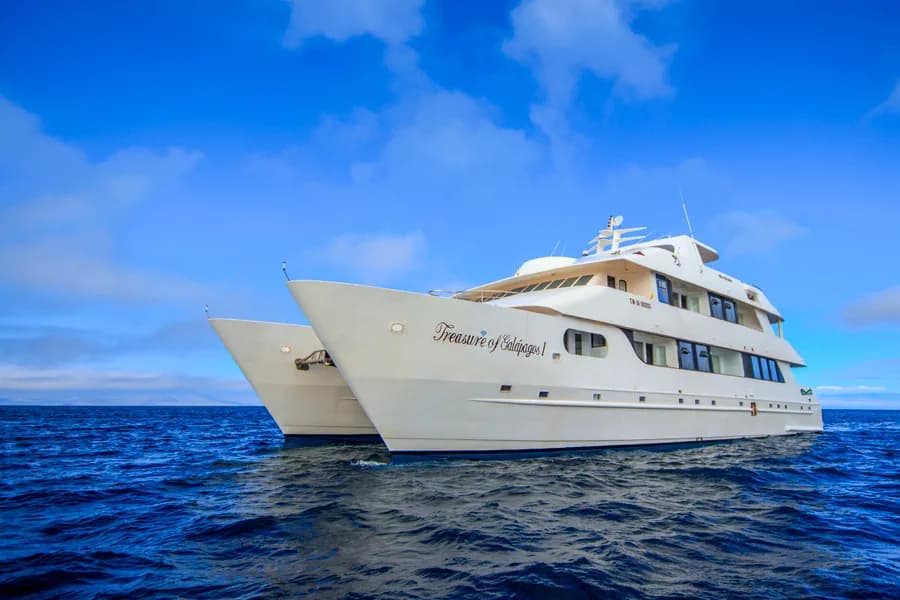
November 10, 2026 · Treasure, 5-Day Southern Islands: Los Gemelos' Daylight Owl
Possible: Punta Suárez, day 2. 16 spots
from US$4,150 per guest
Check availability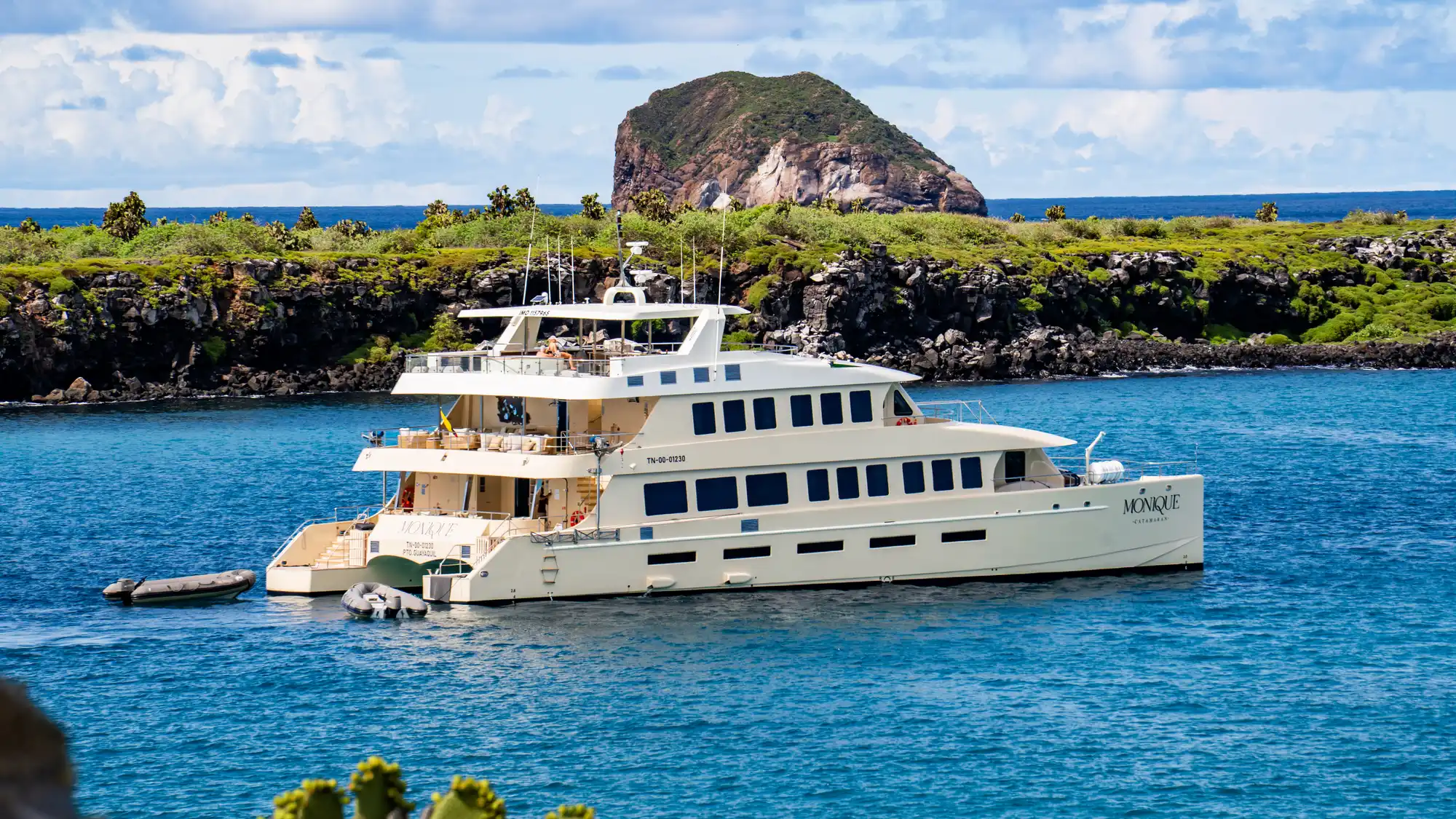
November 12, 2026 · Monique, 4-Day Southern Islands: Santa Cruz's Wild Tortoises
Possible: Punta Suárez, day 3. 6 spots
from US$3,352 per guest
Check availability
November 12, 2026 · Galaxy Sirius, 6-Day Western & Northern: Rabida's Red Sand Beach
Possible: Darwin Bay, day 5. 6 spots
from US$5,680 per guest
Check availability
2,217 departures
On every departure
Included
All meals on board · Two certified national park naturalist guides · All excursions and landings listed in the itinerary · Snorkelling gear and wetsuit · Kayaks and stand-up paddleboards on board · Coffee, tea and water at any time
How you see them
Landing at 4 sites · Snorkelling at 2 sites