Red-Lipped Batfish: Facts and Where to See It
The red-lipped batfish (Ogcocephalus darwini) is a fish found only around Galápagos, about 25 cm long, with bright red lips and fins that work like legs on the seafloor. It lives on sandy bottoms at the edge of reefs, usually between 3 and 76 metres deep. Naturalist guides' sighting records place it at 2 dive and snorkel sites on 2 islands, in every month of the year.
Good to know
| Scientific name | Ogcocephalus darwini |
|---|---|
| Group | Marine life |
| Endemic to Galápagos | Yes |
| Red-lipped batfish size | About 25 cm on average, up to 40 cm |
| Depth | Usually 3 to 76 m, at reef edges down to about 120 m |
| Diet | Small fish, shrimps and other small crustaceans, molluscs |
| IUCN status | Least Concern |
| In Galápagos | All year, at 2 sites (guide sighting records) |
- Galapagos Conservation Trust, red-lipped batfish species page (all rows)
Red lips and walking fins
The red-lipped batfish looks like no other fish on the reef. Its body is light brown and greyish on top with a white belly, a dark stripe of brown dots runs from head to tail, and its lips are a bright, almost fluorescent red, as if it were wearing lipstick.
- Fins as legs. It can swim, but its fins are better suited to walking. The batfish props itself up on them and walks across the sand, or perches and watches its surroundings.
- A built-in lure. A structure on its head called an illicium is thought to draw in prey.
- A snout and a horn. Both are brownish, giving the head its odd, pointed shape.
- Galapagos Conservation Trust (colours, lips, fins as legs, illicium, snout)
Where the red-lipped batfish lives and what it eats
Red-lipped batfish habitat is the sandy seafloor around the reefs of Galápagos, at depths of 3 to 76 metres, and along reef edges down to about 120 metres. The batfish lives on the bottom and hunts there: it eats small fish and small crustaceans such as shrimps, and molluscs.
It is found nowhere else in the world. Close relatives, other batfishes, live elsewhere, but this species is unique to the waters of Galápagos.
- Galapagos Conservation Trust (habitat, depth, diet, endemic, related batfishes)
Where to see red-lipped batfish in Galápagos
Guide sighting records list the red-lipped batfish at 2 sites, both over sandy ground: Gordon Rocks off Santa Cruz, a dive site, and Punta Vicente Roca on Isabela, where visits include a panga ride and snorkelling. The guides rate both Rare. Because the batfish lives on the bottom, divers have the better chance; snorkellers see it only where the sand is shallow.
- Our guide sighting data
Rare
- Gordon Rocks, Santa Cruz.Diving. Seen all year.Rare
- Punta Vicente Roca, Isabela.Panga ride, snorkelling. Seen all year.Rare
How you see them: diving at 1 site, panga ride at 1 site, snorkelling at 1 site.
When to see them
Red-lipped batfish can be seen all year round, so no month rules them out. In the next twelve months, 255 departures stop at a site where they are recorded.
- Galapagos Conservation Trust (all year)
- our guide sighting and departure data
- 14
- departures in November 2026
Show the November 2026 departures - 20
- departures in December 2026
Show the December 2026 departures - 15
- departures in January 2027
Show the January 2027 departures - 15
- departures in February 2027
Show the February 2027 departures - 191
- departures in the other 8 months
Choose a month in the list - 255
- departures in the next twelve months stop where they are seen
Show all departures
Is the red-lipped batfish endangered?
No. The red-lipped batfish is listed as Least Concern and faces no direct threats. Warming seas and coral bleaching could change its habitat and reduce its food, and industrial fishing and the pet trade are possible threats. It lives inside the protected Galápagos Marine Reserve, and park rules keep visitors at least 2 metres from wildlife.
- Galapagos Conservation Trust (status, threats)
- Galápagos Conservancy, Galápagos National Park Rules
Mistakes to avoid when looking for one
- Looking in open water. The batfish sits on the sand. Watch the bottom, not the blue.
- Expecting it on a shallow snorkel. It lives mostly from 3 to 76 metres down, so a dive gives the better chance.
- Kicking up the sand. Good buoyancy keeps the bottom clear and the fish in view.
- Counting on it. Both sites in the guide records are rated Rare.
- Galapagos Conservation Trust (depth)
- our guide sighting data
Frequently asked questions
Is the red-lipped batfish real or AI?
Real. The red-lipped batfish, Ogcocephalus darwini, is a fish found only around Galápagos. It lives on sandy bottoms at 3 to 76 metres and walks on its fins, and its bright red lips are its own colour.
What are some fun facts about red-lipped batfish?
It walks rather than swims, using its fins as legs. Its lips are an almost fluorescent red. It carries a lure on its head, the illicium, which is thought to attract prey. And it lives nowhere in the world except around Galápagos.
Can you keep a red-lipped batfish as a pet?
It should not be. The species lives only in Galápagos, and the Galapagos Conservation Trust names the pet trade as a possible threat to it. Taking wildlife from the Galápagos Marine Reserve is not allowed.
Availability and prices updated
Departures that take you to them
Every Galápagos cruise in this list stops at least once at a site where our guides see the Red-lipped Batfish. The best chances come first, and each departure shows the site and the day. Found one that suits you? Ask us about it. There is no booking and no payment: we check the departure and reply.
Next departures with a good chance
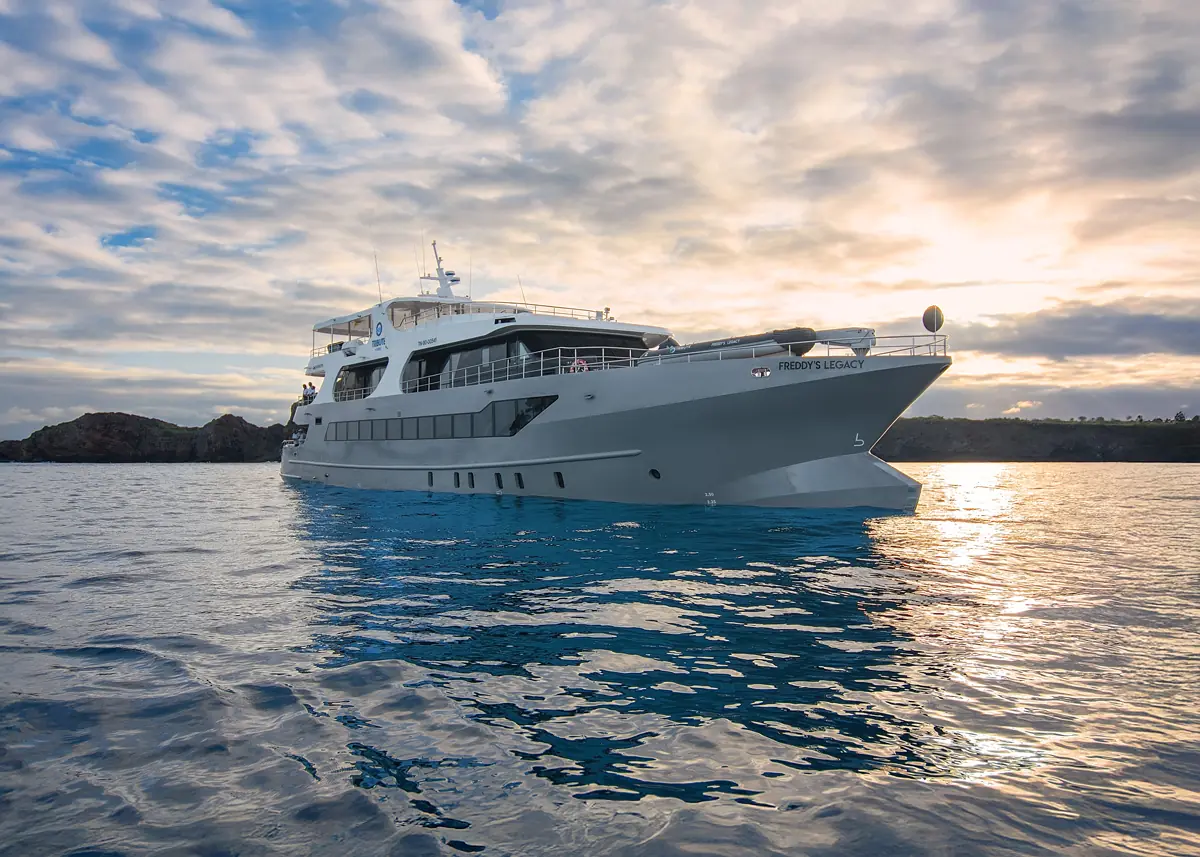
November 12, 2026 · Tribute, 7-Day Western Islands: Fernandina's Marine Iguanas
Rare: Punta Vicente Roca, day 4. 5 spots
from US$7,916 per guest
Check availability
November 14, 2026 · Grand Ocean Spray, 6-Day Western Islands: Fernandina's Underwater Iguanas
Rare: Punta Vicente Roca, day 2. 7 spots
from US$7,191 per guest
Check availability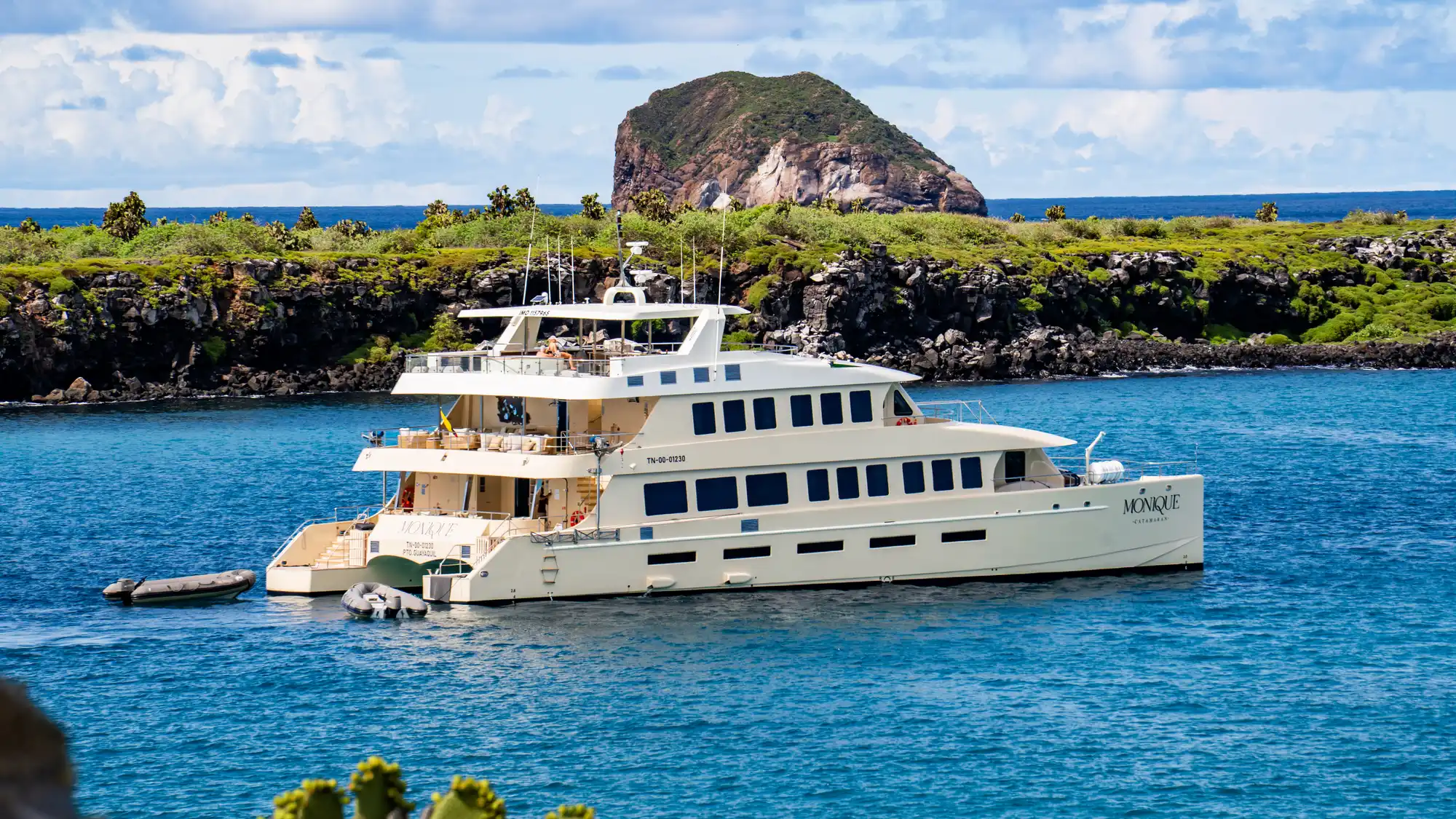
November 19, 2026 · Monique, 8-Day Western Islands: Elizabeth Bay's Penguins
Rare: Punta Vicente Roca, day 3. 8 spots
from US$6,632 per guest
Check availability
980 departures
On every departure
Included
All meals on board · Two certified national park naturalist guides · All excursions and landings listed in the itinerary · Snorkelling gear and wetsuit · Kayaks and stand-up paddleboards on board · Coffee, tea and water at any time
How you see them
Diving at 1 site · Panga ride at 1 site · Snorkelling at 1 site