Ruddy Turnstone in Galápagos: Facts and Where to See It
The ruddy turnstone (Arenaria interpres) is a stocky shorebird with orange legs and a patchwork of black and white on head and chest that makes it look almost like a calico cat. It breeds on the Arctic tundra and spends the rest of the year on rocky shores and beaches around the world, Galápagos included, flipping stones and debris to find food. Naturalist guides' sighting records place it at 2 visitor sites on 2 islands.
Good to know
| Scientific name | Arenaria interpres |
|---|---|
| Group | Shore birds |
| Endemic to Galápagos | No; a migrant |
| Breeds | On the Arctic tundra |
| Diet | Insects and small crustaceans found under stones and debris |
| Flight speed | 27 to 47 miles per hour (about 43 to 76 km/h) on migration |
| Oldest on record | At least 16 years, 11 months |
| IUCN status | Least Concern |
| In Galápagos | At 2 sites (guide sighting records) |
- Cornell Lab of Ornithology, All About Birds, Ruddy Turnstone (all rows except status)
- our species data (status)
Turning stones
The name says what it does: with its stout, slightly upturned bill, the turnstone flips stones, seaweed and debris on the beach to uncover insects and small crustaceans underneath.
- Grip on wet rock. Somewhat spiny feet with short, sharply curved claws and a low centre of gravity keep it steady on slippery rocks.
- Fat as fuel. Like other shorebirds, it builds up fat to power its migrations; birds that do not put on enough leave later or may not arrive.
- Only two turnstones. Of about 350 shorebird species in the world, only two are turnstones: the ruddy and the black turnstone.
- Cornell Lab of Ornithology, All About Birds (bill, feeding, feet, fat, species count)
From the Arctic to the tropics
Ruddy turnstones are long-distance migrants. They breed on the Arctic tundra and spend the rest of the year on rocky shores and sandy beaches in North and South America, Eurasia, Africa and Australia. Young birds fly for the first time at about 19 days and set off on a migration of thousands of miles two days later, on their own, because their parents have already left. Birds breeding in western Alaska and eastern Siberia even take different routes north and south.
- Cornell Lab of Ornithology, All About Birds (breeding, range, young birds, routes)
Where to see ruddy turnstones in Galápagos
Guide sighting records list turnstones at 2 sites. Cerro Brujo on San Cristóbal, a beach landing, is rated Possible, and the Isabela Wetlands near Puerto Villamil Rare. Look along the tideline and on rocks just above the water.
- Our guide sighting data
Possible
- Cerro Brujo, San Cristóbal.Beach. Seen all year.Possible
Rare
- Isabela Wetlands, Isabela.Landing. Seen all year.Rare
How you see them: beach at 1 site, landing at 1 site.
When to see them
As Arctic breeders, turnstones are mainly visitors outside the northern summer. The guide records list them at their sites in every month. In the next twelve months, 314 departures stop at a site where they are seen.
- Cornell Lab of Ornithology (breeding)
- our guide sighting and departure data
- 19
- departures in November 2026
Show the November 2026 departures - 20
- departures in December 2026
Show the December 2026 departures - 23
- departures in January 2027
Show the January 2027 departures - 24
- departures in February 2027
Show the February 2027 departures - 228
- departures in the other 8 months
Choose a month in the list - 314
- departures in the next twelve months stop where they are seen
Show all departures
Is the ruddy turnstone endangered?
No, it is listed as Least Concern. Like all migrants that depend on good feeding before long flights, turnstones are sensitive to disturbance on the beaches where they refuel. In Galápagos, park rules keep visitors at least 2 metres (6 feet) from wildlife and on marked trails.
- Our species data (status)
- Cornell Lab of Ornithology (fat before migration)
- Galápagos National Park Rules
Mistakes to avoid
- Walking along the tideline. That is where they feed; stay a little higher on the beach.
- Overlooking them. Their pattern blends with rocks and seaweed.
- Counting on many. The guide records rate the two sites Possible and Rare.
- Cornell Lab of Ornithology
- our guide sighting data
Frequently asked questions
How fast do ruddy turnstones fly?
On migration, at an average of 27 to 47 miles per hour, about 43 to 76 km/h, to cover the huge distances between the Arctic and their wintering beaches.
- Cornell Lab of Ornithology, All About Birds
Is a Ruddy Turnstone rare?
No. It is listed as Least Concern and found on beaches worldwide outside the breeding season. In Galápagos, the guide records rate Cerro Brujo Possible and the Isabela Wetlands Rare.
- Our species data
- Cornell Lab of Ornithology
- our guide sighting data
Where are Ruddy Turnstones from?
They breed on the Arctic tundra and migrate to rocky shores and beaches in the Americas, Eurasia, Africa and Australia.
- Cornell Lab of Ornithology, All About Birds
Are ruddy turnstones endangered?
No, they are listed as Least Concern.
- Our species data
Why is it called a turnstone?
Because it flips stones, seaweed and debris with its bill to find insects and small crustaceans hiding underneath.
- Cornell Lab of Ornithology, All About Birds
Availability and prices updated
Departures that take you to them
Every Galápagos cruise in this list stops at least once at a site where our guides see the Ruddy Turnstone. The best chances come first, and each departure shows the site and the day. Found one that suits you? Ask us about it. There is no booking and no payment: we check the departure and reply.
Next departures with a good chance
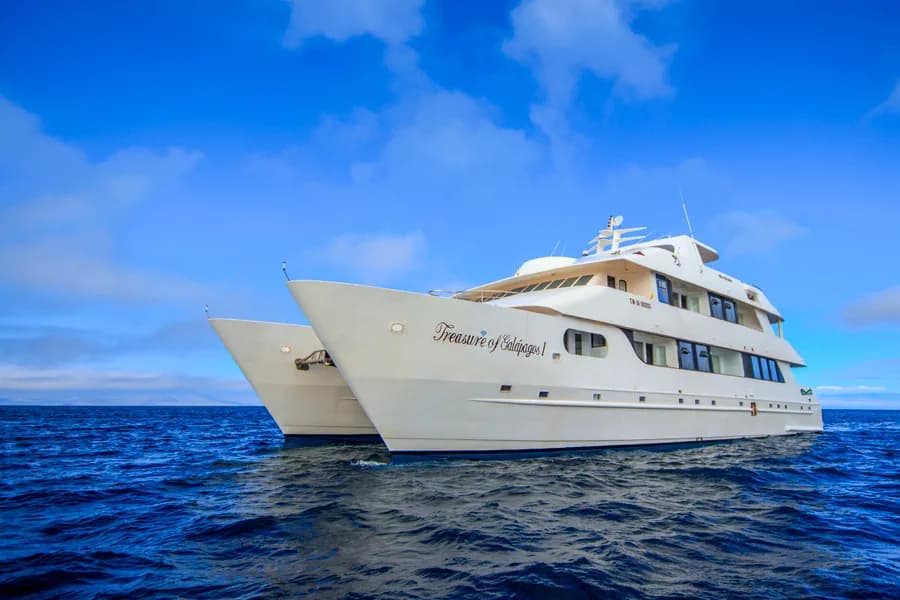
November 20, 2026 · Treasure, 5-Day Northern & Western: Punta Pitt's Triple Boobies
Possible: Cerro Brujo, day 4. 1 spot
from US$4,150 per guest
Check availabilityNovember 20, 2026 · Treasure, 9-Day Northern & Southern: Bartolome's 372-Step Summit
Possible: Cerro Brujo, day 4. 1 spot
from US$8,300 per guest
Check availability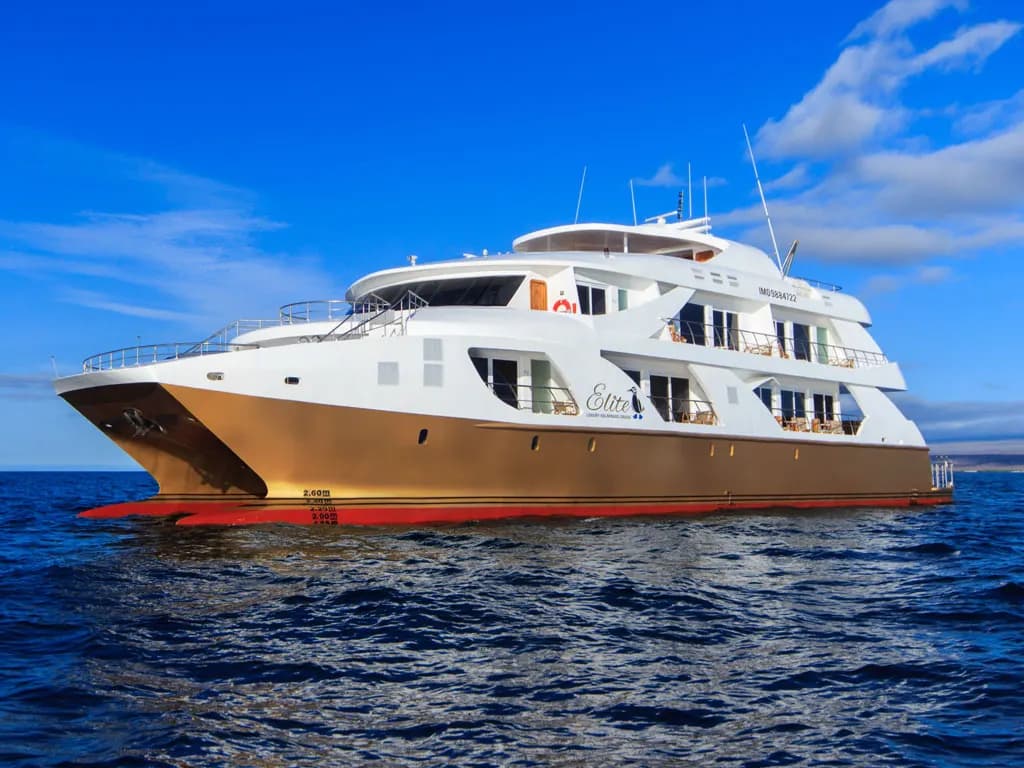
November 21, 2026 · Elite, 8-Day Western Islands: El Junco's Bathing Frigatebirds
Possible: Cerro Brujo, day 7. 2 spots
from US$7,992 per guest
Check availability
1,131 departures
On every departure
Included
All meals on board · Two certified national park naturalist guides · All excursions and landings listed in the itinerary · Snorkelling gear and wetsuit · Kayaks and stand-up paddleboards on board · Coffee, tea and water at any time
How you see them
Beach at 1 site · Landing at 1 site