Sanderling in Galápagos: Facts and Where to See It
The sanderling (Calidris alba) is a small sandpiper with pale winter plumage and black legs and bill, best known for running back and forth with the waves. It breeds only on the High Arctic tundra and spends the rest of the year on sandy beaches around the world, Galápagos among them. Naturalist guides' sighting records place it at 1 visitor site on 1 island.
Good to know
| Scientific name | Calidris alba |
|---|---|
| Group | Shore birds |
| Endemic to Galápagos | No; a migrant |
| Breeds | Only on High Arctic tundra |
| Winters | On sandy beaches worldwide |
| Diet | Tiny animals in wet sand: small molluscs and crustaceans |
| Oldest on record | At least 13 years |
| IUCN status | Least Concern |
| In Galápagos | At 1 site (guide sighting records) |
- Cornell Lab of Ornithology, All About Birds, Sanderling (all rows except status)
- our species and guide sighting data (status, site)
Running with the waves
Sanderlings are the small birds that sprint down the beach behind a retreating wave, pick or probe in the wet sand, and run back up ahead of the next one, their black legs a blur. The Cornell Lab of Ornithology calls the wave-chasing habit obsessive, and the outer beach their domain: they often defend a stretch of the waterline against other shorebirds.
- Sand pellets. After feeding, sanderlings often cough up pellets of sand mixed with bits of shell.
- Escape flights. When a falcon appears, a flock lifts off together and twists low over the sea; single birds sometimes dive into the water to escape.
- Flexible pairs. They are usually monogamous, but some females breed with several males in a row in one season.
- Cornell Lab of Ornithology, All About Birds (feeding, territories, pellets, falcons, mating)
From the Arctic to Galápagos
Sanderlings are extreme long-distance migrants. They nest only on the High Arctic tundra, yet in autumn and winter they reach nearly all temperate and tropical sandy beaches of the world, which makes them one of the most widespread shorebirds. Many young birds that are not yet breeding stay in South America through the northern summer instead of flying back to the Arctic. In Galápagos they feed on beaches and in lagoons.
- Cornell Lab of Ornithology, All About Birds (breeding, wintering, distribution, non-breeders in South America)
- our guide sighting data (Galápagos)
Where to see sanderlings in Galápagos
Guide sighting records list sanderlings at 1 site: the Isabela Wetlands near Puerto Villamil on Isabela, a walk past lagoons and beaches. The guides rate it Rare, and sanderlings on other beaches are always possible but not recorded by site.
- Our guide sighting data
Rare
- Isabela Wetlands, Isabela.Landing. Seen all year.Rare
How you see them: landing at 1 site.
When to see them
As Arctic breeders, sanderlings are mainly a bird of the northern winter in the south. Because many non-breeding birds stay in South America all year, single birds can turn up in any month. In the next twelve months, 151 departures stop at the site where they are recorded.
- Cornell Lab of Ornithology (migration, non-breeders)
- our guide sighting and departure data
- 11
- departures in November 2026
Show the November 2026 departures - 13
- departures in December 2026
Show the December 2026 departures - 11
- departures in January 2027
Show the January 2027 departures - 13
- departures in February 2027
Show the February 2027 departures - 103
- departures in the other 8 months
Choose a month in the list - 151
- departures in the next twelve months stop where they are seen
Show all departures
Is the sanderling endangered?
No, it is listed as Least Concern. Shorebirds that rest and feed on beaches are easily disturbed, so in Galápagos the park rules matter: at least 2 metres (6 feet) from wildlife, marked trails, and a naturalist guide on every walk.
- Our species data (status)
- Galápagos National Park Rules
Mistakes to avoid when looking for one
- Walking along the waterline. That is where they feed. Stay higher on the beach and let them work.
- Confusing them with other small waders. Watch for the run with the waves and the black legs.
- Counting on one. The one site in the guide records is rated Rare.
- Cornell Lab of Ornithology
- our guide sighting data
Frequently asked questions
What kind of bird is a sanderling?
A small sandpiper, one of the "peeps", with pale plumage outside the breeding season and black legs and bill. It is known for chasing the waves on sandy beaches.
- Cornell Lab of Ornithology, All About Birds
Is a sanderling the same as a sandpiper?
A sanderling is one kind of sandpiper. The Cornell Lab of Ornithology describes it as a medium-sized "peep" sandpiper.
- Cornell Lab of Ornithology, All About Birds
Is a sanderling a plover?
No. The Cornell Lab of Ornithology classes it as a sandpiper. Plovers often feed alongside sanderlings on the same beaches, which is where the two get confused.
- Cornell Lab of Ornithology, All About Birds
Where do sanderlings breed?
Only on the High Arctic tundra. They spend the rest of the year on sandy beaches around the world, from temperate coasts to the tropics.
- Cornell Lab of Ornithology, All About Birds
Availability and prices updated
Departures that take you to them
Every Galápagos cruise in this list stops at least once at a site where our guides see the Sanderling. The best chances come first, and each departure shows the site and the day. Found one that suits you? Ask us about it. There is no booking and no payment: we check the departure and reply.
Next departures with a good chance
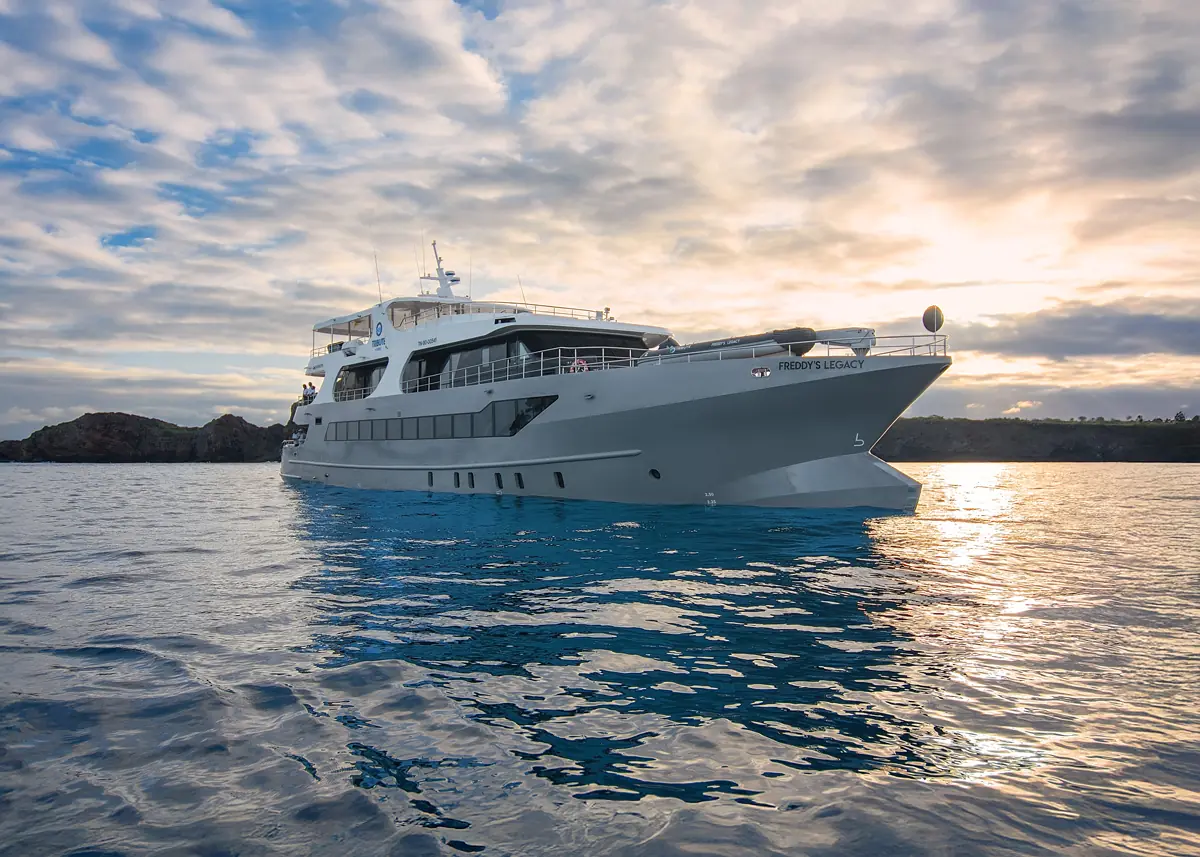
November 12, 2026 · Tribute, 7-Day Western Islands: Fernandina's Marine Iguanas
Rare: Isabela Wetlands, day 2. 5 spots
from US$7,916 per guest
Check availability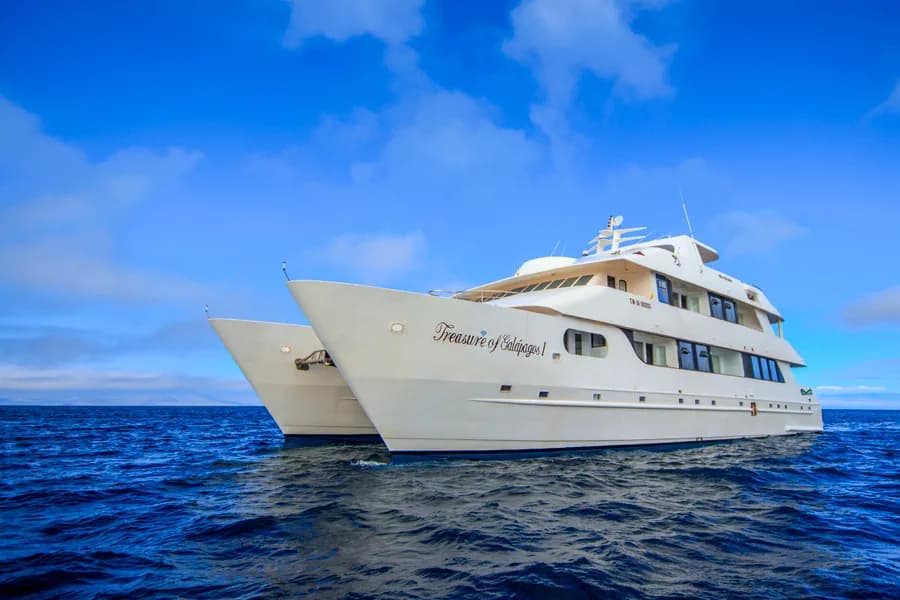
November 20, 2026 · Treasure, 15-Day Western & Southern: Flightless Cormorant & Waved Albatross
Rare: Isabela Wetlands, day 11. 1 spot
from US$14,095 per guest
Check availability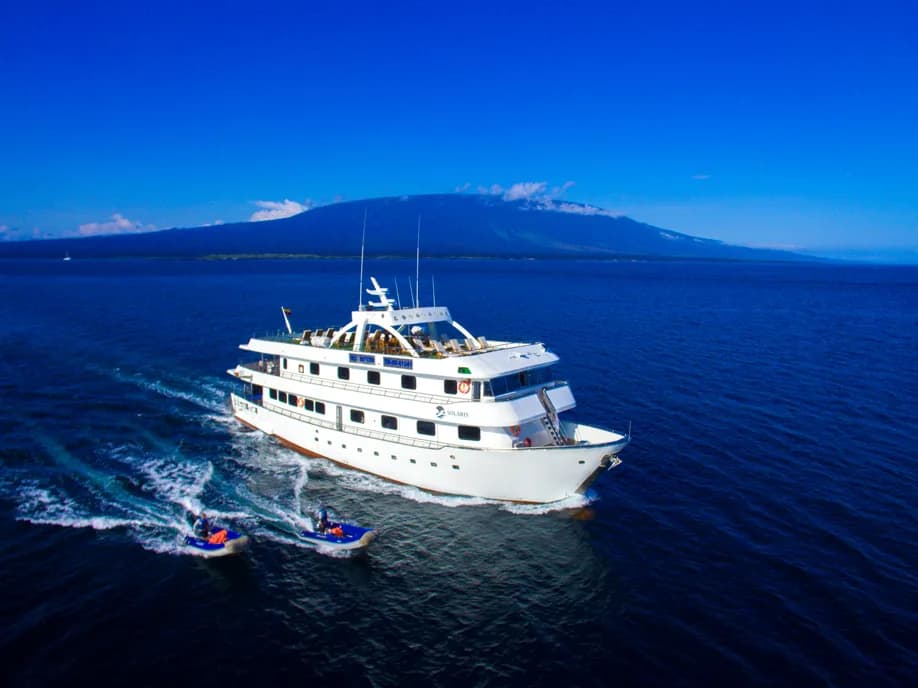
November 23, 2026 · Solaris, 15-Day Northern, Southern & Western: Punta Cormorant's Flamingo Lagoon
Rare: Isabela Wetlands, day 10. 1 spot
from US$14,095 per guest
Check availability
515 departures
On every departure
Included
All meals on board · Two certified national park naturalist guides · All excursions and landings listed in the itinerary · Snorkelling gear and wetsuit · Kayaks and stand-up paddleboards on board · Coffee, tea and water at any time
How you see them
Landing at 1 site