Smooth-Billed Ani in Galápagos: Facts and Where to See It
The smooth-billed ani (Crotophaga ani) is a glossy black cuckoo about 35 cm long with an oversized bill, and one of the few introduced birds in Galápagos. Farmers are thought to have brought it in the 1960s to eat ticks on cattle; it has since spread to all major islands but Darwin and numbers around 250,000. Naturalist guides' sighting records place it at 1 site on 1 island.
Good to know
| Scientific name | Crotophaga ani |
|---|---|
| Group | Land birds |
| Native to Galápagos | No; introduced in the 1960s |
| Size | About 35 cm |
| Weight | About 115 g (males), 95 g (females) |
| Population in Galápagos | About 250,000 |
| Spread | All major islands except Darwin |
| IUCN status | Least Concern |
- Galapagos Conservation Trust, smooth-billed ani species page (all rows)
From tick-eater to problem
Anis were probably brought in deliberately by farmers to control ticks that were killing livestock, first on Isabela. Over the next 50 years they spread across the archipelago. Instead of feeding on ticks, they took to native wildlife, and some consider them the most damaging introduced bird in Galápagos.
- Nest robbers. Anis eat the nestlings of Darwin's finches and rob the nests of yellow warblers and mockingbirds.
- Seed spreaders. They spread the seeds of the invasive hill raspberry, one of the worst weeds in the islands.
- Fly hosts. They host the parasitic fly Philornis downsi, which kills the chicks of many native birds and threatens the mangrove finch, the bird most at risk of extinction in Galápagos.
- Galapagos Conservation Trust (introduction, spread, damage, prey, hill raspberry, Philornis, mangrove finch)
Where the ani lives
In Galápagos, anis live on all the major islands except Darwin. In their native range they live in wet, shrubby or thorny country and are almost always seen in groups. They eat insects and lizards as well as fruit, and a group does almost everything together: the females lay all their eggs in one shared nest that the whole group tends. The guide sighting records list them by the Isabela Interpretation Center near Puerto Villamil.
- Galapagos Conservation Trust (islands)
- Cornell Lab of Ornithology, All About Birds (habitat, groups, diet, shared nest)
- our guide sighting data
Where to see smooth-billed anis in Galápagos
Guide sighting records list the smooth-billed ani at 1 site: the Isabela Interpretation Center on Isabela, rated Rare. With some 250,000 anis spread over the islands, they also turn up elsewhere without being recorded by site.
- Our guide sighting data
- Galapagos Conservation Trust (population)
Rare
- Isabela Interpretation Center, Isabela.Seen all year.Rare
When to see them
Anis live in Galápagos all year. In the next twelve months, 66 departures stop at the site where they are recorded.
- Our guide sighting and departure data
- 1
- departure in November 2026
Show the November 2026 departures - 5
- departures in December 2026
Show the December 2026 departures - 3
- departures in January 2027
Show the January 2027 departures - 4
- departures in February 2027
Show the February 2027 departures - 53
- departures in the other 8 months
Choose a month in the list - 66
- departures in the next twelve months stop where they are seen
Show all departures
What is being done about anis?
Research is under way into the biology of anis to find the most effective way to control them. On Floreana, an eradication of invasive rats began in October 2023 as part of the Restoring Floreana project, which aims to bring back 12 locally extinct species. That operation did not target anis, but it has raised interest in how such eradications affect them.
- Galapagos Conservation Trust (research, Floreana eradication, 12 species)
Why it matters for visitors
- Not every bird is native. The ani is a reminder that introduced species are the biggest threat to Galápagos land birds.
- Bring nothing living. Park rules make each visitor responsible for not introducing food, animals or plants into the archipelago.
- Ask the guide. Guides can point out which birds are native and which arrived with people.
Frequently asked questions
Is the smooth-billed ani native to Galápagos?
No. It was introduced in the 1960s, most likely by farmers who hoped it would eat ticks on cattle, and has since spread to every major island except Darwin.
Why is the smooth-billed ani a problem in Galápagos?
It eats finch nestlings, robs the nests of yellow warblers and mockingbirds, spreads seeds of the invasive hill raspberry and hosts the parasitic fly that kills many native chicks.
What does a smooth-billed ani look like?
A glossy black cuckoo about 35 cm long with an oversized bill, usually seen in groups. Males weigh about 115 g, females about 95 g.
- Cornell Lab of Ornithology, All About Birds (look, groups)
- Galapagos Conservation Trust (size, weight)
Where can I find Smooth-billed Ani?
In Galápagos, anis live on all the major islands except Darwin. Our guides record them by the Isabela Interpretation Center near Puerto Villamil.
- Galapagos Conservation Trust. Our guide sighting data
Availability and prices updated
Departures that take you to them
Every Galápagos cruise in this list stops at least once at a site where our guides see the Smooth-billed Ani. The best chances come first, and each departure shows the site and the day. Found one that suits you? Ask us about it. There is no booking and no payment: we check the departure and reply.
Next departures with a good chance
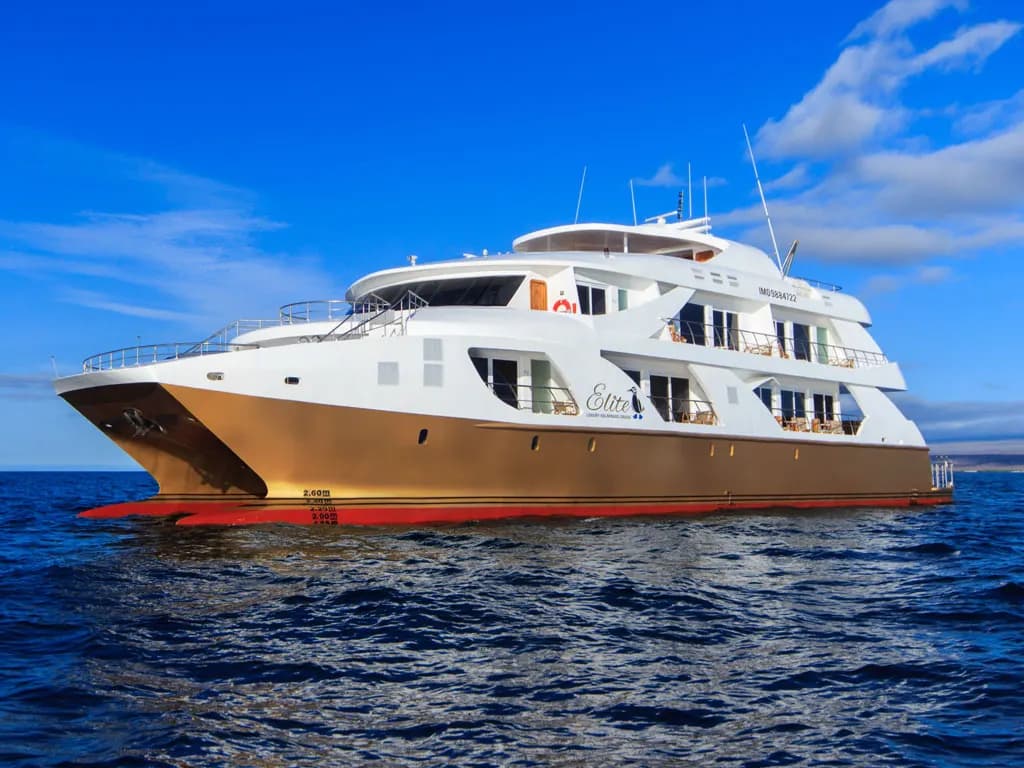
November 21, 2026 · Elite, 8-Day Western Islands: El Junco's Bathing Frigatebirds
Rare: Isabela Interpretation Center, day 3. 2 spots
from US$7,992 per guest
Check availability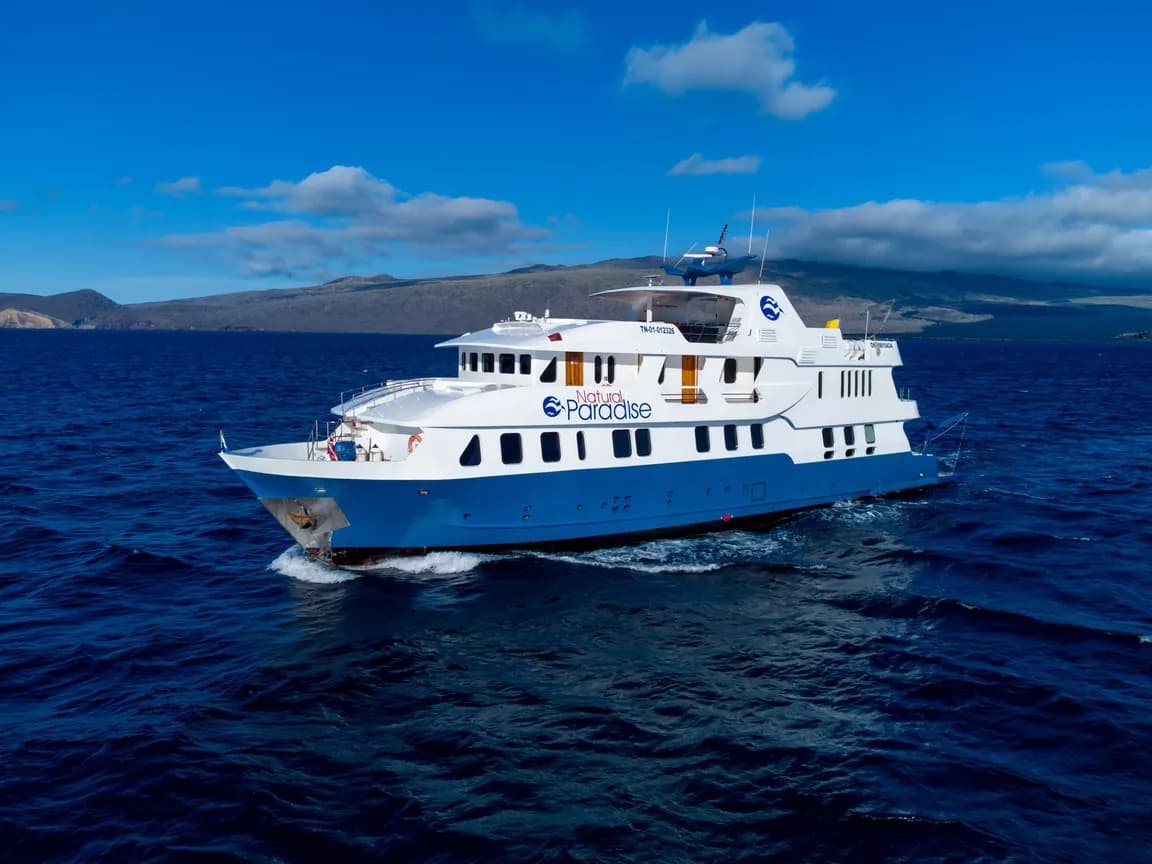
December 1, 2026 · Natural Paradise, 8-Day Western & Southern: Champion Islet's Mockingbird
Rare: Isabela Interpretation Center, day 4. 2 spots
from US$7,145 per guest
Check availability
December 9, 2026 · Galaxy Stella, 8-Day Western Islands: Mangle Point's Rare Access
Rare: Isabela Interpretation Center, day 2. 2 spots
from US$8,400 per guest
Check availability
171 departures
On every departure
Included
All meals on board · Two certified national park naturalist guides · All excursions and landings listed in the itinerary · Snorkelling gear and wetsuit · Kayaks and stand-up paddleboards on board · Coffee, tea and water at any time