Spotted Eagle Ray in Galápagos: Facts and Where to See It
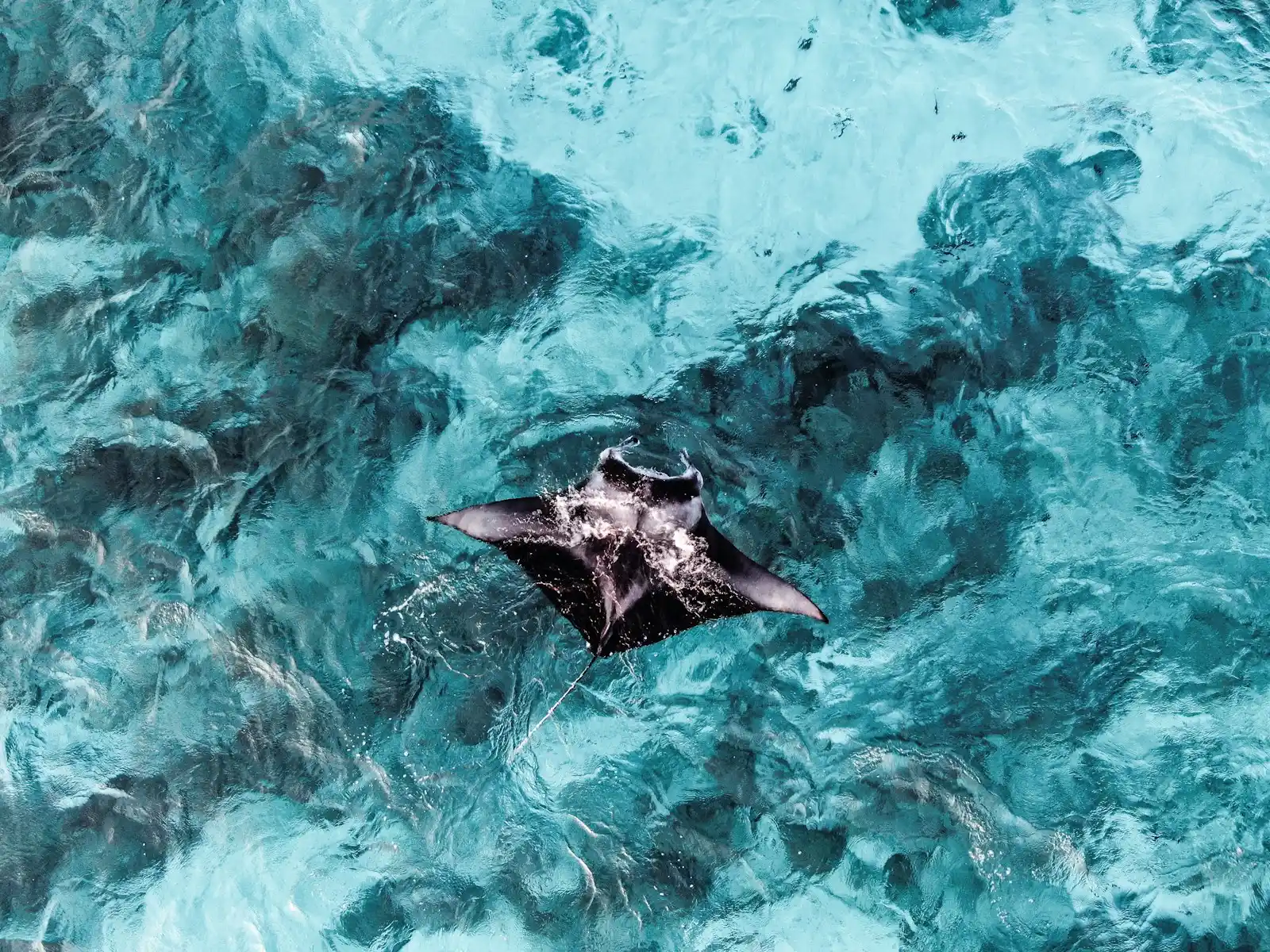
The spotted eagle ray (Aetobatus laticeps) is easy to recognise: a black back covered in bright white dots, a wingspan of about 1.8 metres and a long, thin tail. It swims in groups called fevers in warm coastal waters around the world, Galápagos included. Naturalist guides' sighting records place it at 5 sites on 5 islands, and note it in open water around the archipelago.
Good to know
| Scientific name | Aetobatus laticeps |
|---|---|
| Group | Sharks and rays |
| Endemic to Galápagos | No |
| Wingspan | About 1.8 m |
| Lifespan | About 15 years |
| Groups | Fevers of a few to hundreds of rays |
| IUCN status | Endangered |
| In Galápagos | All year, at 5 sites on 5 islands (guide sighting records) |
- Galapagos Conservation Trust, spotted eagle ray species page (all rows)
- our guide sighting data
Fevers and leaps
Spotted eagle rays move in groups known as fevers, which range from a few rays to hundreds. They are known for acrobatics, and in the breeding season a male tries to guard a female from rivals. From a panga, a fever often shows as a row of dark shapes gliding just below the surface, the white spots catching the light.
The Galapagos Conservation Trust funds research that identifies individual rays and tracks their movements, to learn what they need at each stage of their lives.
- Galapagos Conservation Trust (fevers, acrobatics, breeding, research)
- our guide sighting data (just below the surface)
Where the spotted eagle ray lives
Spotted eagle rays live in warm tropical and subtropical waters around the world, including the nutrient-rich seas around Galápagos. They favour calm coastal water: mangrove lagoons, sheltered bays and shallow sandy channels. The Galapagos Conservation Trust names Elizabeth Bay on Isabela, Black Turtle Cove on Santa Cruz, and the waters around North Seymour and Española.
- Galapagos Conservation Trust (range, sites)
Where to see spotted eagle rays in Galápagos
Guide sighting records list spotted eagle rays at 5 sites. 3 are rated Possible, where they swim just below the surface: Black Turtle Cove on Santa Cruz, visited by panga, and the snorkels at Devil's Crown on Floreana and Gardner Bay on Española. Elizabeth Bay and Santa Fé Bay are rated Rare, and the guides note them in open water around the whole archipelago.
- Our guide sighting data
Possible
- Black Turtle Cove, Santa Cruz.Panga ride. Seen all year.Possible
- Devil's Crown, Floreana.Snorkelling. Seen all year.Possible
- Gardner Bay, Española.Beach, snorkelling. Seen all year.Possible
Rare
- Elizabeth Bay, Isabela.Panga ride. Seen all year.Rare
- Santa Fé Bay, Santa Fé.Landing, snorkelling. Seen all year.Rare
How you see them: snorkelling at 3 sites, panga ride at 2 sites, beach at 1 site, landing at 1 site.
When to see them
The guide records list spotted eagle rays in every month. The Galapagos Conservation Trust names December to May as the best time, when the water is slightly warmer and visibility clearer. In the next twelve months, 796 departures stop at a site where they are seen.
- Our guide sighting and departure data
- Galapagos Conservation Trust (December to May)
- 34
- departures in November 2026
Show the November 2026 departures - 52
- departures in December 2026
Show the December 2026 departures - 56
- departures in January 2027
Show the January 2027 departures - 54
- departures in February 2027
Show the February 2027 departures - 600
- departures in the other 8 months
Choose a month in the list - 796
- departures in the next twelve months stop where they are seen
Show all departures
Is the spotted eagle ray endangered?
Yes, the Galapagos Conservation Trust lists it as Endangered. Outside the Galápagos Marine Reserve, rays get caught as bycatch in nets and on longlines set for tuna and squid. Microplastics are a possible further threat, as they could interfere with food chains and stunt growth. Park rules keep visitors at least 2 metres (6 feet) from wildlife.
- Galapagos Conservation Trust (status, bycatch, longlines, microplastics)
- Galápagos National Park Rules
Mistakes to avoid
- Watching only the surface. In mangrove lagoons the rays glide just below it; look for dark shapes with white dots.
- Skipping the panga ride. Black Turtle Cove, one of the best sites in the records, is visited only by panga.
- Ignoring the season. Clear water from December to May makes them easier to spot.
- Our guide sighting data
- Galapagos Conservation Trust
Frequently asked questions
How rare is a spotted eagle ray?
In Galápagos they are seen regularly in calm coastal water, and the guide records list them at several sites in every month. As a species they are listed as Endangered, mainly because of bycatch outside protected waters.
- Our guide sighting data
- Galapagos Conservation Trust
Can a spotted eagle ray sting?
Yes. The Florida Museum of Natural History describes 2 to 6 short, venomous spines just behind the dorsal fin, at the base of the long tail, which can cause serious wounds when the ray defends itself. In Galápagos the rays are watched from a panga or the surface, and park rules ask for at least 2 metres of distance.
- Florida Museum of Natural History, Discover Fishes, spotted eagle ray (description of the closely related Aetobatus narinari)
- Galápagos National Park Rules
What is a group of eagle rays called?
A fever. Spotted eagle rays travel in fevers that range from a few rays to hundreds.
Where can I see spotted eagle rays in Galápagos?
In calm coastal water: the guide records rate Black Turtle Cove on Santa Cruz, Devil's Crown on Floreana and Gardner Bay on Española as Possible, and the Galapagos Conservation Trust adds Elizabeth Bay on Isabela and the waters around North Seymour.
- Our guide sighting data
- Galapagos Conservation Trust
Availability and prices updated
Departures that take you to them
Every Galápagos cruise in this list stops at least once at a site where our guides see the Spotted Eagle Ray. The best chances come first, and each departure shows the site and the day. Found one that suits you? Ask us about it. There is no booking and no payment: we check the departure and reply.
Next departures with a good chance
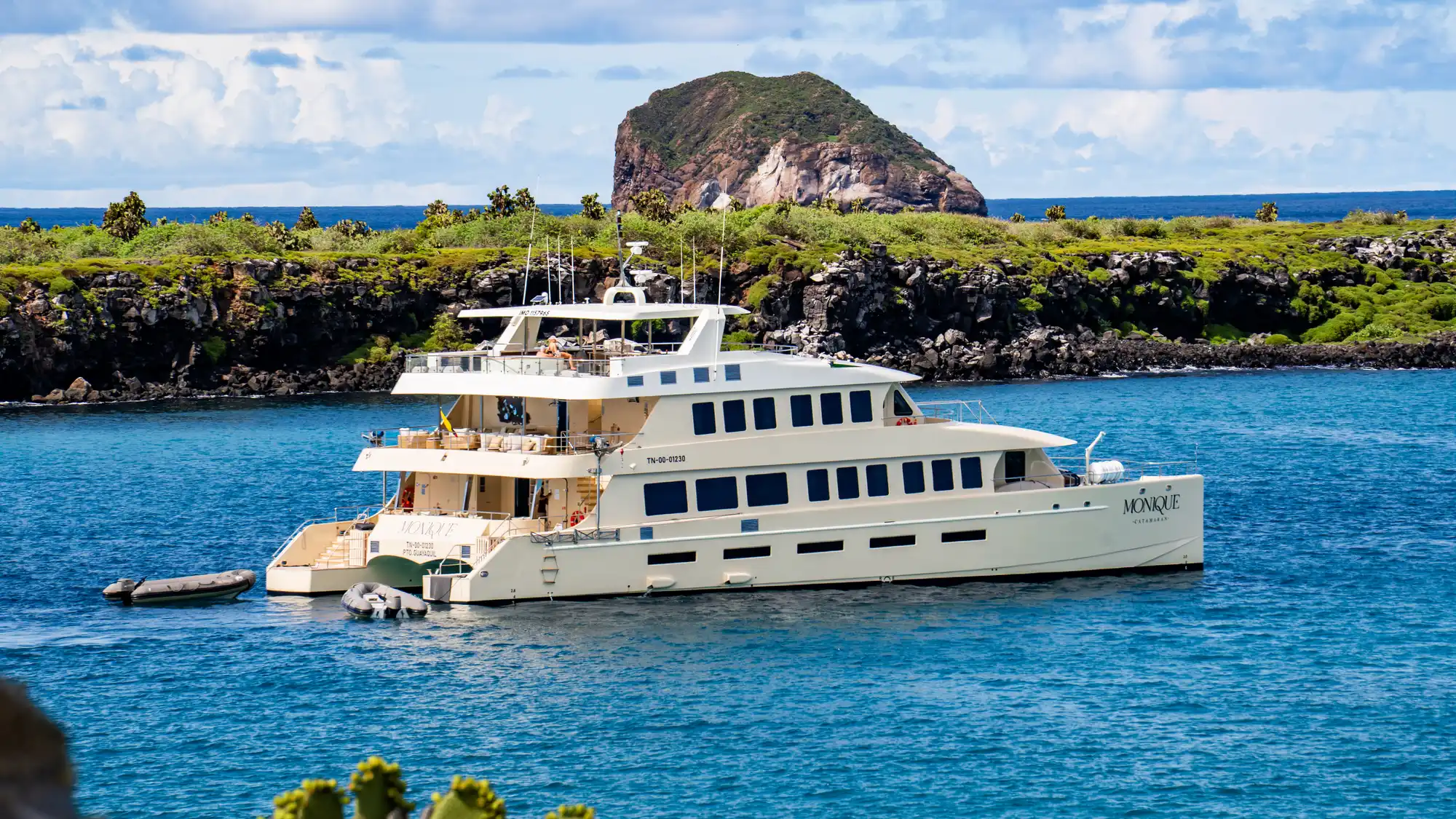
November 12, 2026 · Monique, 4-Day Southern Islands: Santa Cruz's Wild Tortoises
Possible: Gardner Bay, day 3. 6 spots
from US$3,352 per guest
Check availability
November 12, 2026 · Galaxy Sirius, 6-Day Western & Northern: Rabida's Red Sand Beach
Possible: Black Turtle Cove, day 1. 6 spots
from US$5,680 per guest
Check availability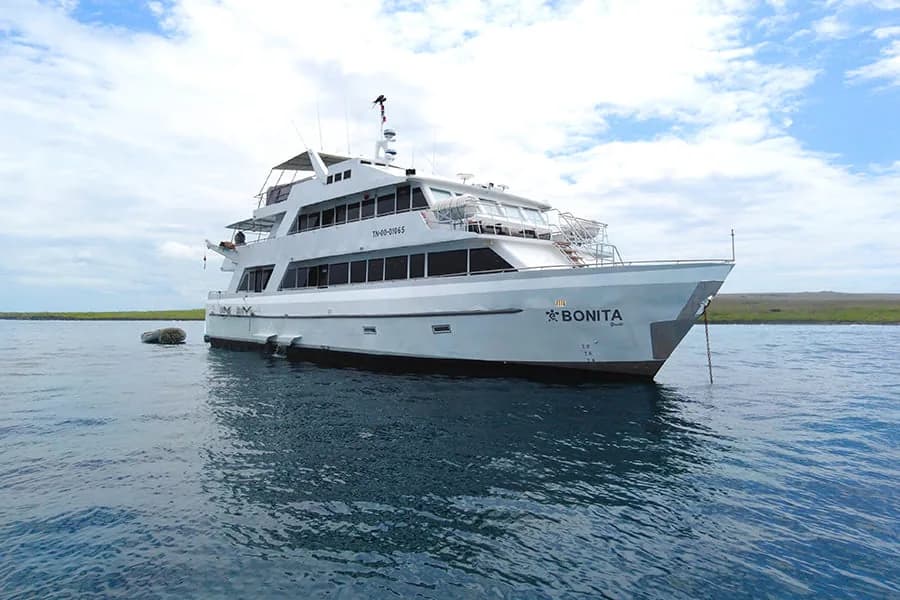
November 14, 2026 · Bonita, 5-Day Southern Islands: Isla Lobos' Coastal Trail
Possible: Gardner Bay, day 3. 2 spots
from US$2,465 per guest
Check availability
2,403 departures
On every departure
Included
All meals on board · Two certified national park naturalist guides · All excursions and landings listed in the itinerary · Snorkelling gear and wetsuit · Kayaks and stand-up paddleboards on board · Coffee, tea and water at any time
How you see them
Snorkelling at 3 sites · Panga ride at 2 sites · Beach at 1 site · Landing at 1 site