Swallow-Tailed Gull in Galápagos: Facts and Where to See It
The swallow-tailed gull (Creagrus furcatus) is the world's only nocturnal gull: it hunts squid and small fish at night with eyes larger than any other gull's. Breeding adults are grey with a black head and a red ring around the eye. About 35,000 birds breed mainly in Galápagos, and naturalist guides' sighting records place them at 6 visitor sites on 5 islands, all year.
Good to know
| Scientific name | Creagrus furcatus |
|---|---|
| Group | Seabirds |
| Endemic | Breeds mainly in Galápagos; a few on Malpelo, Colombia |
| Size | About 53 cm, up to 57 cm |
| Weight | About 625 g |
| Diet | Squid and small fish, caught at night |
| Population | About 35,000 |
| IUCN status | Least Concern |
| In Galápagos | All year, about 50 colonies |
- Galapagos Conservation Trust, swallow-tailed gull species page (all rows)
A gull built for the night
The swallow-tailed gull forages mainly at night for squid, which rise towards the surface in the dark, and also takes small fish. Its eyes are much larger than other gulls' and have a tissue layer that reflects light back through the retina, making them especially sensitive in low light.
- A butcher's hook. It is the only species in its genus, Creagrus, from words for butcher or meat, probably after the hooked bill.
- Breeding look. Grey body, black head, red eye-ring, pink legs and a dark bill with a pale tip and a white spot at the base.
- Off-season look. White head with a thick black ring around the eye.
- Galapagos Conservation Trust, swallow-tailed gull (nocturnal foraging, eyes, genus name, plumage) and waved albatross (squid nearer the surface at night)
Nests of stones, one egg
Swallow-tailed gulls have no fixed breeding season, so nests can be found in any month. They form loose colonies with wide gaps between nests, which the males build from stones and lava fragments on steep slopes and cliffs, on stony beaches just above the waves or under plants. Each female lays one egg; both parents incubate it for about 35 days and feed the chick for up to three months. After breeding, adults may spend four to five months hunting at sea, along the Pacific coast of South America from Ecuador to Chile.
- Galapagos Conservation Trust (breeding, colonies, nests, egg, chick, migration)
Where to see swallow-tailed gulls
Guide sighting records list swallow-tailed gulls at 6 sites. 2 are rated Likely: the trail on South Plaza and Darwin Bay on Genovesa. North Seymour and Punta Suárez on Española are rated Possible, and Cerro Brujo and Punta Pitt on San Cristóbal Rare. The Galapagos Conservation Trust notes a preference for the warmer waters around the eastern islands.
- Our guide sighting data
- Galapagos Conservation Trust
Likely
- Darwin Bay, Genovesa.Landing, snorkelling. Seen all year.Likely
- South Plaza Trail, South Plaza.Landing. Seen all year.Likely
Possible
- North Seymour Trail, North Seymour.Landing. Seen all year.Possible
- Punta Suárez, Española.Landing. Seen all year.Possible
Rare
- Cerro Brujo, San Cristóbal.Beach. Seen all year.Rare
- Punta Pitt, San Cristóbal.Landing. Seen all year.Rare
How you see them: landing at 5 sites, snorkelling at 1 site, beach at 1 site.
When to see them
Swallow-tailed gulls can be seen all year round, and because breeding is not tied to a season, chicks can turn up in any month. In the next twelve months, 803 departures stop at a site where they are seen.
- Galapagos Conservation Trust
- our guide sighting and departure data
- 38
- departures in November 2026
Show the November 2026 departures - 52
- departures in December 2026
Show the December 2026 departures - 60
- departures in January 2027
Show the January 2027 departures - 56
- departures in February 2027
Show the February 2027 departures - 597
- departures in the other 8 months
Choose a month in the list - 803
- departures in the next twelve months stop where they are seen
Show all departures
Is the swallow-tailed gull endangered?
No, it is listed as Least Concern and protected by the national park and marine reserve. Galápagos hawks take eggs, and rats eat eggs too, without a visible effect on numbers. El Niño reduces their prey and has interrupted breeding before, after which the population recovered. Plastic and long-line fishing are possible threats.
- Galapagos Conservation Trust (status, protection, predators, El Niño, threats)
Mistakes to avoid
- Taking it for an ordinary gull. Look for the red eye-ring and black head.
- Expecting them to fish by day. They forage mainly at night; by day you see them at their colonies.
- Crowding a nest. Nests sit on bare stony ground; keep the 2-metre distance.
Frequently asked questions
Why is the swallow-tailed gull special?
It is the world's only nocturnal gull. It hunts squid at night with eyes larger than any other gull's and a reflective layer that makes them sensitive to low light.
Where do swallow-tailed gulls live?
They breed mainly in Galápagos, in about 50 colonies, with a few on Malpelo off Colombia. Outside breeding they range along the Pacific coast of South America from Ecuador to Chile.
Availability and prices updated
Departures that take you to them
Every Galápagos cruise in this list stops at least once at a site where our guides see the Swallow-tailed Gull. The best chances come first, and each departure shows the site and the day. Found one that suits you? Ask us about it. There is no booking and no payment: we check the departure and reply.
Next departures with a good chance
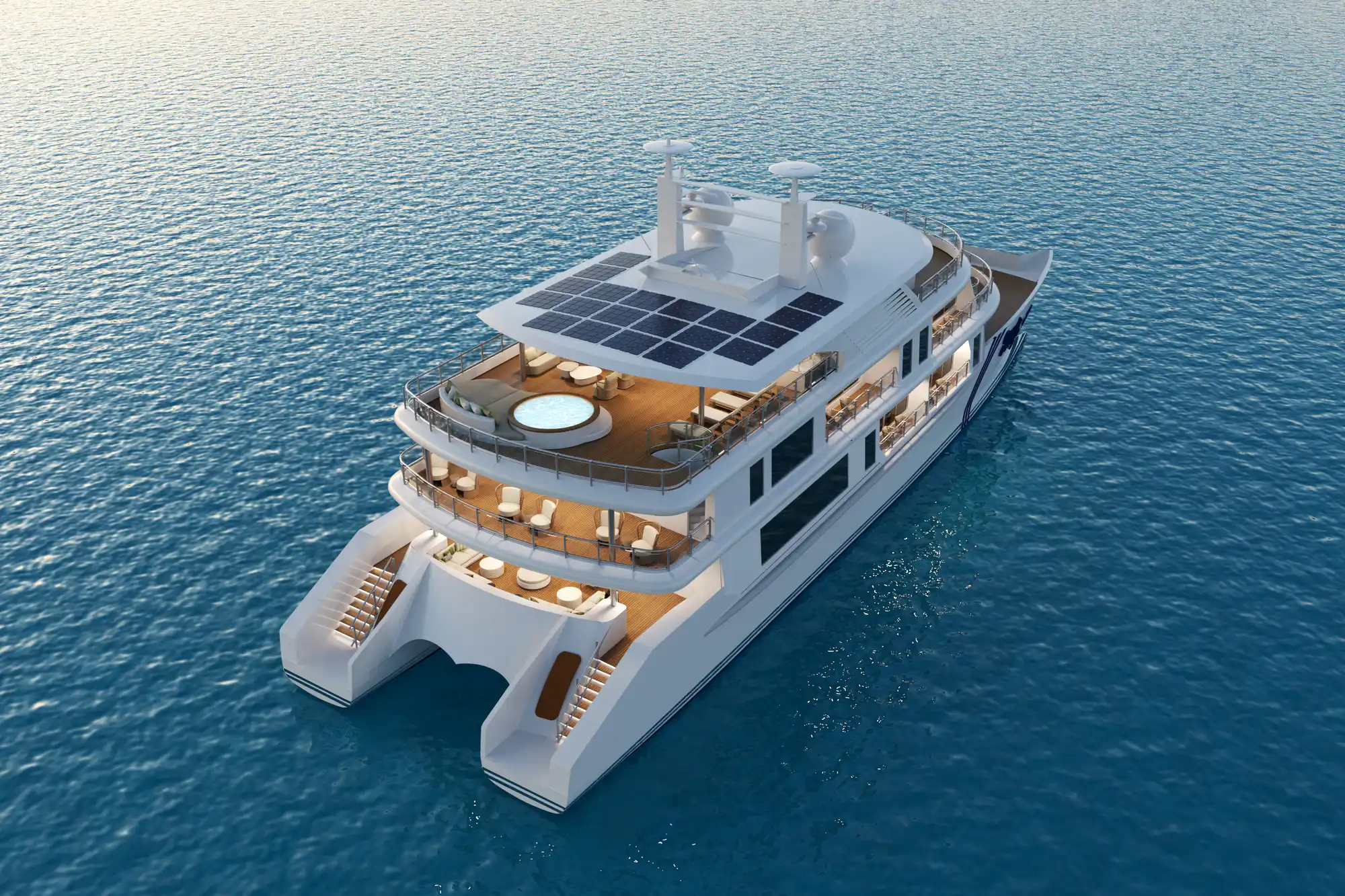
November 14, 2026 · Grand Ocean Spray, 6-Day Western Islands: Fernandina's Underwater Iguanas
Likely: South Plaza Trail, day 6. 7 spots
from US$7,191 per guest
Check availability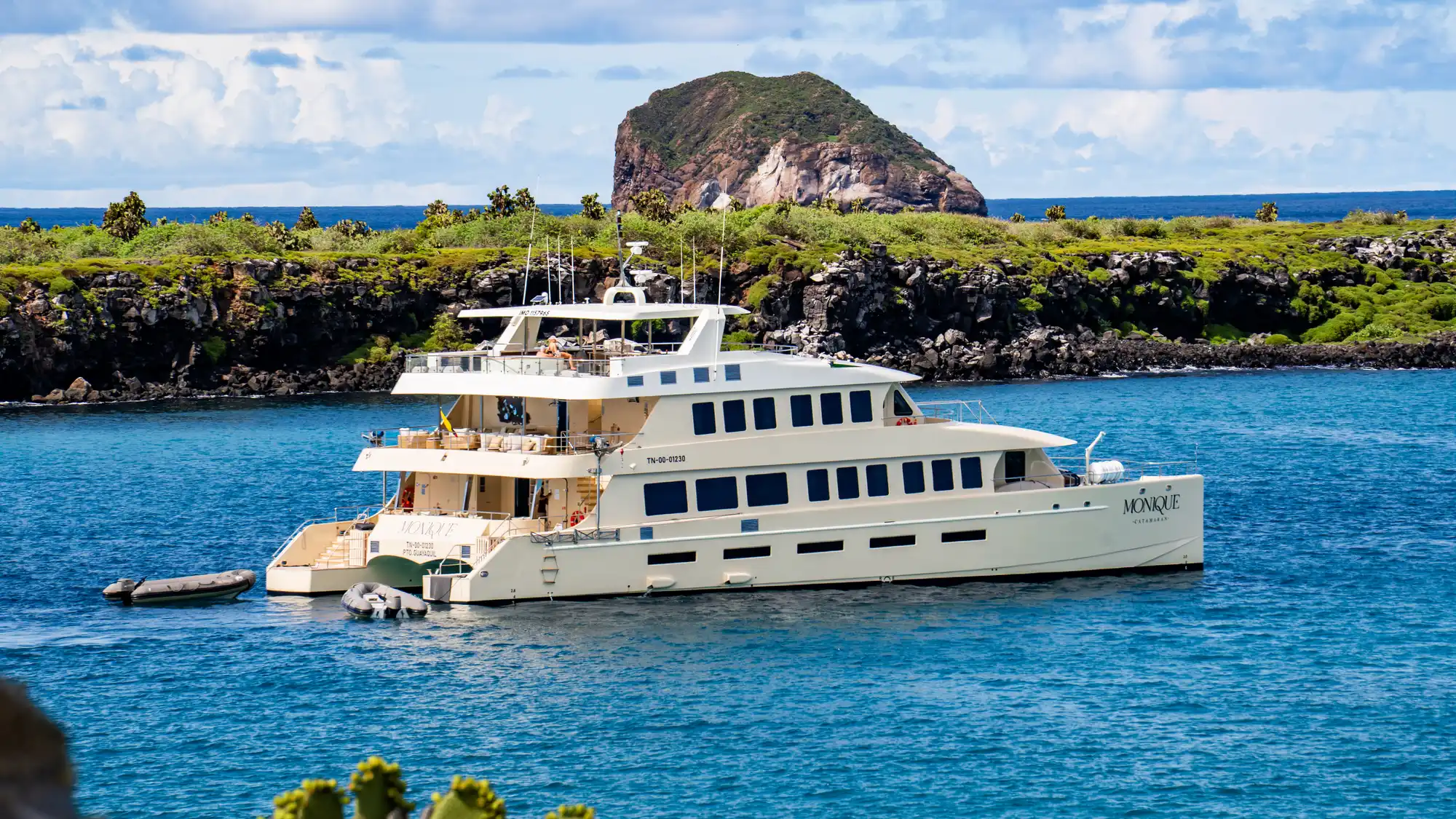
November 15, 2026 · Monique, 5-Day Southern & Western: Kicker Rock's Swim Channel
Likely: South Plaza Trail, day 2. 1 spot
Check availability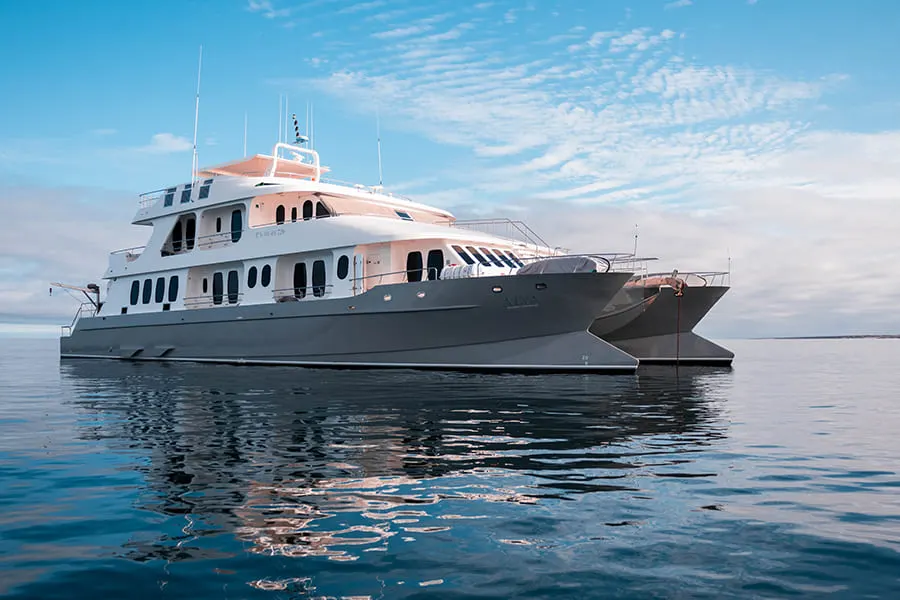
November 19, 2026 · Alya, 5-Day Northern & Western: Bartolome's Endemic Plant
Likely: Darwin Bay, day 2. 8 spots
from US$4,140 per guest
Check availability
2,386 departures
On every departure
Included
All meals on board · Two certified national park naturalist guides · All excursions and landings listed in the itinerary · Snorkelling gear and wetsuit · Kayaks and stand-up paddleboards on board · Coffee, tea and water at any time
How you see them
Landing at 5 sites · Snorkelling at 1 site · Beach at 1 site
Best chance
Darwin Bay · South Plaza Trail