Vermilion Flycatcher in Galápagos: Facts and Where to See It
The little vermilion flycatcher (Pyrocephalus nanus) is a small bird found only in Galápagos, about 13 cm long and 12 grams. Males are bright red with black wings and eye marks, the only truly bright land bird of the islands, while females are greyish with a peach breast. Naturalist guides' sighting records place it at 2 highland sites on 2 islands.
Good to know
| Scientific name | Pyrocephalus nanus |
|---|---|
| Group | Land birds |
| Endemic to Galápagos | Yes |
| Size | About 13 cm |
| Weight | About 12 g |
| Lifespan | About 5 years |
| Diet | Insects, often caught in flight |
| Breeding | December to May, three eggs a year |
| Status | Near Threatened (Galapagos Conservation Trust); declining |
| In Galápagos | At 2 sites in the humid highlands (guide sighting records) |
- Galapagos Conservation Trust, little vermilion flycatcher species page (all rows except sites)
- our guide sighting data
Red males, singing flights
The Galápagos birds are slightly smaller and duller than vermilion flycatchers on the mainland, yet the male is still the brightest land bird of the islands. Pairs are monogamous and territorial. To court, a male flies straight up while chirping steadily.
- Nest. A cup high in a tree, lined with moss and lichen, built in the warm season from December to May.
- Eggs. Three a year.
- Maturity. At two years.
The species has a tangled history. It was first collected on Darwin's voyage on HMS Beagle, and two subspecies were described from his specimens; the one from San Cristóbal has not been recorded since the 1980s and is considered extinct. The Galápagos birds were recently recognised as a species of their own.
- Galapagos Conservation Trust (plumage, display, nest, eggs, maturity, taxonomy, San Cristóbal subspecies)
Where the vermilion flycatcher lives and what it eats
Its home is the humid highland forest of Scalesia, Tournefortia and Zanthoxylum trees, forests that have largely been cleared for farming on the inhabited islands. It catches insects on the wing like other flycatchers. The Galapagos Conservation Trust names Isabela and the uninhabited islands of Fernandina and Rábida, and on Santa Cruz the north and northwest side of the central ridge, where Scalesia forest still stands.
- Galapagos Conservation Trust (habitat, forest loss, diet, islands, Santa Cruz)
Where to see vermilion flycatchers in Galápagos
Guide sighting records list the little vermilion flycatcher at 2 sites, both in the humid highlands: the Santa Cruz Highlands and Sierra Negra on Isabela. Both are rated Rare, so a sighting is a reward on a highland visit rather than a certainty.
- Our guide sighting data
Rare
- Santa Cruz Highlands, Santa Cruz.Landing. Seen all year.Rare
- Sierra Negra, Isabela.Hiking. Seen all year.Rare
How you see them: landing at 1 site, hiking at 1 site.
When to see them
The best time is the breeding season, December to May, when insects are plentiful and males display. In the next twelve months, 509 departures stop at a site where they are recorded.
- Galapagos Conservation Trust (December to May)
- our guide sighting and departure data
- 27
- departures in November 2026
Show the November 2026 departures - 32
- departures in December 2026
Show the December 2026 departures - 35
- departures in January 2027
Show the January 2027 departures - 39
- departures in February 2027
Show the February 2027 departures - 376
- departures in the other 8 months
Choose a month in the list - 509
- departures in the next twelve months stop where they are seen
Show all departures
Is the vermilion flycatcher endangered?
Its numbers are believed to be falling fast, especially on the inhabited islands, where much of its forest has been cleared for building and farming. The introduced smooth-billed ani competes with it, and larvae of the parasitic fly Philornis downsi attack the nestlings. The Galapagos Conservation Trust lists it as Near Threatened.
Conservation. Since 2014, a landbird programme has removed invasive hill raspberry to let Scalesia forest return, and treats nesting material with insecticide against the fly. The restoration of Floreana aims to bring the flycatcher back there in the long run.
- Galapagos Conservation Trust (decline, threats, status, Landbird Conservation Programme, Floreana)
Mistakes to avoid
- Looking on the coast. It lives in the highland forest.
- Missing the females. Only males are red; females are grey with a peach breast.
- Coming outside the season. December to May gives the best chance.
Frequently asked questions
How rare is the Vermilion Flycatcher?
In Galápagos it is declining fast and listed as Near Threatened by the Galapagos Conservation Trust; one subspecies, on San Cristóbal, has not been seen since the 1980s. The guide sighting records rate both highland sites Rare.
- Galapagos Conservation Trust
- our guide sighting data
Where can I see a vermilion flycatcher in Galápagos?
In the humid highlands: the Santa Cruz Highlands and Sierra Negra on Isabela in the guide records, and the remnant Scalesia forest on the north side of Santa Cruz's central ridge.
- Our guide sighting data
- Galapagos Conservation Trust
Availability and prices updated
Departures that take you to them
Every Galápagos cruise in this list stops at least once at a site where our guides see the Vermilion Flycatcher. The best chances come first, and each departure shows the site and the day. Found one that suits you? Ask us about it. There is no booking and no payment: we check the departure and reply.
Next departures with a good chance
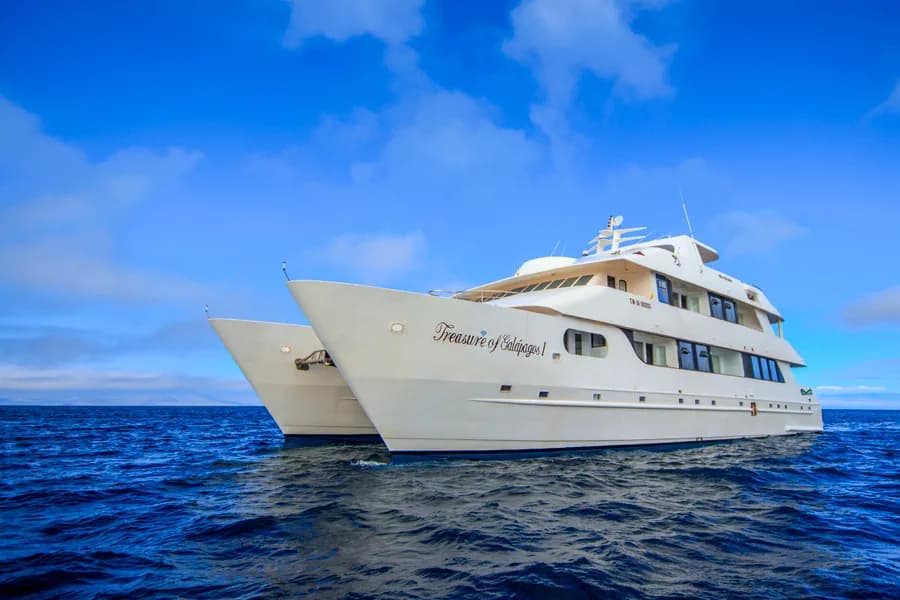
November 10, 2026 · Treasure, 5-Day Southern Islands: Los Gemelos' Daylight Owl
Rare: Santa Cruz Highlands, day 4. 16 spots
from US$4,150 per guest
Check availability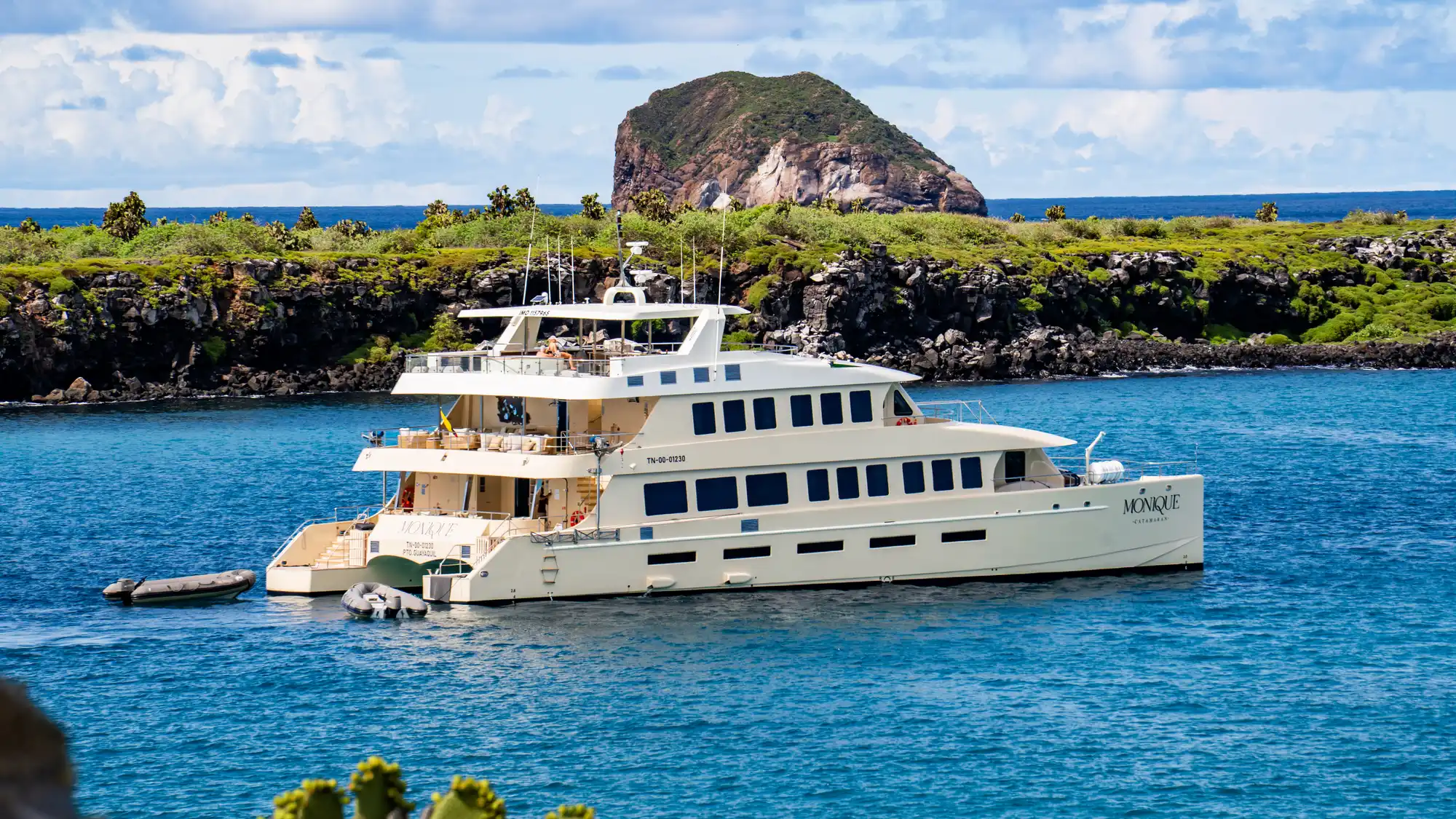
November 12, 2026 · Monique, 4-Day Southern Islands: Santa Cruz's Wild Tortoises
Rare: Santa Cruz Highlands, day 1. 6 spots
from US$3,352 per guest
Check availability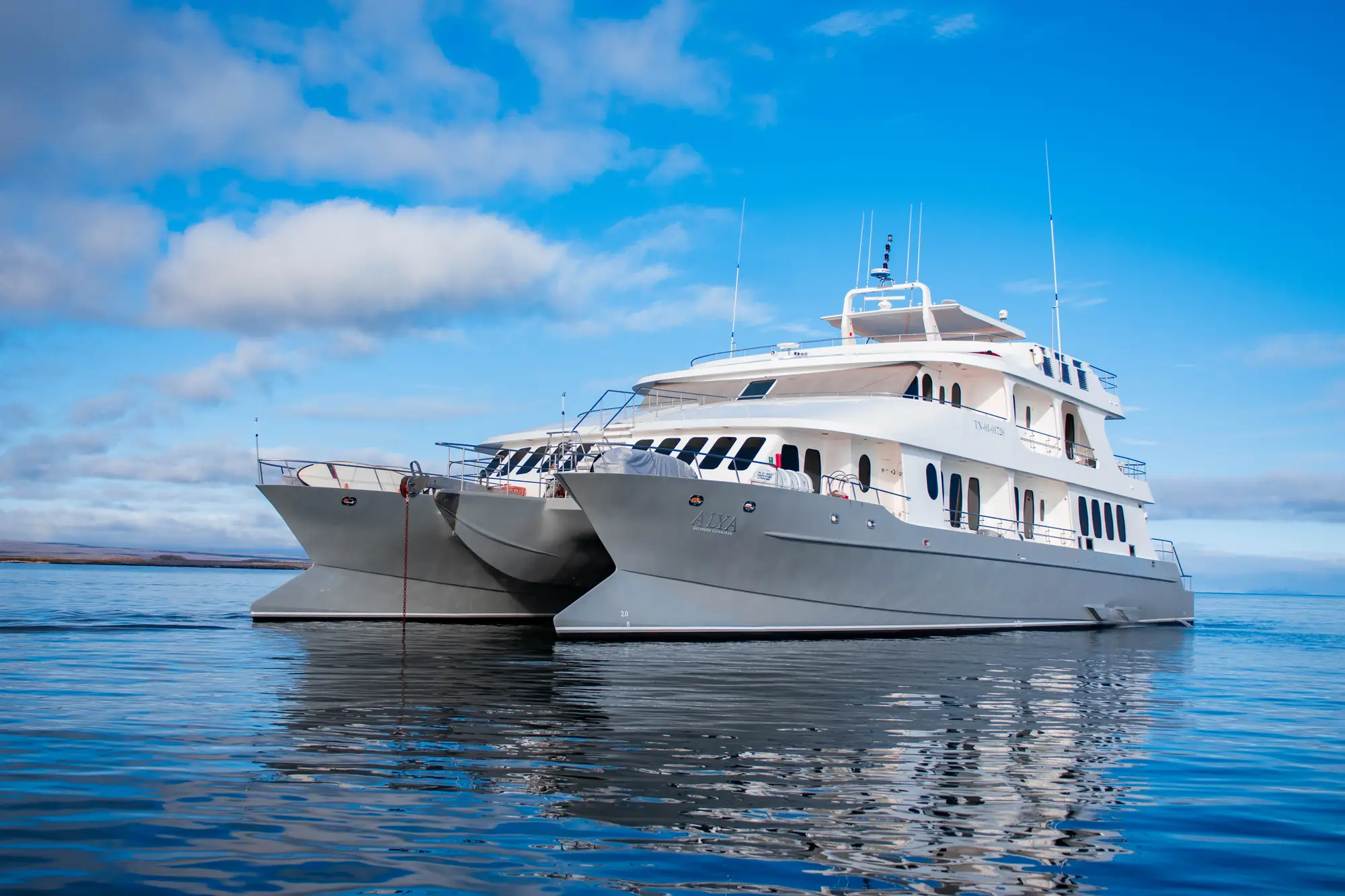
November 12, 2026 · Galaxy Sirius, 6-Day Western & Northern: Rabida's Red Sand Beach
Rare: Santa Cruz Highlands, day 3. 6 spots
from US$5,680 per guest
Check availability
1,471 departures
On every departure
Included
All meals on board · Two certified national park naturalist guides · All excursions and landings listed in the itinerary · Snorkelling gear and wetsuit · Kayaks and stand-up paddleboards on board · Coffee, tea and water at any time
How you see them
Landing at 1 site · Hiking at 1 site