Waved Albatross in Galápagos: Facts and When to See It
The waved albatross (Phoebastria irrorata) is the largest bird in Galápagos, with a wingspan of up to 2.5 metres, and almost the whole population breeds on Española. Pairs mate for life and greet each other with a dance of bill circling, clacking and mooing. Naturalist guides' sighting records place it at 1 visitor site: Punta Suárez on Española, from April to December.
Good to know
| Scientific name | Phoebastria irrorata |
|---|---|
| Group | Seabirds |
| Endemic to Galápagos | Breeds almost only on Española; fewer than 20 pairs on Isla de la Plata |
| Size | About 80 cm long, up to 93 cm |
| Wingspan | About 2.2 m, up to 2.5 m |
| Weight | About 3 kg, up to 4 kg |
| Lifespan | About 30 years |
| Population | 50,000 to 70,000 birds, about 12,000 breeding pairs |
| IUCN status | Critically Endangered |
| On Española | April to December |
- Galapagos Conservation Trust, waved albatross species page (all rows)
The courtship dance
The waved albatross has a white head with a creamy yellow crown, a chestnut-brown body, a long dull yellow bill and bluish feet. The name comes from the fine wave-like pattern on the adults' wings.
Its courtship dance is one of the best-known sights in Galápagos: the partners circle their bills, clack them together, nod, waddle and give a cow-like moo. The dance is longest and most elaborate for new pairs and for pairs whose last breeding season failed. The guide records place the peak of the courtship season at Punta Suárez in October.
- Galapagos Conservation Trust (look, name, dance)
- our guide sighting data (October peak)
One egg, a long childhood
Pairs mate for life. Each season the female lays a single egg on bare ground between April and June, and the pair take turns incubating it for up to two months. A few weeks after hatching, the chicks are left in nursery groups while the parents feed at sea, returning with an oily, pre-digested liquid. About five and a half months after hatching, the young start to fly, and by January they have left the colony. They spend up to six years at sea before returning to find a partner.
Outside the breeding season the whole population moves out to sea, between Galápagos and the coasts of Colombia and Peru, feeding on fish and squid, often at night, and stealing from boobies.
- Galapagos Conservation Trust (breeding, nursery groups, fledging, years at sea, migration, diet)
Where to see waved albatrosses
Guide sighting records list waved albatrosses at 1 site: Punta Suárez on Española, a landing with a trail along the cliffs to the colony. The guides rate it Likely for courtship and breeding from April to December, Possible in December when the fledglings leave, and Rare in January for a few late stragglers.
- Our guide sighting data
Peak of the courtship season, October
Punta Suárez
Likely
- Punta Suárez, Española.Landing. Courtship and breeding, April to December.Likely
How you see them: landing at 1 site.
When to see them
Albatrosses are away at sea from January to March, the only months they are not on land. They return in April, lay from April to June, and the courtship peaks in October according to the guide records. In the next twelve months, 45 departures stop at Punta Suárez during the courtship and breeding months.
- Galapagos Conservation Trust (January to March at sea, laying April to June)
- our guide sighting and departure data
- 45
- departures in October 2027
Show the October 2027 departures - 327
- departures in the other 11 months
Choose a month in the list - 372
- departures in the next twelve months stop where they are seen
Show all departures
Is the waved albatross endangered?
Yes, it is listed as Critically Endangered. The greatest threat is fishing: long-line boats set hundreds of miles of baited hooks, and albatrosses that take the bait are dragged under and drown. Long-lining is banned in the Galápagos Marine Reserve, but outside it the birds have no protection. Harvesting for food and feathers has increased, and plastic, oil and chemicals add to the risk. With one egg a year at most, losses are hard to replace.
Scientists are tagging albatrosses to find their key feeding grounds at sea and show where protection from industrial fleets is needed. At Punta Suárez, park rules keep visitors on the trail and at least 2 metres (6 feet) from the birds.
- Galapagos Conservation Trust (status, long-lines, protection, harvesting, pollution, tagging)
- Galápagos National Park Rules
Mistakes to avoid when planning to see them
- Travelling from January to March. The albatrosses are at sea.
- Booking a route without Española. Punta Suárez is the one site.
- Expecting the dance in any month. October is the peak; from April to December there is a good chance.
- Galapagos Conservation Trust
- our guide sighting data
Frequently asked questions
Where can you see waved albatrosses?
At Punta Suárez on Española, the main breeding ground, from April to December. The guide sighting records rate it Likely in those months.
- Galapagos Conservation Trust
- our guide sighting data
When to see waved albatross in Galápagos?
From April to December, with the courtship peak in October according to the guide records. From January to March they are at sea.
- Galapagos Conservation Trust
- our guide sighting data
Why is the waved albatross critically endangered?
Mainly because of long-line fishing outside the marine reserve, where birds take baited hooks and drown, and because of harvesting for food and feathers. Each pair raises at most one chick a year, so losses are slow to replace.
Do waved albatrosses mate for life?
Yes. Pairs mate for life and greet each other with a long courtship dance of bill circling, clacking, nodding and mooing.
Availability and prices updated
Departures that take you to them
Every Galápagos cruise in this list stops at least once at a site where our guides see the Waved Albatross. The best chances come first, and each departure shows the site and the day. Found one that suits you? Ask us about it. There is no booking and no payment: we check the departure and reply.
Next departures with a good chance
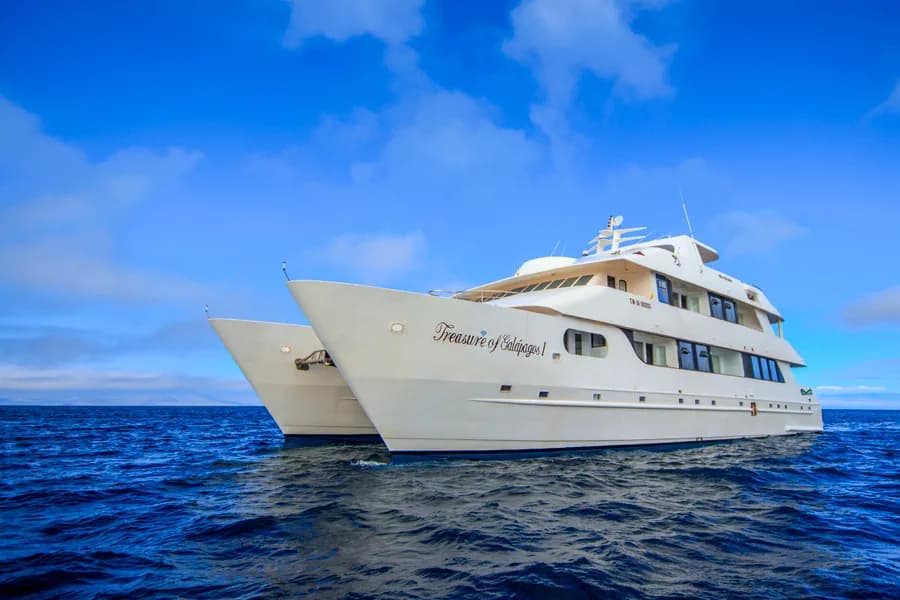
November 10, 2026 · Treasure, 5-Day Southern Islands: Los Gemelos' Daylight Owl
Likely: Punta Suárez, day 2. 16 spots
from US$4,150 per guest
Check availability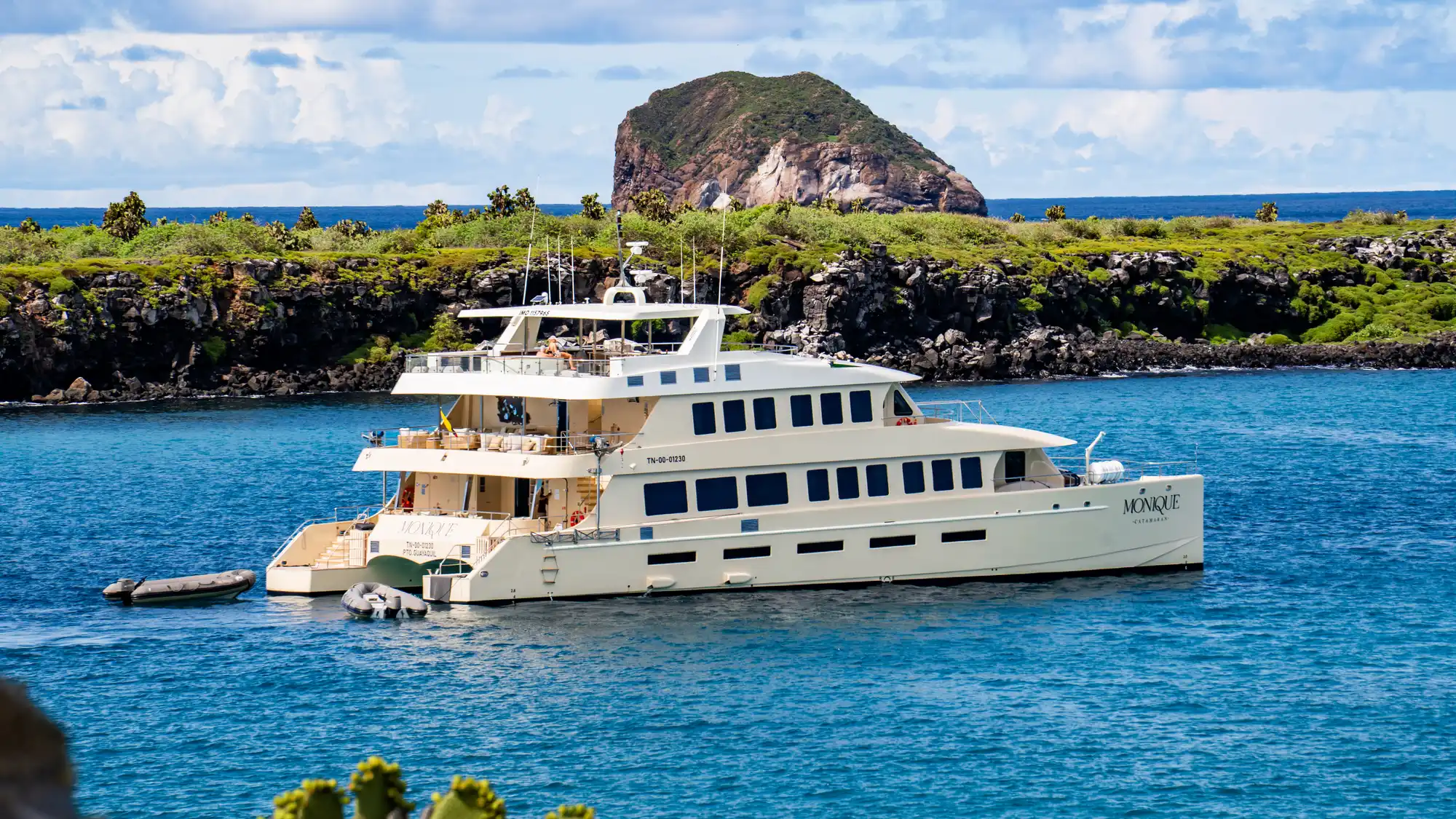
November 12, 2026 · Monique, 4-Day Southern Islands: Santa Cruz's Wild Tortoises
Likely: Punta Suárez, day 3. 6 spots
from US$3,352 per guest
Check availability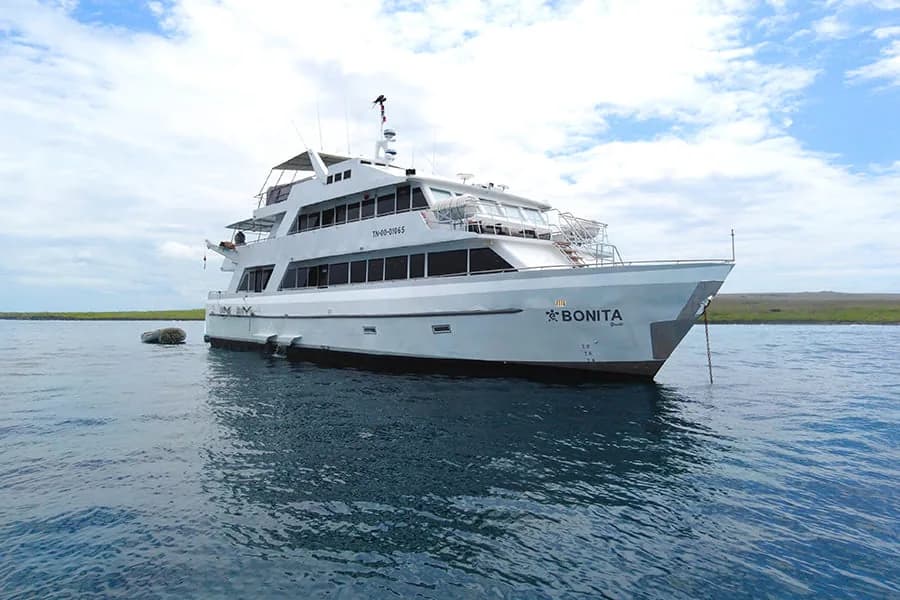
November 14, 2026 · Bonita, 5-Day Southern Islands: Isla Lobos' Coastal Trail
Likely: Punta Suárez, day 3. 2 spots
from US$2,465 per guest
Check availability
1,065 departures
On every departure
Included
All meals on board · Two certified national park naturalist guides · All excursions and landings listed in the itinerary · Snorkelling gear and wetsuit · Kayaks and stand-up paddleboards on board · Coffee, tea and water at any time
How you see them
Landing at 1 site
Best chance
Peak of the courtship season from October to October on Punta Suárez.