Wedge-rumped Storm Petrel: Facts and Where to See It
The wedge-rumped storm petrel (Hydrobates tethys) is a small, dark seabird that spends most of its life far out at sea and comes ashore only to breed. It nests in the Galápagos Islands and on two small islands off Peru. On Genovesa it breeds in a vast colony in the crevices of a lava field, and naturalist guides' sighting records place it at 1 visitor site.
Good to know
| Scientific name | Hydrobates tethys, formerly Oceanodroma tethys |
|---|---|
| Group | Seabirds |
| Endemic to Galápagos | No; breeds in Galápagos and on Pescadores and San Gallán off Peru |
| At sea | From Baja California to central Chile |
| Diet | Small fish, squid and crustaceans |
| Feeds | Mainly at night |
| Nests | In rock crevices or under plants, on cliffs and lava fields |
| IUCN status | Least Concern, decreasing |
| In Galápagos | At 1 site (guide sighting records) |
- BirdLife International DataZone (range, breeding islands, diet, feeding, nests, status, trend)
- Wikipedia, Wedge-rumped storm petrel (former genus)
A seabird of the open ocean
Wedge-rumped storm petrels live over open water, usually well offshore, and come close to land only near their colonies. They feed mostly at night, catching small fish, squid and crustaceans in flight by pattering and dipping at the surface, or by seizing prey while sitting on the water.
- Pattering. Storm petrels flutter low over the waves, legs dangling, and pick food from the surface without landing.
- Hidden nests. In the breeding season they form colonies on cliffs and lava fields and lay in rock crevices or under plant cover.
- Crowded colonies. BirdLife names competition between the petrels themselves as the main reason nests fail.
- BirdLife International DataZone (offshore, feeding methods, colonies, nests, nest failure)
Petrels and owls on Genovesa
The colony on Genovesa has a famous hunter. Galápagos short-eared owls eat these storm petrels in large numbers, and visitors with keen eyes may see an owl stalking its petrel prey along the island's eastern cliffs. BirdLife considers this predation unlikely to be above natural levels, and low losses of adults are unlikely to have a lasting effect on the population.
For visitors, this makes the lava field at Prince Philip's Steps one of the few places where predator and prey can be watched side by side on a short walk. Read more about the short-eared owl.
- BirdLife International DataZone (owl predation, natural levels)
- Galápagos Conservancy, Genovesa Island (owl stalking petrels on the eastern cliffs)
Where to see wedge-rumped storm petrels
Guide sighting records list one site, rated Likely: Prince Philip's Steps (El Barranco) on Genovesa, where the guides note a vast colony in the lava crevices. The trail climbs a steep natural stairway from the landing to a plateau, then crosses the lava field where the petrels swirl overhead.
- Our guide sighting data
- Tripadvisor and Go Galápagos visitor site descriptions (stairway, lava field, storm petrels)
Likely
- Prince Philip's Steps, Genovesa.Landing. Seen all year.Likely
How you see them: landing at 1 site.
When to see them
The guide records list the colony in every month. In the next twelve months, 369 departures stop at Prince Philip's Steps.
- Our guide sighting and departure data
- 11
- departures in November 2026
Show the November 2026 departures - 22
- departures in December 2026
Show the December 2026 departures - 29
- departures in January 2027
Show the January 2027 departures - 28
- departures in February 2027
Show the February 2027 departures - 279
- departures in the other 8 months
Choose a month in the list - 369
- departures in the next twelve months stop where they are seen
Show all departures
Is the wedge-rumped storm petrel endangered?
No. BirdLife lists it as Least Concern because its population is very large, although the trend is given as decreasing. In Galápagos, park rules keep visitors on marked trails and at least 2 metres (6 feet) from wildlife, which matters here because nests sit in crevices right beside the path.
- BirdLife International DataZone (status, population, trend)
- Galápagos National Park Rules
Mistakes to avoid
- Stepping off the trail. The lava crevices hold nests; park rules ask you to stay on the marked path.
- Watching only the sky. Look along the cliffs too; that is where owls hunt.
- Skipping the climb. The colony is on the plateau above the steps, not at the landing.
- Galápagos National Park Rules
- BirdLife International
- Galápagos Conservancy
Frequently asked questions
Where do wedge-rumped storm petrels breed?
On the Galápagos Islands and on the Pescadores and San Gallán islands off Peru, in colonies on cliffs and lava fields.
What do storm petrels eat?
Wedge-rumped storm petrels eat mostly small fish, squid and crustaceans, caught mainly at night by pattering and dipping at the surface.
Why do owls hunt storm petrels on Genovesa?
The petrels nest there in a huge colony in the lava, and Galápagos short-eared owls eat them in large numbers. BirdLife considers this a natural level of predation.
Is the wedge-rumped storm petrel endangered?
No, it is listed as Least Concern, with a very large population.
Where can I see storm-petrels?
In Galápagos, at Prince Philip's Steps on Genovesa, where wedge-rumped storm petrels nest in a vast colony in the lava crevices. Our guides rate them Likely there.
- Our guide sighting data
Availability and prices updated
Departures that take you to them
Every Galápagos cruise in this list stops at least once at a site where our guides see the Wedge-rumped Storm Petrel. The best chances come first, and each departure shows the site and the day. Found one that suits you? Ask us about it. There is no booking and no payment: we check the departure and reply.
Next departures with a good chance
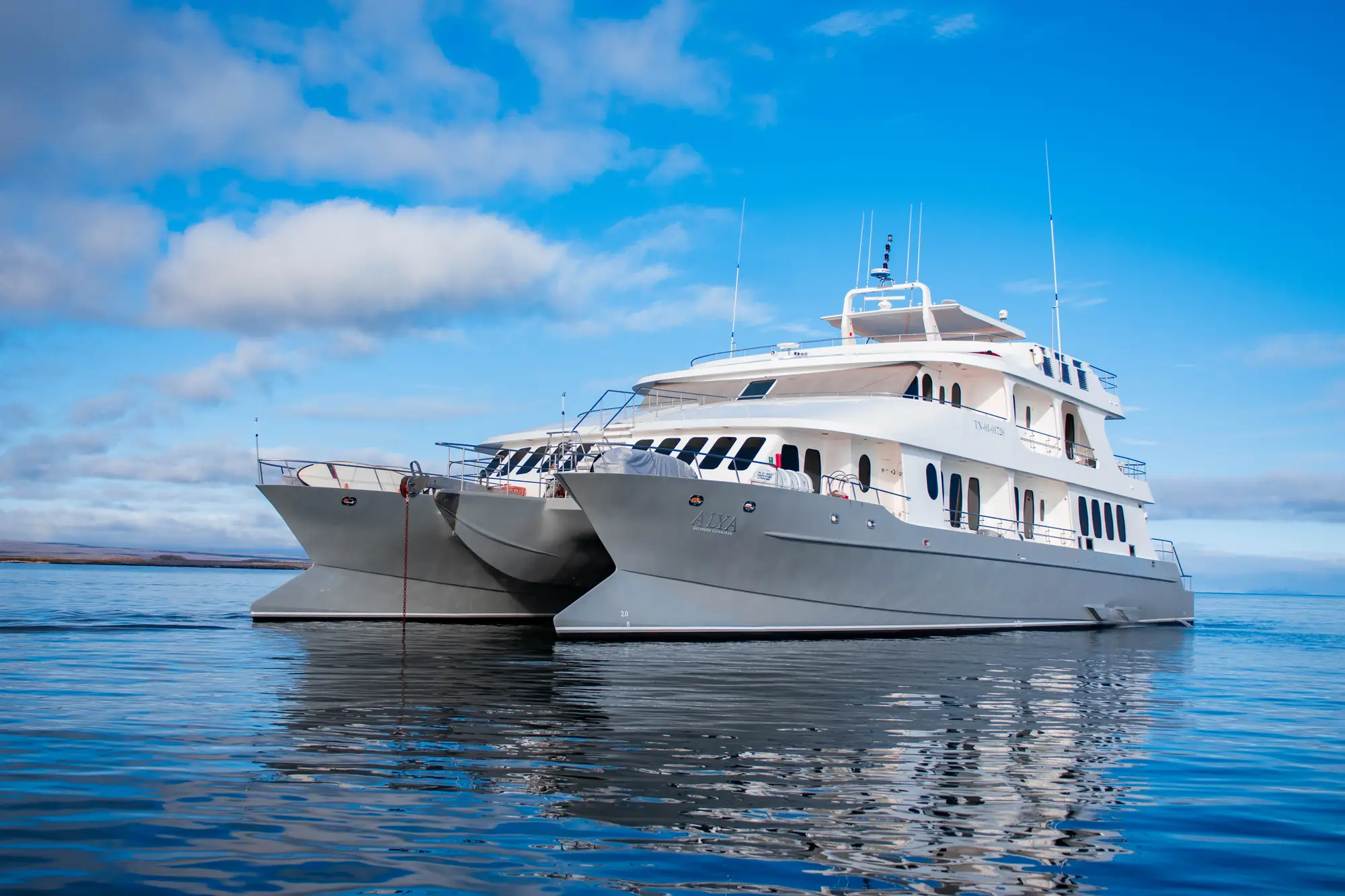
November 12, 2026 · Galaxy Sirius, 6-Day Western & Northern: Rabida's Red Sand Beach
Likely: Prince Philip's Steps, day 5. 6 spots
from US$5,680 per guest
Check availability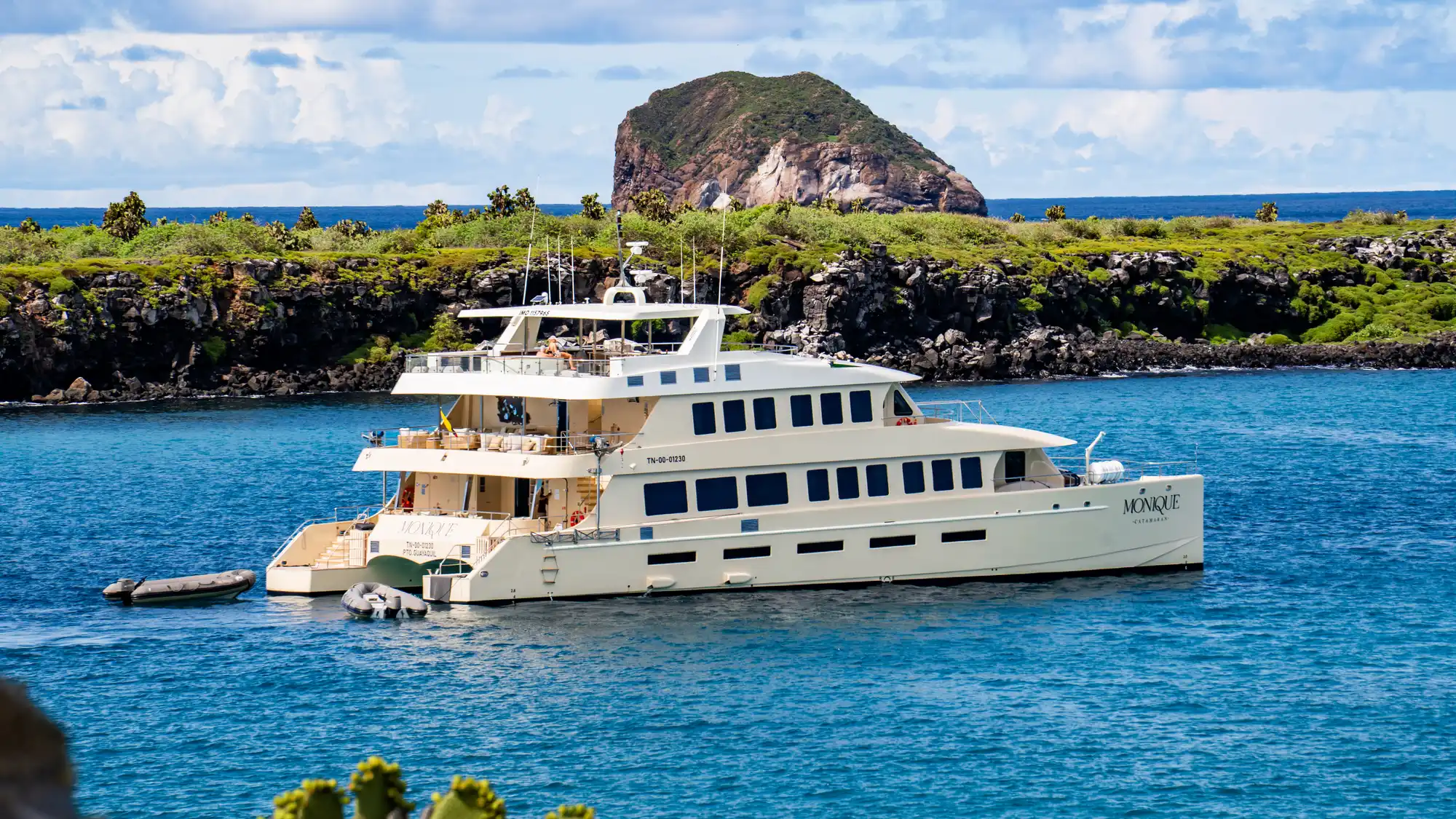
November 15, 2026 · Monique, 5-Day Southern & Western: Kicker Rock's Swim Channel
Likely: Prince Philip's Steps, day 4. 1 spot
Check availability
November 18, 2026 · Galaxy Stella, 5-Day Northern Islands: Kicker Rock's Shark Channel
Likely: Prince Philip's Steps, day 3. 4 spots
from US$4,080 per guest
Check availability
1,137 departures
On every departure
Included
All meals on board · Two certified national park naturalist guides · All excursions and landings listed in the itinerary · Snorkelling gear and wetsuit · Kayaks and stand-up paddleboards on board · Coffee, tea and water at any time
How you see them
Landing at 1 site
Best chance
Prince Philip's Steps