White-Cheeked Pintail in Galápagos: Facts and Where to See It
The white-cheeked pintail (Anas bahamensis) is a brown duck with white cheeks and throat, which give it a capped look, and a dark bill with a red or pink base. Galápagos has its own subspecies, Anas bahamensis galapagensis, found in brackish lagoons and wetlands. Naturalist guides' sighting records place it at 5 visitor sites on 4 islands.
Good to know
| Scientific name | Anas bahamensis; in Galápagos A. b. galapagensis |
|---|---|
| Group | Water birds |
| Endemic | Galápagos subspecies |
| Look | Brown cap, white cheeks and throat, dark bill with red or pink base |
| Habitat | Marshes, brackish and freshwater lagoons, shallow coastal water |
| World population | 118,000 to 720,000 mature birds |
| Trend | Decreasing |
| IUCN status | Least Concern |
| In Galápagos | At 5 sites (guide sighting records) |
- BirdLife International DataZone (population, trend, status, habitat)
- Charles Darwin Foundation, Galápagos species checklist (subspecies, look)
- Birds of the World (red spot at the bill base)
The Galápagos duck
The Charles Darwin Foundation describes the Galápagos bird as brown on top of the head with white cheeks and throat, which makes it look as if it were wearing a cap, and with a dark bill that turns pink or reddish at the base. Birds of the World adds red to red-brown eyes and dark grey legs.
- Subspecies. Anas bahamensis galapagensis lives in Galápagos.
- Wetland bird. BirdLife lists marshes and swamps as its main habitat, and brackish lagoons, lakes, rocky shallows and seagrass beds as suitable.
- Charles Darwin Foundation (look, subspecies)
- Birds of the World (eyes, legs)
- BirdLife International DataZone (habitat)
Where the pintail lives
BirdLife describes the species' range as extremely large. Its main habitat is marshes and swamps; they also use brackish and saline pools, freshwater lakes and shallow coastal water with rocks, seagrass or seaweed. In Galápagos they are found in the lagoons behind beaches and in coastal wetlands.
- BirdLife International DataZone (range, habitat)
- our guide sighting data (Galápagos sites)
Where to see white-cheeked pintails in Galápagos
Guide sighting records list pintails at 5 sites. Cerro Brujo on San Cristóbal is rated Possible; the lagoons at Punta Cormorant on Floreana, Bachas Beach on Santa Cruz, Punta Moreno and the Isabela Wetlands are rated Rare.
- Our guide sighting data
Possible
- Cerro Brujo, San Cristóbal.Beach. Seen all year.Possible
Rare
- Bachas Beach, Santa Cruz.Beach. Seen all year.Rare
- Isabela Wetlands, Isabela.Landing. Seen all year.Rare
- Punta Cormorant, Floreana.Landing. Seen all year.Rare
- Punta Moreno, Isabela.Landing, panga ride. Seen all year.Rare
How you see them: landing at 3 sites, beach at 2 sites, panga ride at 1 site.
When to see them
The guide records list pintails in every month. In the next twelve months, 771 departures stop at a site where they are seen.
- Our guide sighting and departure data
- 34
- departures in November 2026
Show the November 2026 departures - 49
- departures in December 2026
Show the December 2026 departures - 54
- departures in January 2027
Show the January 2027 departures - 53
- departures in February 2027
Show the February 2027 departures - 581
- departures in the other 8 months
Choose a month in the list - 771
- departures in the next twelve months stop where they are seen
Show all departures
Is the white-cheeked pintail endangered?
No. BirdLife lists it as Least Concern, with 118,000 to 720,000 mature birds worldwide, although the population is decreasing. In Galápagos, park rules keep visitors on the trails and at least 2 metres (6 feet) from wildlife at the lagoons.
Mistakes to avoid
- Skipping the lagoons. Pintails live behind the beaches, not on the sea.
- Walking to the water's edge. Stay on the trail above the lagoon.
- Confusing it with other ducks. Look for the white cheeks and the red bill base.
- BirdLife International DataZone
- Charles Darwin Foundation
- Galápagos National Park Rules
Frequently asked questions
How many white-cheeked pintails are there?
BirdLife estimates 177,000 to 1,080,000 birds worldwide, or 118,000 to 720,000 mature birds, based on Wetlands International figures from 2023. The trend over three generations, about 12 years, is decreasing.
Where do white-cheeked pintails live?
Mainly in marshes and swamps. They also use brackish and saline pools, freshwater lakes, and shallow coastal water over rock, seagrass or seaweed, both in and outside the breeding season.
Is a pintail a rare duck?
The white-cheeked pintail is not rare: it is listed as Least Concern with 118,000 to 720,000 mature birds, though the population is decreasing. In Galápagos the guide records rate it Possible or Rare at its sites.
- BirdLife International DataZone
- our guide sighting data
What duck has white cheeks?
The white-cheeked pintail: brown on top of the head, with white cheeks and throat and a dark bill with a red or pink base.
- Charles Darwin Foundation
- Birds of the World
Does Galápagos have its own duck?
It has its own subspecies of the white-cheeked pintail, Anas bahamensis galapagensis.
- Charles Darwin Foundation
Where can I see a white-cheeked pintail in Galápagos?
In lagoons and wetlands. The guide records rate Cerro Brujo on San Cristóbal as Possible.
- Our guide sighting data
What does the Galápagos pintail look like?
Brown on top of the head with white cheeks and throat, like a cap, and a dark bill that turns pink or reddish at the base.
- Charles Darwin Foundation
Availability and prices updated
Departures that take you to them
Every Galápagos cruise in this list stops at least once at a site where our guides see the White-cheeked Pintail. The best chances come first, and each departure shows the site and the day. Found one that suits you? Ask us about it. There is no booking and no payment: we check the departure and reply.
Next departures with a good chance
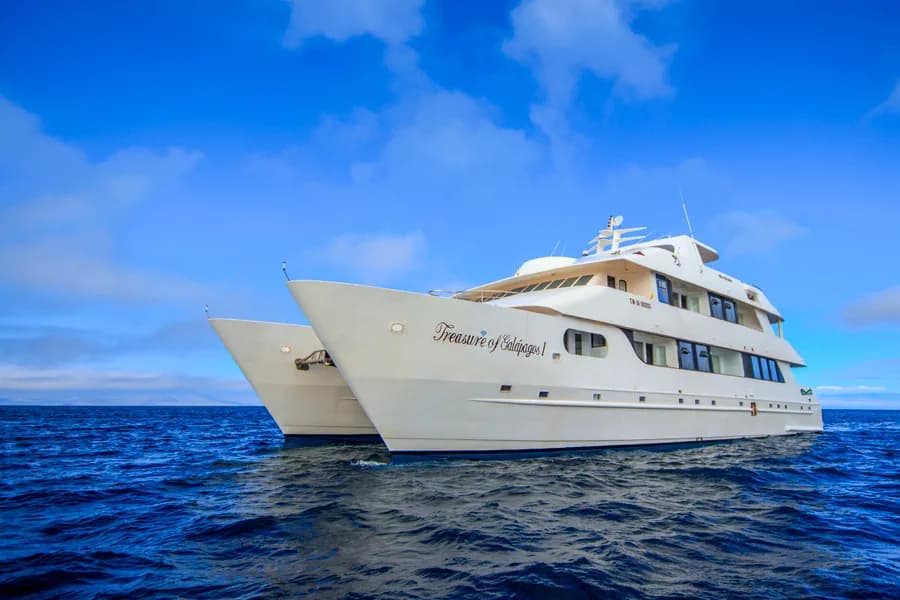
November 20, 2026 · Treasure, 5-Day Northern & Western: Punta Pitt's Triple Boobies
Possible: Cerro Brujo, day 4. 1 spot
from US$4,150 per guest
Check availability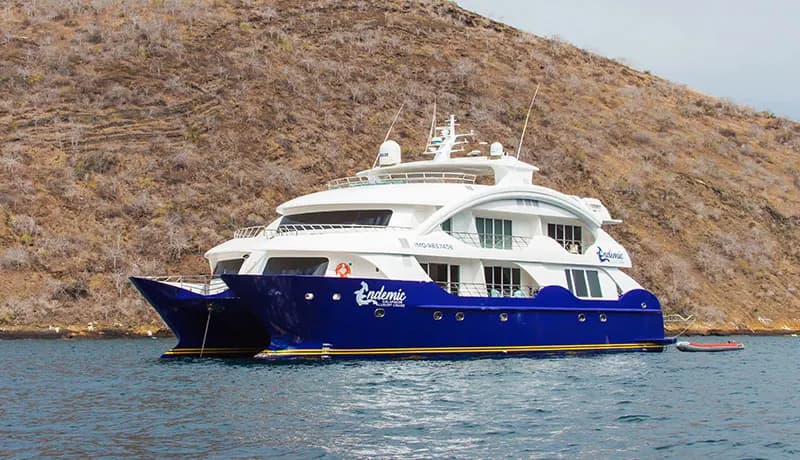
November 22, 2026 · Endemic, 5-Day Southern Islands: Lonesome George's Legacy
Possible: Cerro Brujo, day 2. 5 spots
from US$4,952 per guest
Check availability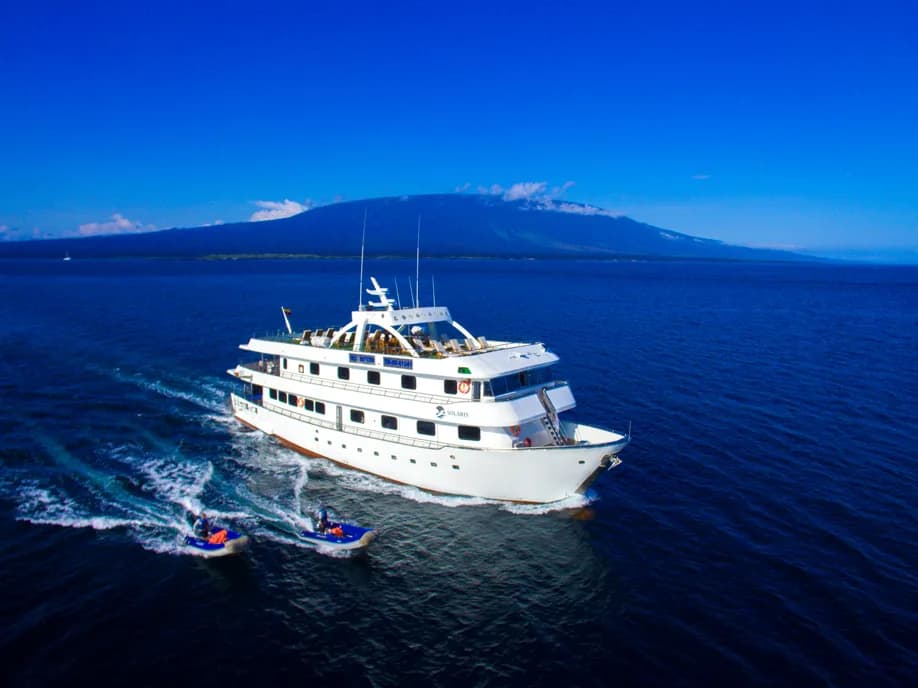
November 23, 2026 · Solaris, 5-Day Northern Islands: South Plaza's Hybrid Iguana
Possible: Cerro Brujo, day 5. 4 spots
from US$3,735 per guest
Check availability
2,356 departures
On every departure
Included
All meals on board · Two certified national park naturalist guides · All excursions and landings listed in the itinerary · Snorkelling gear and wetsuit · Kayaks and stand-up paddleboards on board · Coffee, tea and water at any time
How you see them
Landing at 3 sites · Beach at 2 sites · Panga ride at 1 site