Whitetip Reef Shark in Galápagos: Facts and Where to See It
The whitetip reef shark (Triaenodon obesus) is the most common shark in Galápagos, a slender shark about 1.5 metres long with white tips on its fins. By day it rests in caves and under rock ledges, often stacked on top of other whitetips. Naturalist guides note it in the water around the whole archipelago and list it at 5 sites on 4 islands.
Good to know
| Scientific name | Triaenodon obesus |
|---|---|
| Group | Sharks and rays |
| Endemic to Galápagos | No |
| Size | About 1.5 m, up to 2.13 m |
| Weight | About 10 kg, up to 18.3 kg |
| Lifespan | 14 to 19 years |
| Young | 1 to 5 pups, about half a metre at birth |
| Depth | Mostly above 40 m |
| IUCN status | Vulnerable |
| In Galápagos | All year, across the archipelago |
- Galapagos Conservation Trust, whitetip reef shark species page (all rows)
Sleeping in stacks, hunting at night
Whitetips are slow and slender, grey to brownish above and white below, and easy to tell from blacktip sharks by the white marks on the fin tips. By day many crowd into caves, often lying on top of each other, and a whitetip usually returns to the same cave or crevice day after day, sometimes for years. At night, or in calm water, they hunt small reef animals hidden in the rocks and coral.
They are among the few sharks seen mating in the wild. Pups are born large enough to look after themselves and hide from other sharks.
- Galapagos Conservation Trust (body, white tips, caves, site fidelity, night hunting, mating, pups)
Where the whitetip reef shark lives
Whitetips live on rocky reefs, under coral heads and in caves, from the surface down to more than 300 metres, though they are rarely seen below 40 metres. They are found throughout the archipelago, and the Galapagos Conservation Trust names North Seymour, Champion and Gardner islets and northern Isabela as places they are seen most often.
- Galapagos Conservation Trust (habitat, depth, sites)
Where to see whitetip reef sharks in Galápagos
The guides note whitetips resting under rock ledges around the whole archipelago. Of the sites listed by name, 2 are rated Likely, both snorkels where they rest in crevices: Devil's Crown off Floreana and Los Túneles on Isabela. Pinnacle Rock on Bartolomé, Black Turtle Cove and Tortuga Bay on Santa Cruz are rated Possible.
- Our guide sighting data
Likely
- Devil's Crown, Floreana.Snorkelling. Seen all year.Likely
- Los Túneles, Isabela.Snorkelling. Seen all year.Likely
Possible
- Black Turtle Cove, Santa Cruz.Panga ride. Seen all year.Possible
- Pinnacle Rock, Bartolomé.Snorkelling. Seen all year.Possible
- Tortuga Bay, Santa Cruz.Beach. Seen all year.Possible
How you see them: snorkelling at 3 sites, panga ride at 1 site, beach at 1 site.
When to see them
Whitetips are active all year and, in the words of the Galapagos Conservation Trust, very hard to miss. In the next twelve months, 365 departures stop at a site where they are seen.
- Galapagos Conservation Trust
- our guide sighting and departure data
- 11
- departures in November 2026
Show the November 2026 departures - 28
- departures in December 2026
Show the December 2026 departures - 28
- departures in January 2027
Show the January 2027 departures - 28
- departures in February 2027
Show the February 2027 departures - 270
- departures in the other 8 months
Choose a month in the list - 365
- departures in the next twelve months stop where they are seen
Show all departures
Is the whitetip reef shark endangered?
It is listed as Vulnerable. Outside Galápagos, populations are falling quickly: whitetips live in shallow water in a small area of reef, where gill nets and longlines catch them easily. In the Galápagos Marine Reserve they are protected from fishing and have no natural predators. Since November 2022, the international trade in whitetips is controlled under CITES along with 53 other requiem sharks.
- Galapagos Conservation Trust (status, threats, protection, predators, CITES 2022)
Mistakes to avoid when snorkelling with them
- Diving down into a cave. Whitetips rest there by day; watch from above and let them be.
- Expecting them in open water. Look under ledges and in crevices, not in the blue.
- Touching the reef. Resting sharks lie close to the rock, and park rules ask for at least 2 metres of distance from wildlife.
- Galapagos Conservation Trust
- our guide sighting data
- Galápagos National Park Rules
Frequently asked questions
Are whitetip reef sharks aggressive?
No. The Galapagos Conservation Trust describes them as docile in Galápagos, where food is plentiful, and says they show little sign of aggression and are in fact wary of people.
Is it safe to swim with white tip reef sharks?
Snorkelling near resting whitetips is part of many Galápagos visits, always with a naturalist guide. They are docile and wary of people; the rule is to watch from a distance and not to disturb them in their caves.
How big do white tip reef sharks get?
About 1.5 metres on average and up to 2.13 metres, with a weight of about 10 kg and up to 18.3 kg.
Where can you see whitetip reef sharks in Galápagos?
Almost anywhere along the rocky coasts. The guide records rate Devil's Crown and Los Túneles as Likely, and the Galapagos Conservation Trust names North Seymour, Champion and Gardner islets and northern Isabela.
- Our guide sighting data
- Galapagos Conservation Trust
Availability and prices updated
Departures that take you to them
Every Galápagos cruise in this list stops at least once at a site where our guides see the White-tipped Reef Shark. The best chances come first, and each departure shows the site and the day. Found one that suits you? Ask us about it. There is no booking and no payment: we check the departure and reply.
Next departures with a good chance
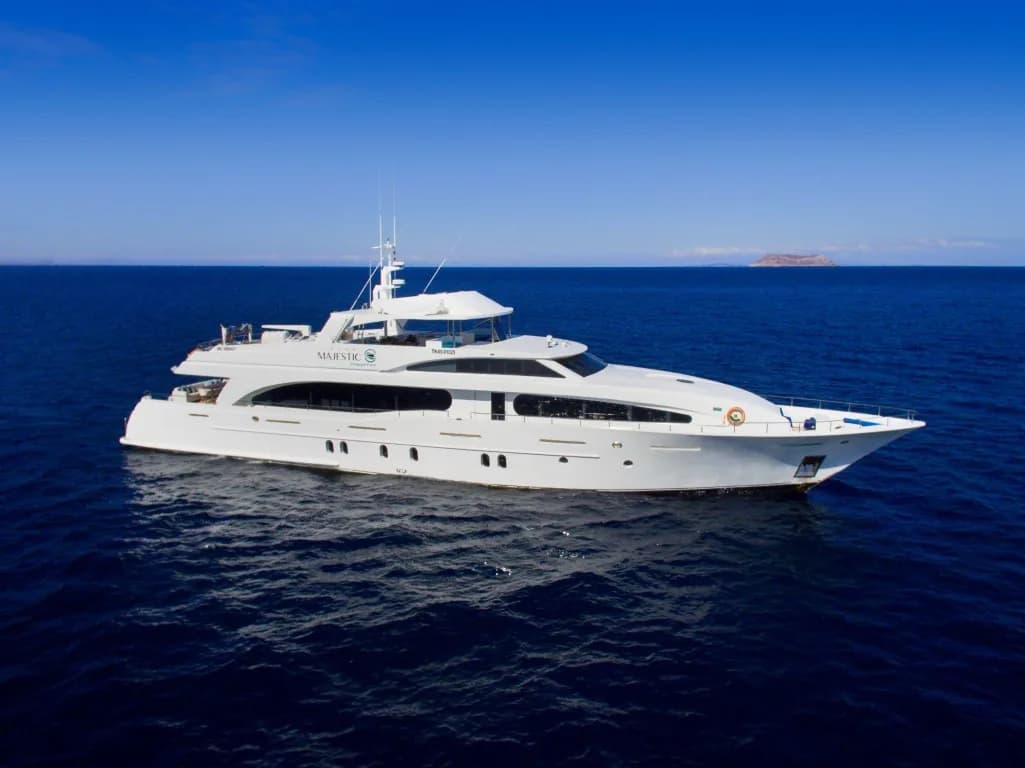
November 30, 2026 · Grand Majestic, 4-Day Southern Islands: El Junco's Freshwater Crater
Likely: Devil's Crown, day 3. 4 spots
from US$3,145 per guest
Check availabilityNovember 30, 2026 · Grand Majestic, 8-Day Southern & Northern: Espanola's Albatross Cliffs
Likely: Devil's Crown, day 3. 2 spots
from US$7,045 per guest
Check availability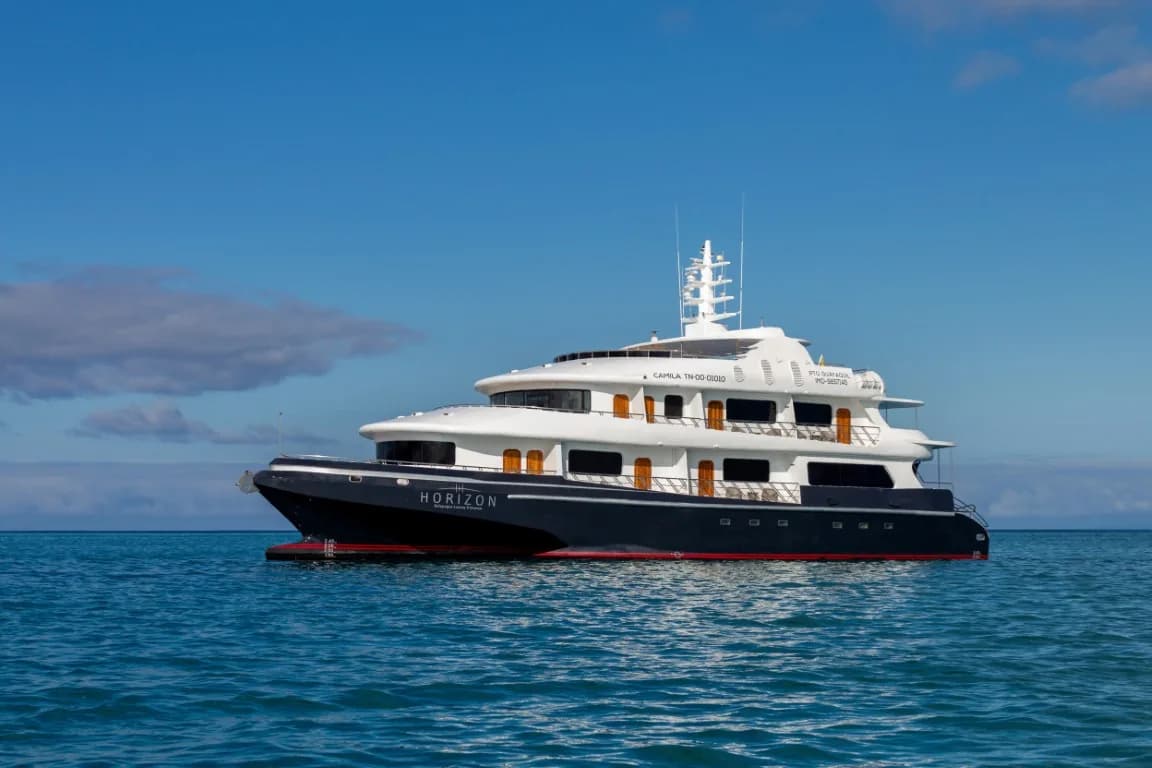
December 12, 2026 · Galapagos Horizon, 8-Day Western & Southern: Devil's Crown's Sunken Cone
Likely: Devil's Crown, day 6. 2 spots
from US$9,445 per guest
Check availability
1,178 departures
On every departure
Included
All meals on board · Two certified national park naturalist guides · All excursions and landings listed in the itinerary · Snorkelling gear and wetsuit · Kayaks and stand-up paddleboards on board · Coffee, tea and water at any time
How you see them
Snorkelling at 3 sites · Panga ride at 1 site · Beach at 1 site
Best chance
Devil's Crown · Los Túneles