Wrasses in Galápagos: Facts and Where to See Them
Wrasses (family Labridae) are a large, colourful family of reef fish, with over 600 species. Most are small, under 20 cm, and many can change sex during their lives. Some work as cleaners for bigger fish. In Galápagos they live on the rocky reefs that snorkellers visit, and naturalist guides' sighting records place them at 1 site.
Good to know
| Scientific name | Labridae (a family, not a single species) |
|---|---|
| Group | Fish |
| Species | Over 600, in 81 genera |
| Size | Most under 20 cm; the humphead wrasse up to 2.5 m |
| Habitat | Shallow coral reefs and rocky shores |
| Sex change | Many species, usually female to male |
| Relatives | Parrotfish are now often counted as wrasses |
| Endemic to Galápagos | No; tropical and subtropical seas worldwide |
| In Galápagos | At 1 site (guide sighting records) |
- Wikipedia, Wrasse (all rows)
Fish that change sex
Most wrasses are protogynous hermaphrodites: they can start life as females and later become males. Young fish, called the initial phase, are a mix of males and females, but the largest adults become territory-holding terminal-phase males, often with a harem of females. The change is usually from female to male, and the fish that changes is generally the largest female. In experiments, a male cleaner wrasse kept with a bigger male has even turned back into a female.
- Thick lips. Many wrasses have thick, folded lips, which gave them the German name Lippfische, "lip fishes".
- Protruding mouths. Their mouths can push forward, and their teeth often jut outwards.
- Wikipedia, Wrasse (protogyny, phases, harems, direction of change, experiment, lips, mouths, teeth)
The cleaners of the reef
Cleaner wrasses are the best-known cleaner fish. Larger, often predatory fish gather at their cleaning stations and wait while the wrasses remove parasites, dead tissue and scales, even swimming into their open mouths and gills. Some cheat and nibble healthy tissue and mucus. In a 2019 study, cleaner wrasses became the first fish to pass the mirror test, though scientists still argue about what that means. Many smaller wrasses also follow larger fish to pick up the small animals they stir up.
- Wikipedia, Wrasse (cleaning stations, cheating, mirror test, following larger fish)
Where to see wrasses in Galápagos
Guide sighting records list one site: Devil's Crown, a snorkelling site off Floreana, rated Rare. Wrasses live close to the reef, so watch the rocks and the fish swimming around them.
- Our guide sighting data
- Wikipedia (close to the substrate)
Rare
- Devil's Crown, Floreana.Snorkelling. Seen all year.Rare
How you see them: snorkelling at 1 site.
When to see them
The guide records list wrasses at Devil's Crown in every month. In the next twelve months, 42 departures stop at the site.
- Our guide sighting and departure data
- 2
- departures in November 2026
Show the November 2026 departures - 2
- departures in December 2026
Show the December 2026 departures - 2
- departures in January 2027
Show the January 2027 departures - 1
- departure in February 2027
Show the February 2027 departures - 35
- departures in the other 8 months
Choose a month in the list - 42
- departures in the next twelve months stop where they are seen
Show all departures
Are wrasses endangered?
Wrasses are a whole family of over 600 species, so their status differs from species to species. In the Galápagos Marine Reserve, park rules ask visitors to keep at least 2 metres (6 feet) from wildlife and never to feed it.
- Our species data
- Galápagos National Park Rules
Mistakes to avoid
- Expecting one look. Young fish, females and terminal males can look very different.
- Touching the reef. Wrasses live close to the rocks; keep your hands off.
- Feeding fish. It is not allowed in the marine reserve.
- Wikipedia, Wrasse (sexual dimorphism, phases)
- Galápagos National Park Rules
Frequently asked questions
Are all wrasses born female?
No. Young wrasses are a mix of males and females. But most wrasse species are protogynous, so many females later turn into males, usually the largest ones.
- Wikipedia, Wrasse
Is a parrotfish a wrasse?
Today, often yes. Parrotfish used to have their own family, but they sit deep within the wrasse family tree and are now usually treated as a subfamily or tribe of the wrasses.
- Wikipedia, Wrasse
What does a cleaner wrasse do?
It removes parasites, dead tissue and scales from larger fish at cleaning stations, even entering their mouths and gills.
- Wikipedia, Wrasse
How big do wrasses get?
Most are under 20 cm, but the largest, the humphead wrasse, can reach 2.5 metres.
- Wikipedia, Wrasse
Where do wrasses live?
Mostly in tropical and subtropical waters of the Atlantic, Indian and Pacific oceans, in shallow habitats such as coral reefs and rocky shores, close to the bottom.
- Wikipedia, Wrasse
Availability and prices updated
Departures that take you to them
Every Galápagos cruise in this list stops at least once at a site where our guides see the Wrasse. The best chances come first, and each departure shows the site and the day. Found one that suits you? Ask us about it. There is no booking and no payment: we check the departure and reply.
Next departures with a good chance
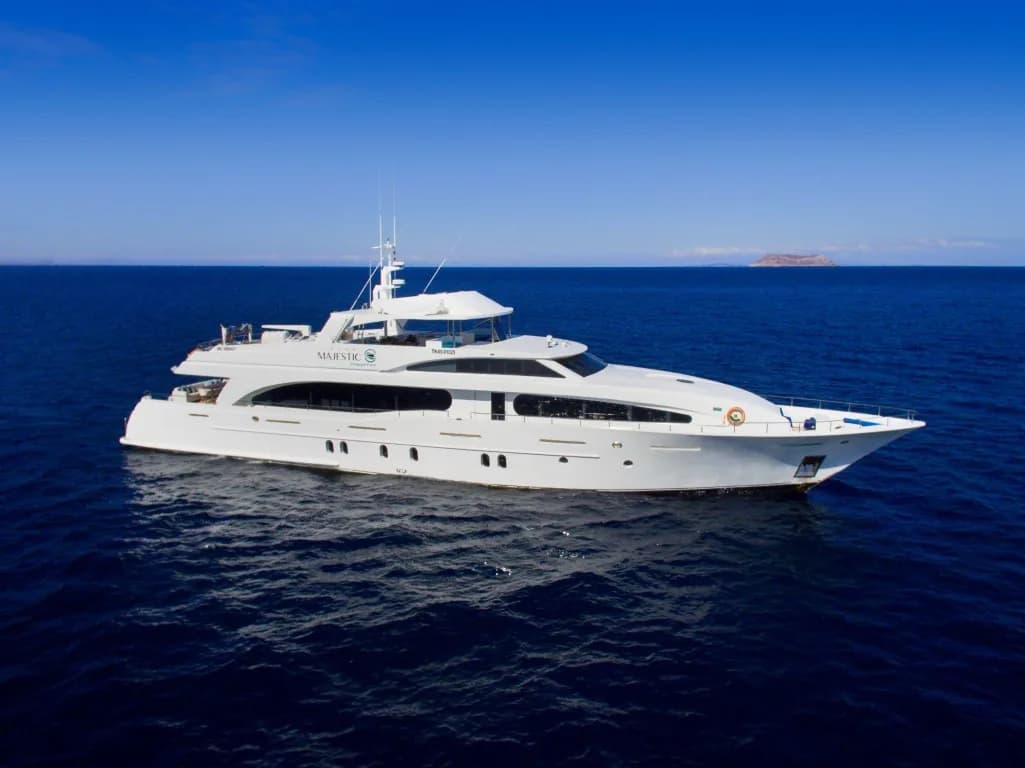
November 30, 2026 · Grand Majestic, 4-Day Southern Islands: El Junco's Freshwater Crater
Rare: Devil's Crown, day 3. 4 spots
from US$3,145 per guest
Check availabilityNovember 30, 2026 · Grand Majestic, 8-Day Southern & Northern: Espanola's Albatross Cliffs
Rare: Devil's Crown, day 3. 2 spots
from US$7,045 per guest
Check availability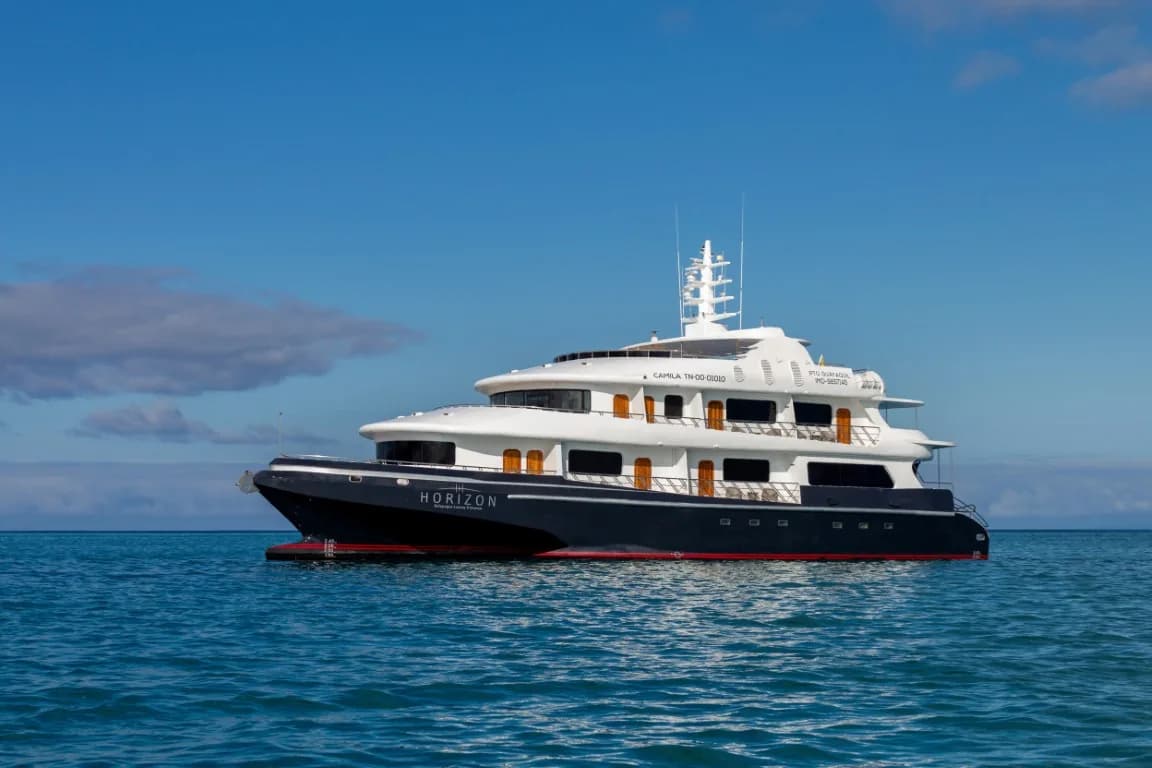
December 12, 2026 · Galapagos Horizon, 8-Day Western & Southern: Devil's Crown's Sunken Cone
Rare: Devil's Crown, day 6. 2 spots
from US$9,445 per guest
Check availability
120 departures
On every departure
Included
All meals on board · Two certified national park naturalist guides · All excursions and landings listed in the itinerary · Snorkelling gear and wetsuit · Kayaks and stand-up paddleboards on board · Coffee, tea and water at any time
How you see them
Snorkelling at 1 site